Before you leave
- Book permits for the numbered (PR) hikes — they are now paid, and booked for a specific day and time slot on the official Madeira hiking website
- Rain jacket and shoes with good grip — trails, levadas and forests are muddy and slick almost everywhere on the island
- Warm layers, a hat and gloves for the mountain hikes — it was below freezing at Pico do Arieiro and Pico Ruivo in December
- Water and snacks for Day 1 — we didn’t pass any restaurants on the way
- Reserve dinners ahead where needed — Sabor de India and Thai Funchal both require a reservation
- Leave the drone at home, or keep it grounded on windy days on the north coast
- Leave time to clean the rental car’s floor mats before you return it
Day 1 — Pico do Arieiro and the Balcões levada
- Early arrival to Madeira from Lisbon in the morning.
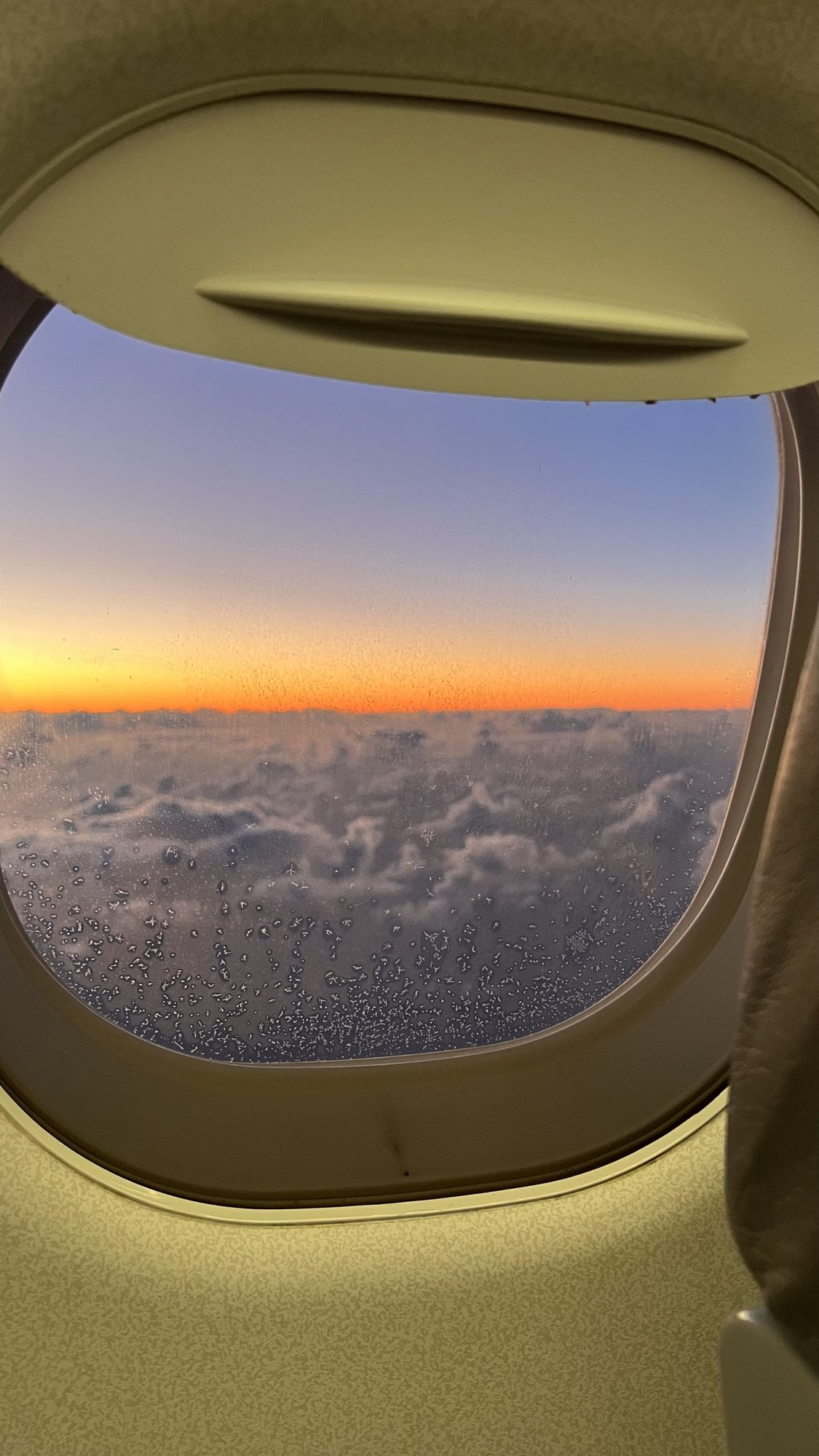
Sunrise over Madeira.
- Pick up the rental car from the airport.
- Drive to the Pico do Arieiro hike, about 40 minutes up windy mountain roads from the airport.
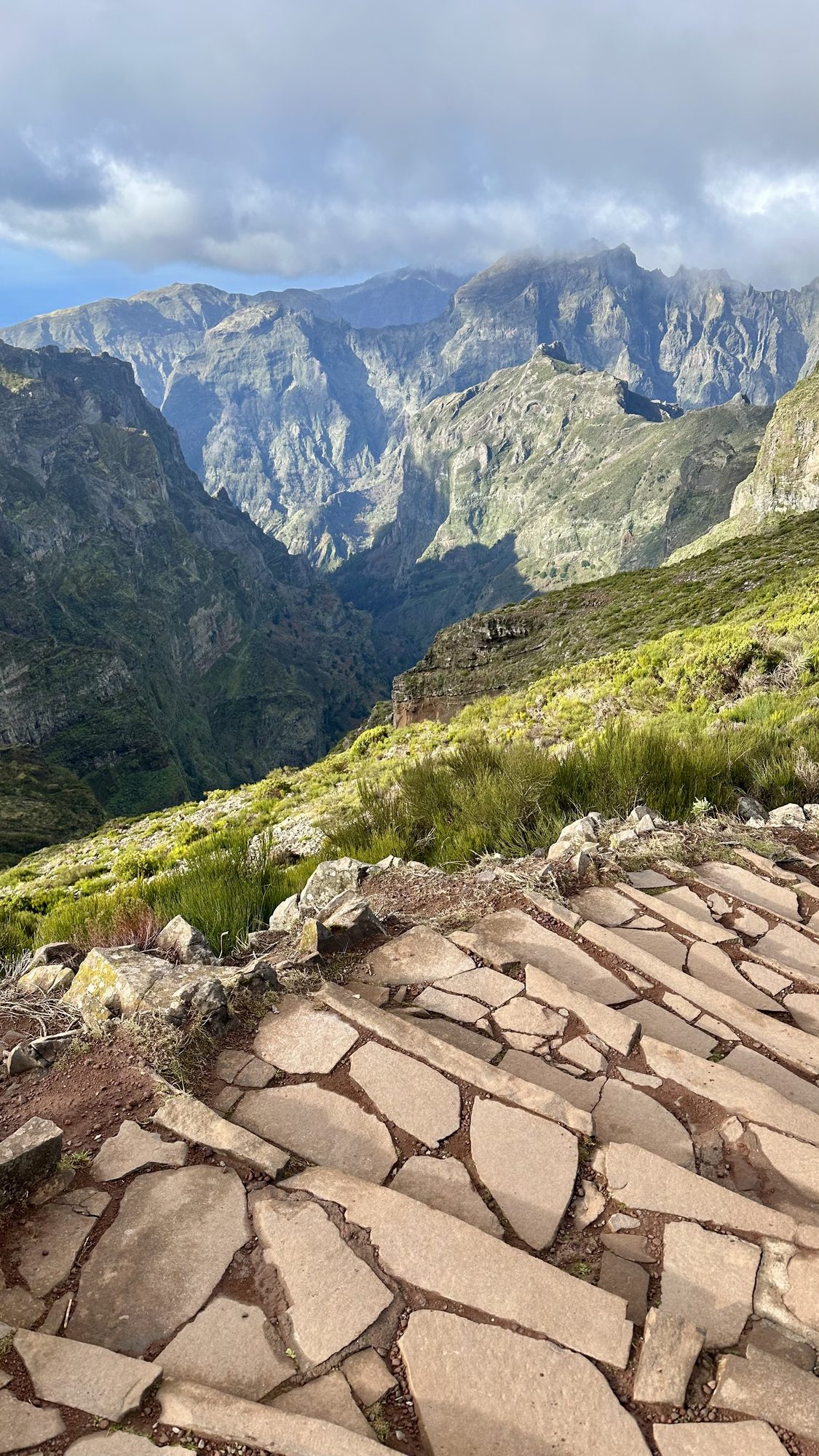
Fog lifting during our hike on PR1.
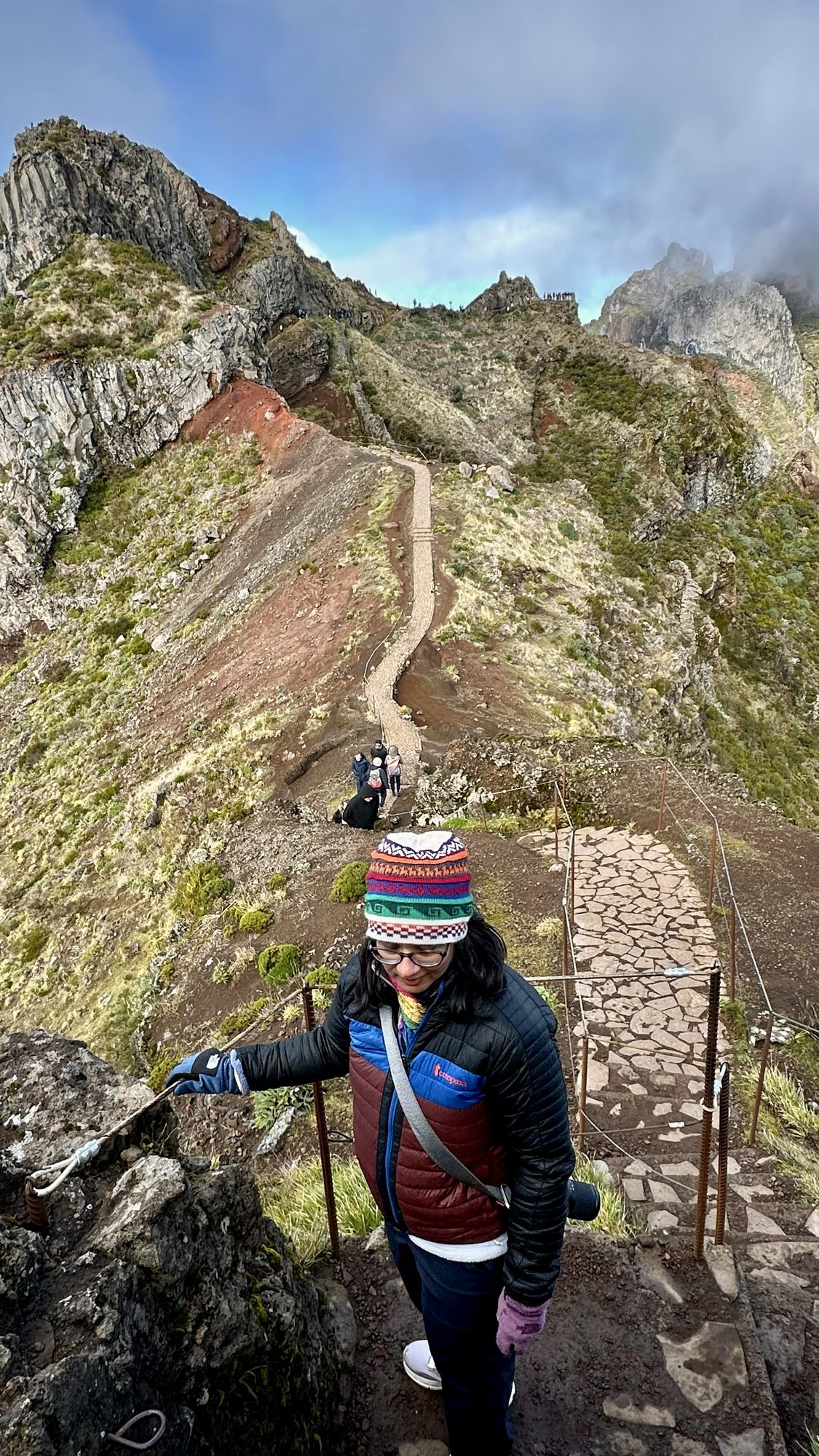
The Pico do Arieiro hike.
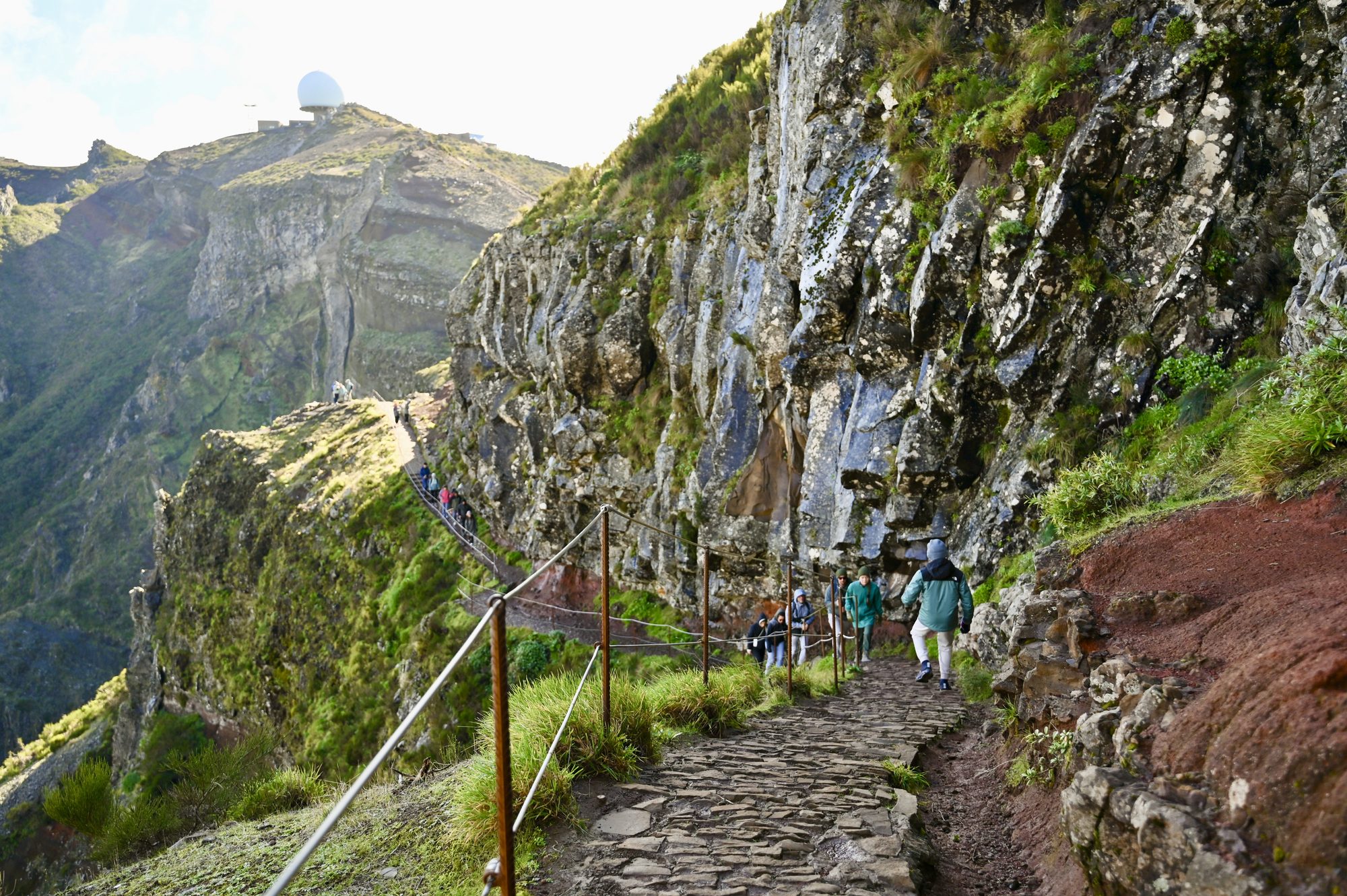
Making our way back to the car.
- This hike is extremely popular at sunrise. We decided to do it in the full light of day instead: the roads are safer to drive in daylight, the hike is safer in daylight, and there is less chance of the view being foggy.
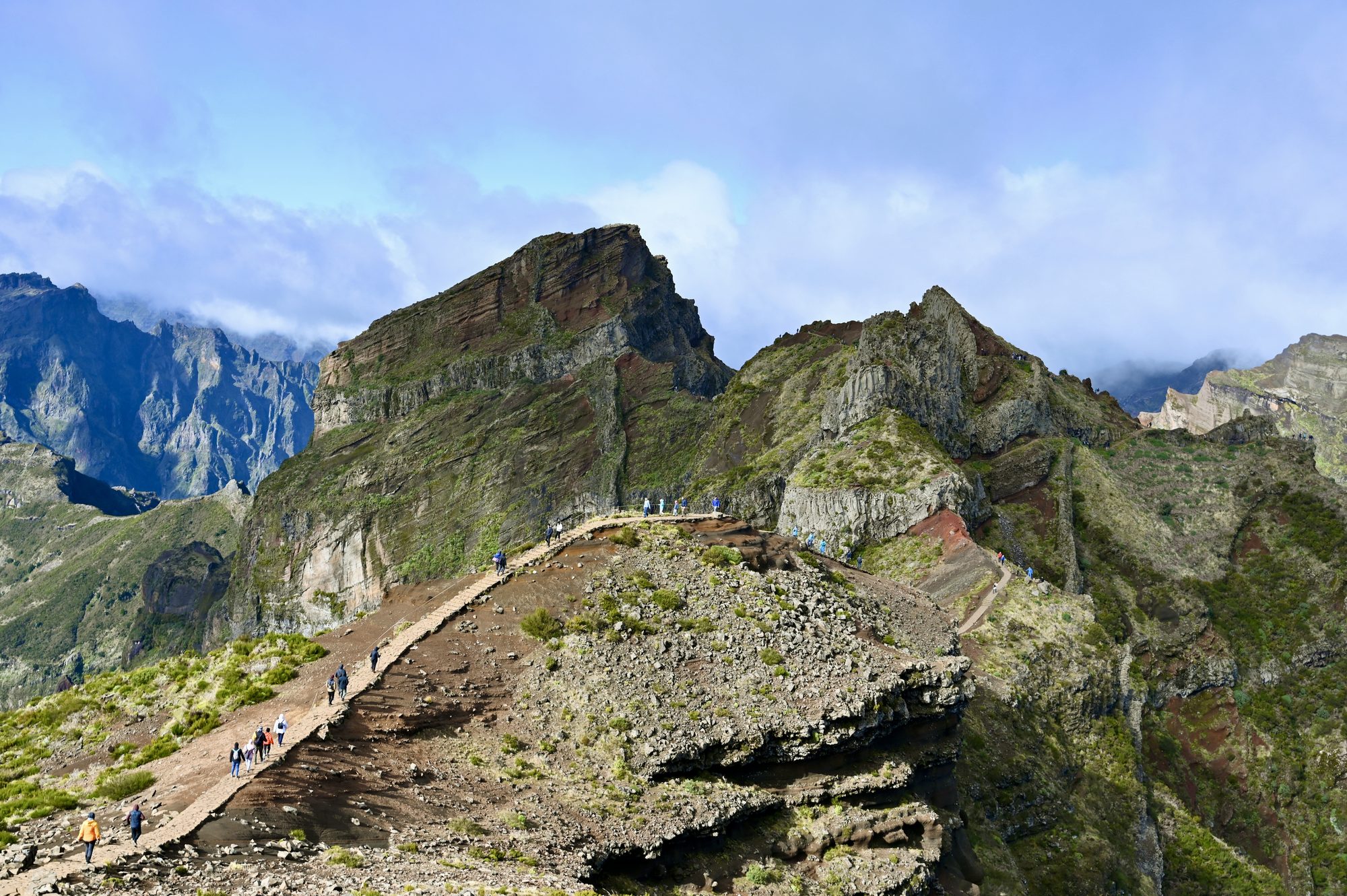
The life-changing hike — PR1.
- Hike from the trailhead to the Ninho da Manta viewpoint. This is about 1.6 miles with about 840 feet of elevation gain. The trail follows a narrow ridge at times, with spectacular views and drop-offs on both sides. The only way to describe the views on this hike is life-changing. This is easily one of the best hikes anywhere in the world.
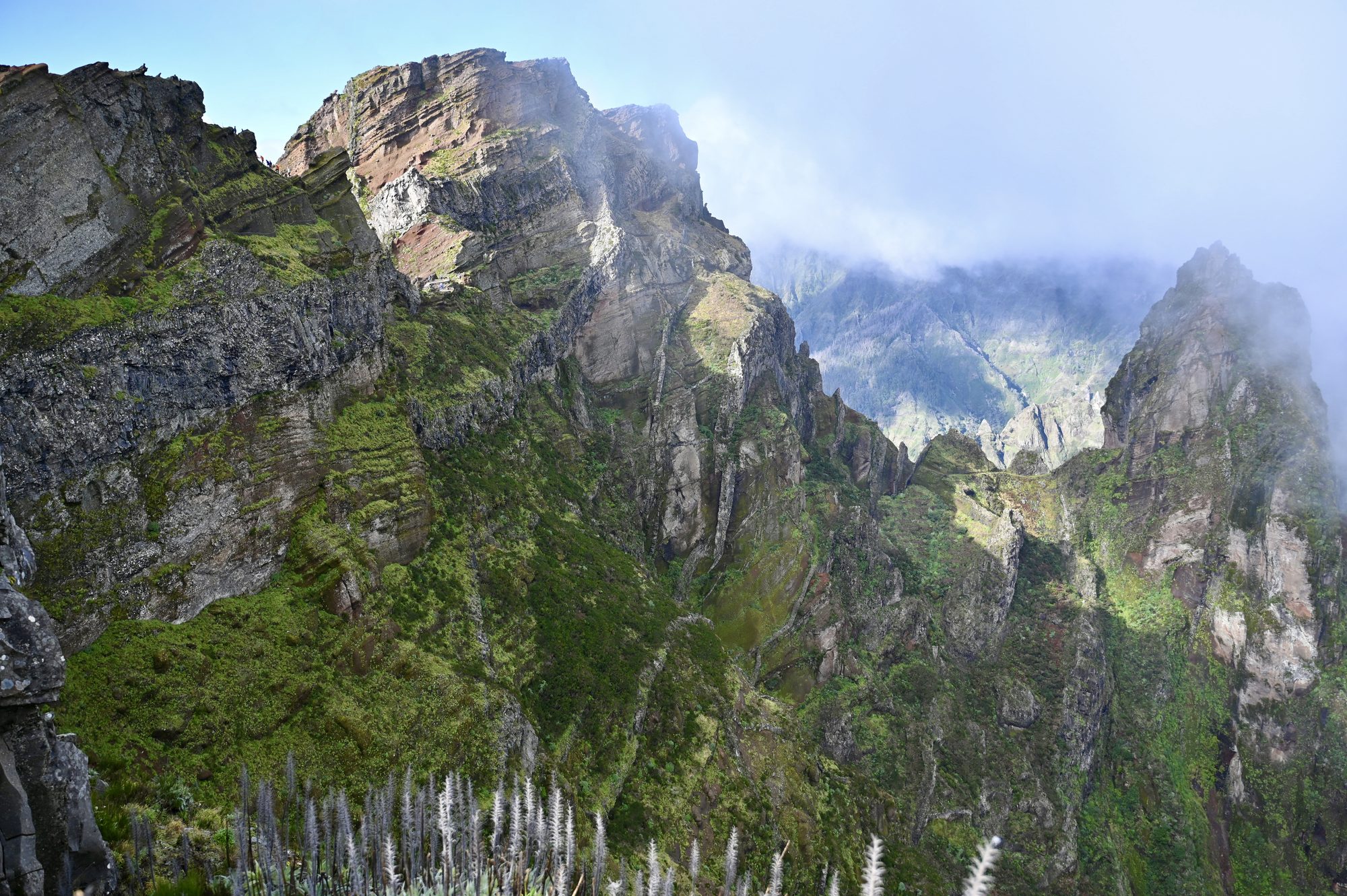
The Ninho da Manta viewpoint.
- Optional: With more time and good weather, this hike can be made much longer by hiking all the way to Pico Ruivo, then arranging transport back to this parking lot. Several tour companies offer pick-up and drop-off for this hike. Going as far as the Stairway to Heaven before turning back is an option as well. Pico Ruivo can also be done as a separate stop on this itinerary (see Day 4).
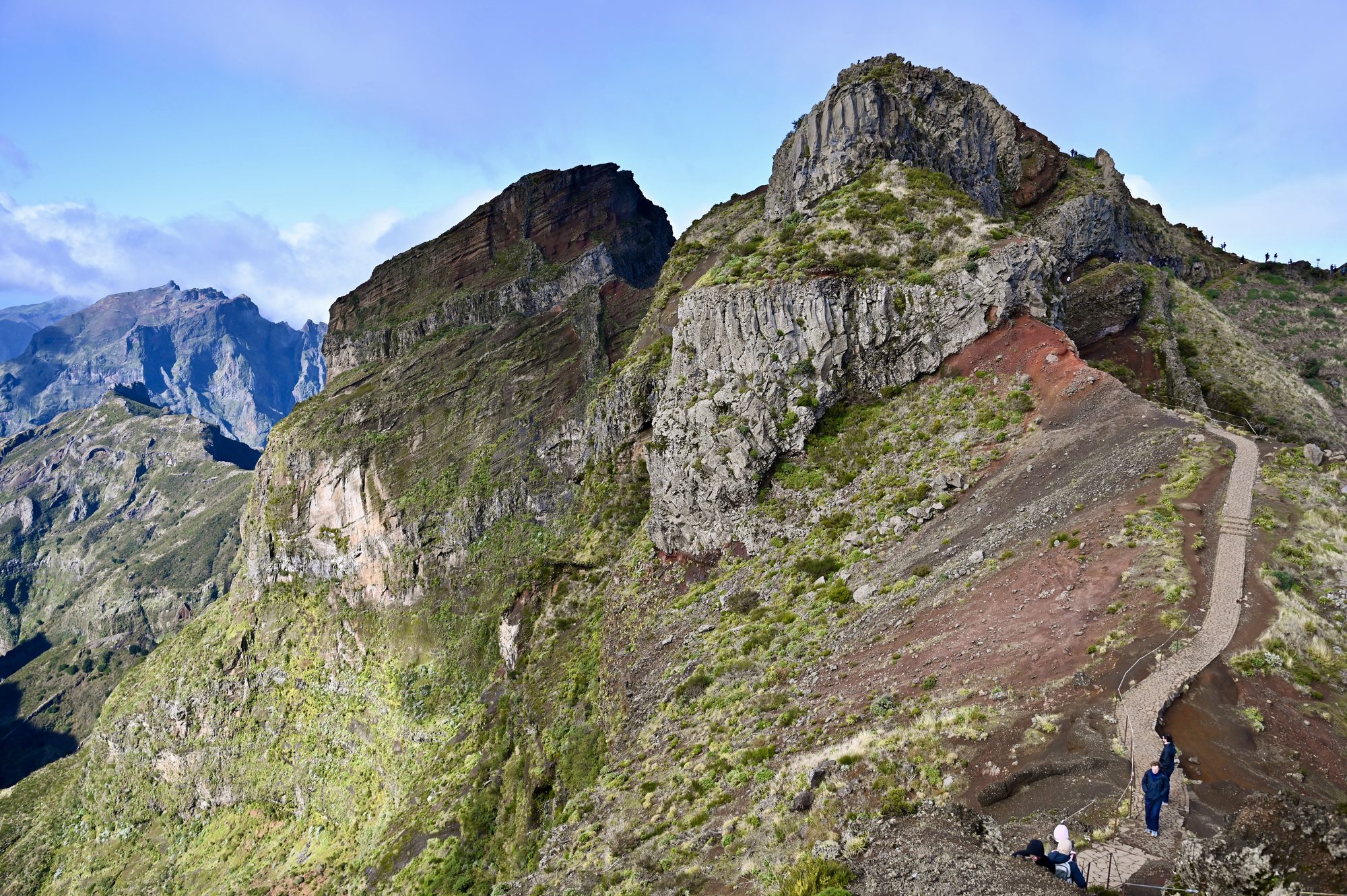
The ridge on PR1.
- Walk up the stairs from the restroom area to the observatory for more views.
- Some more viewpoints nearby: Miradouro do Tarm and Miradouro do Juncal.
- Tip: Carry water and snacks for this day, as we didn’t pass any restaurants on the way.
- Next, drive about 20 minutes to the Levada dos Balcões (PR11), a 1.8-mile easy-to-moderate walk to the Miradouro dos Balcões viewpoint. It is a flat walk of 20–30 minutes to a gorgeous view. The trail can get slick with mud after rain. Parking is tricky here — we parked on the side of the road along with other cars.
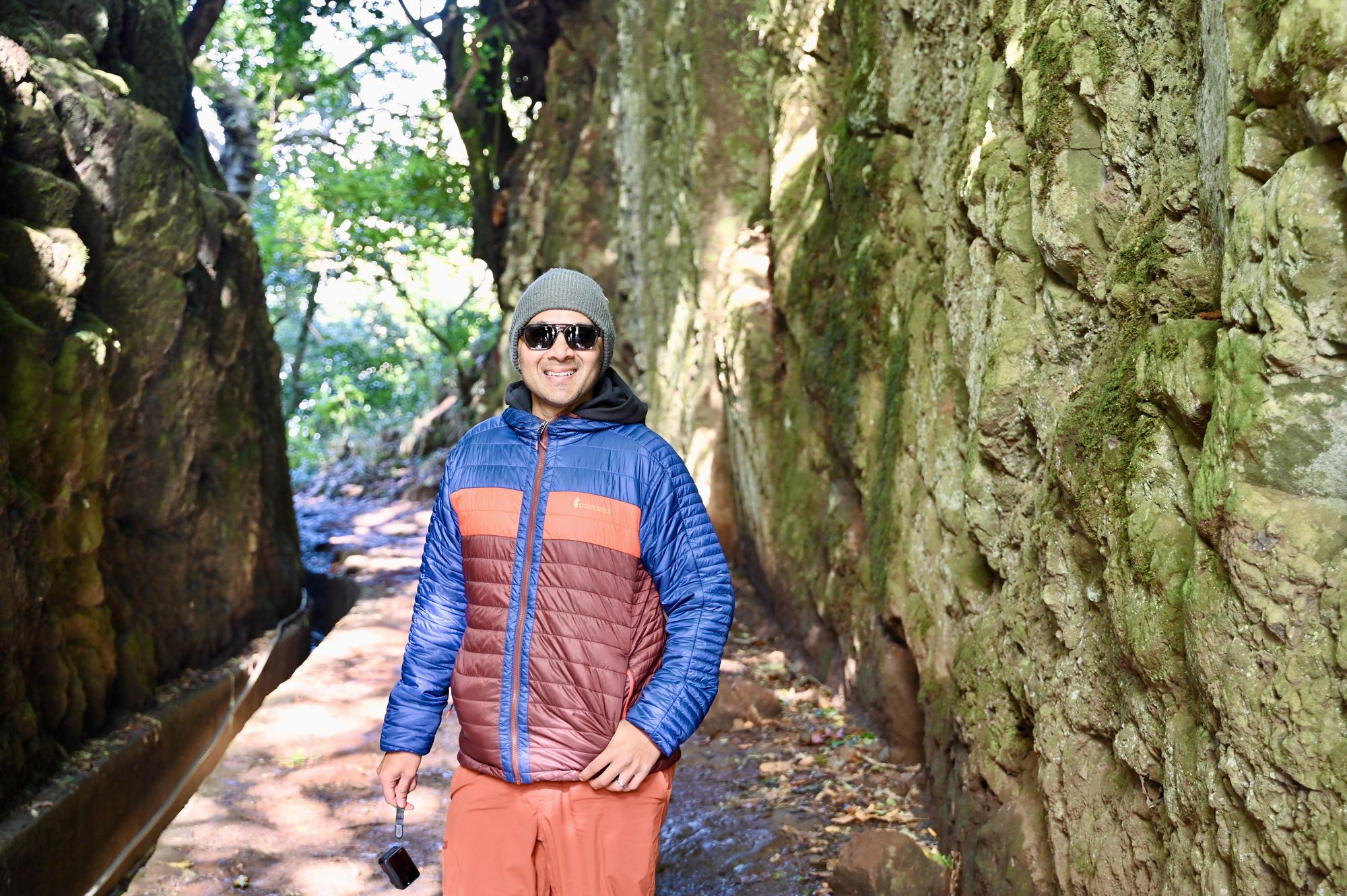
The levada walk passes between rocky walls.
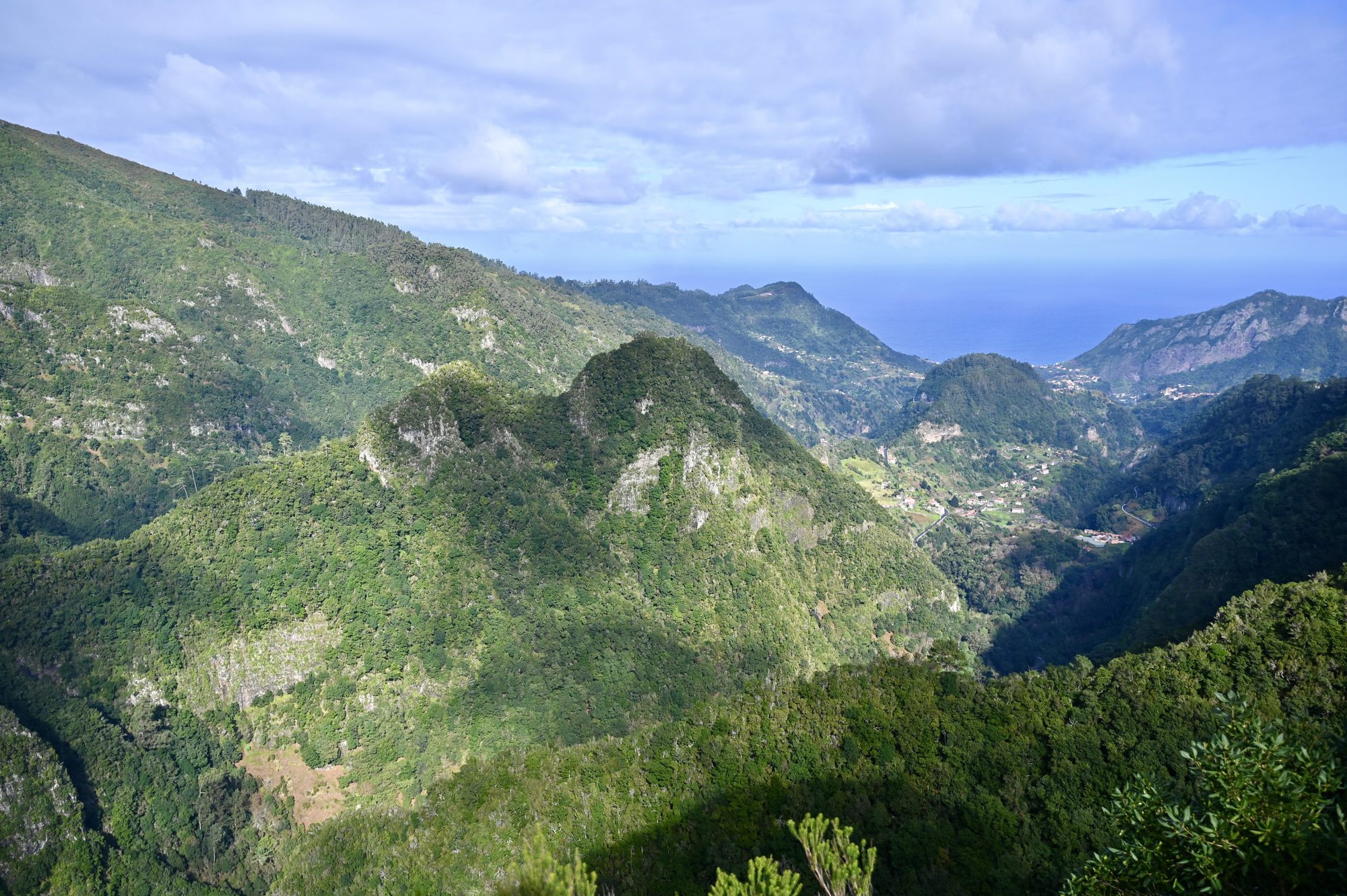
The view from the Levada dos Balcões.
- Optional: Miradouro do Cabouco, a short drive up the road.
- Drive back to the accommodation in Funchal.
- For dinner, we recommend India Gate in the old town of Funchal. Parking is not readily available in this part of town, so walk if you can, or take an Uber or Lyft to keep things easier.
Day 2 — The southwest coast
- Have breakfast at the accommodation or a café.
- Drive about an hour to Achadas da Cruz, a village at the bottom of a steep cliff, reached by one of the steepest cable cars in the world or by a scary, challenging trail. There is a parking lot, a small café and restrooms at the cable car ticket office at the top. Buy tickets in the office and take the cable car down to the beach and village. The line can be more than an hour long in peak season.
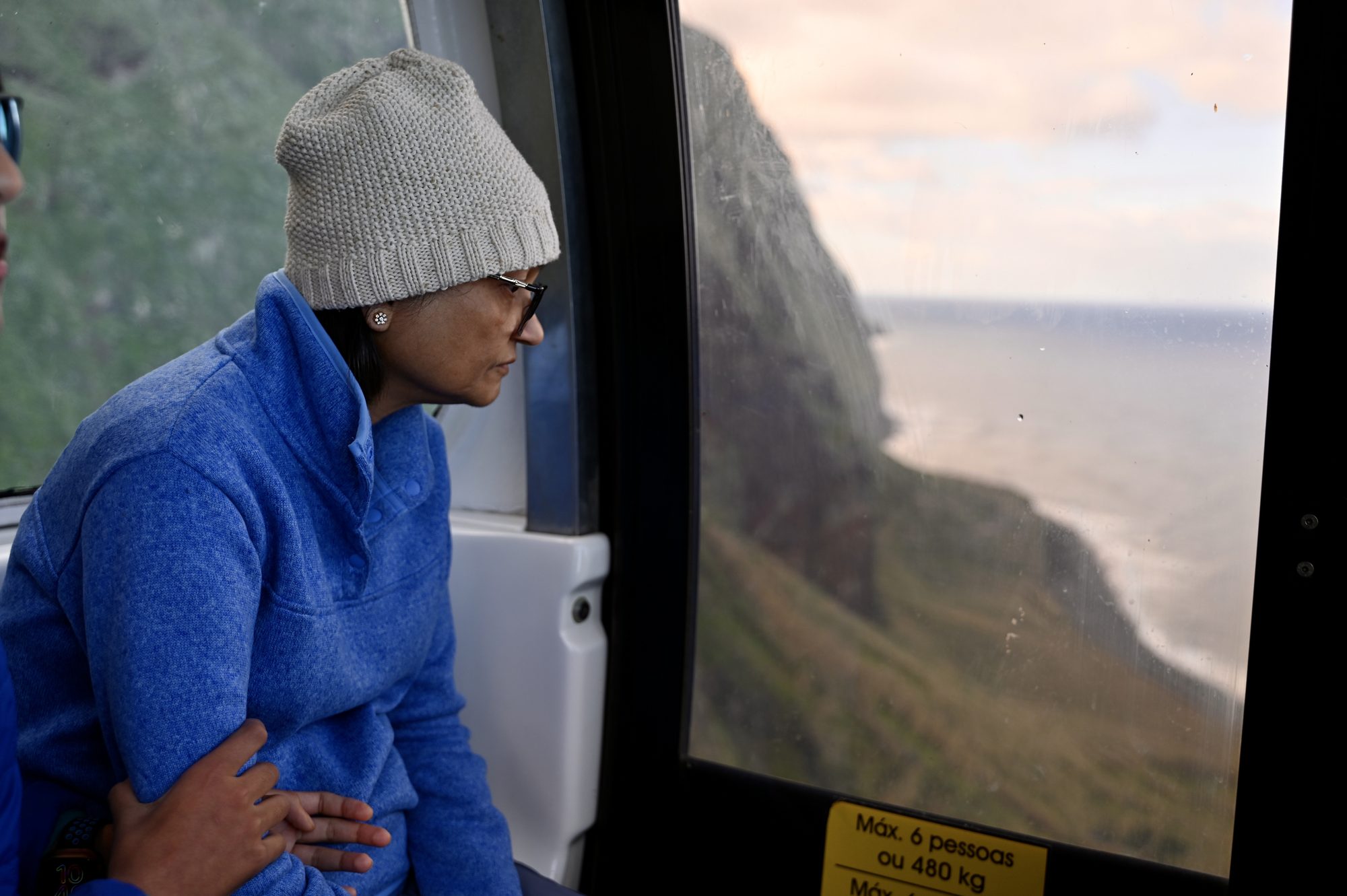
In the cable car down to Achadas da Cruz.
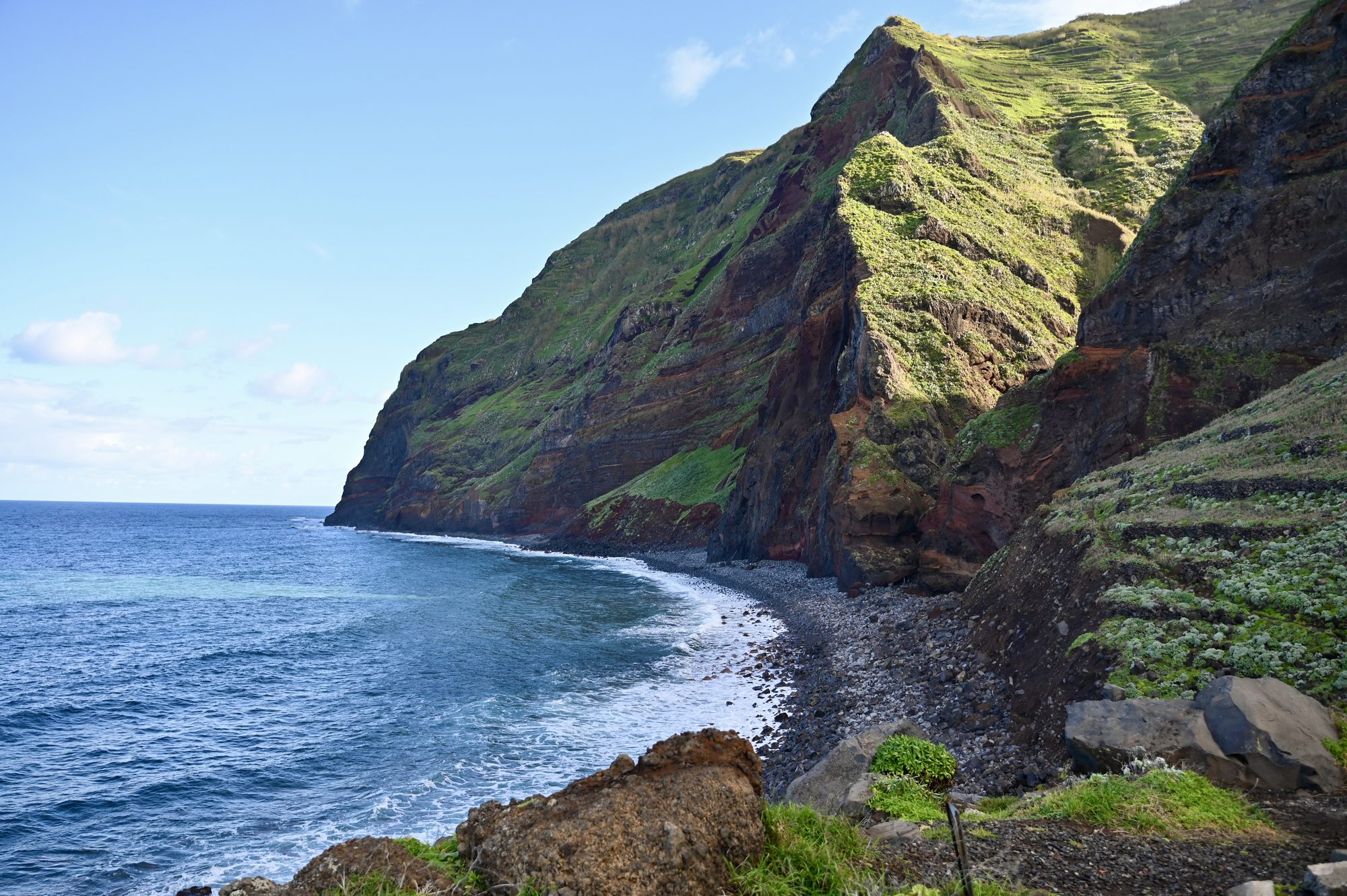
The gorgeous village of Achadas da Cruz.
- Once at the bottom, explore the beach, the village paths, the views and the coastal walk at a leisurely pace. Grab some food at the café at the top of the cliff.
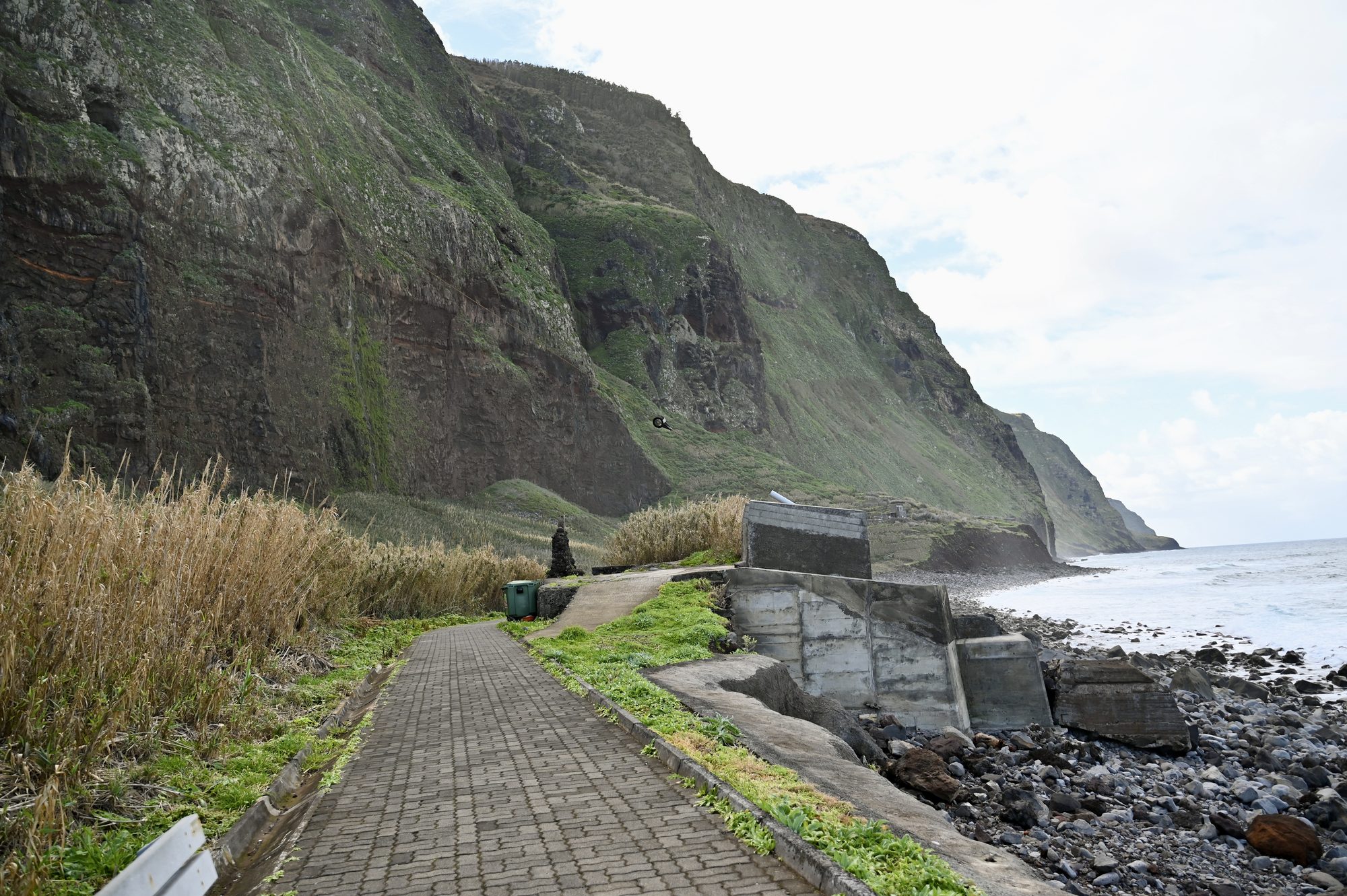
Towards the end of the village.
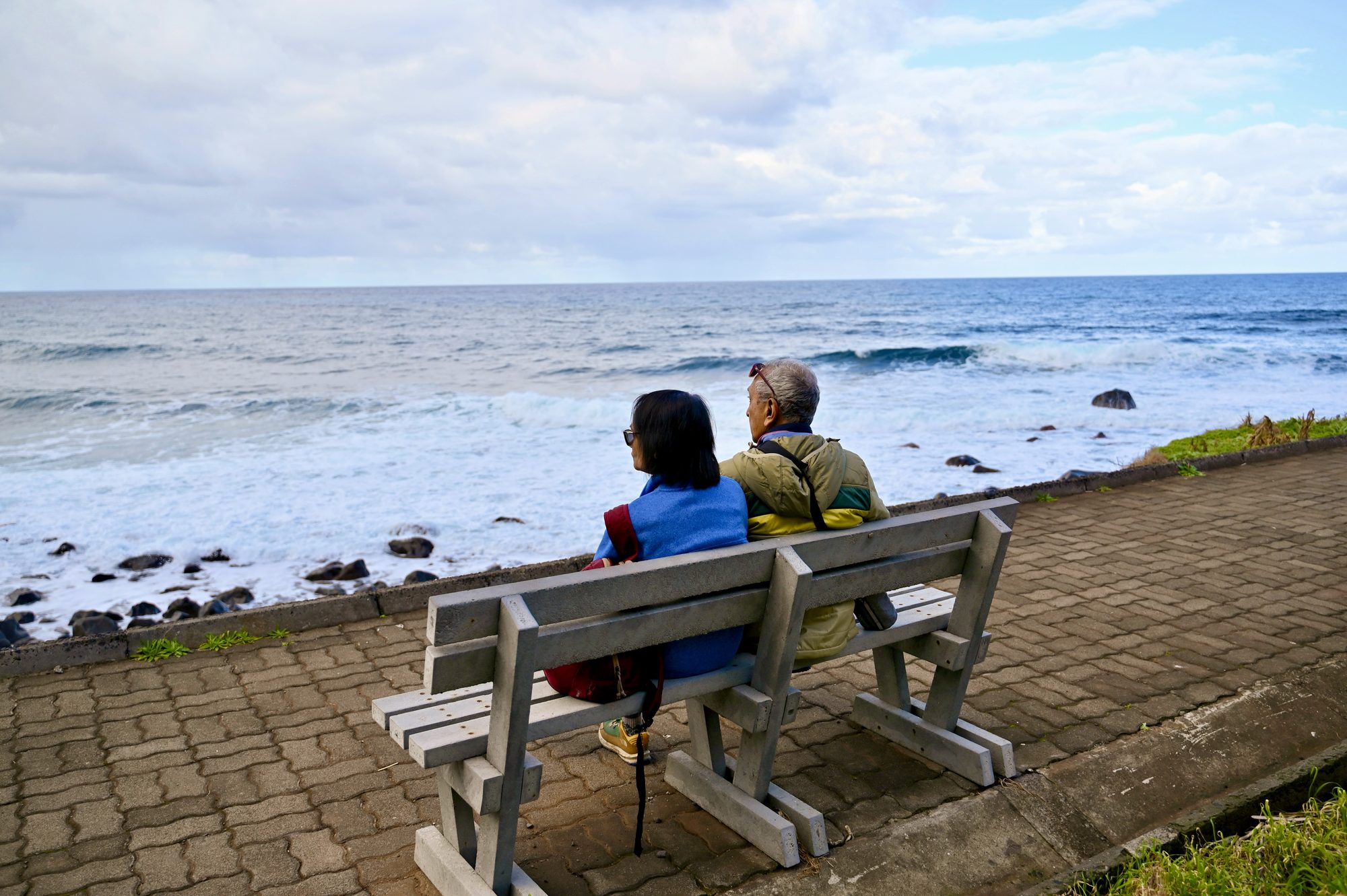
Looking out towards the ocean.
- Drive to the Miradouro da Garganta Funda waterfall. There is a rough parking area. Walk about 10 minutes to the viewpoint to see a tall waterfall plunge into the ocean off the side of a lush cliff. The trail can be muddy when wet, and there is no shade.
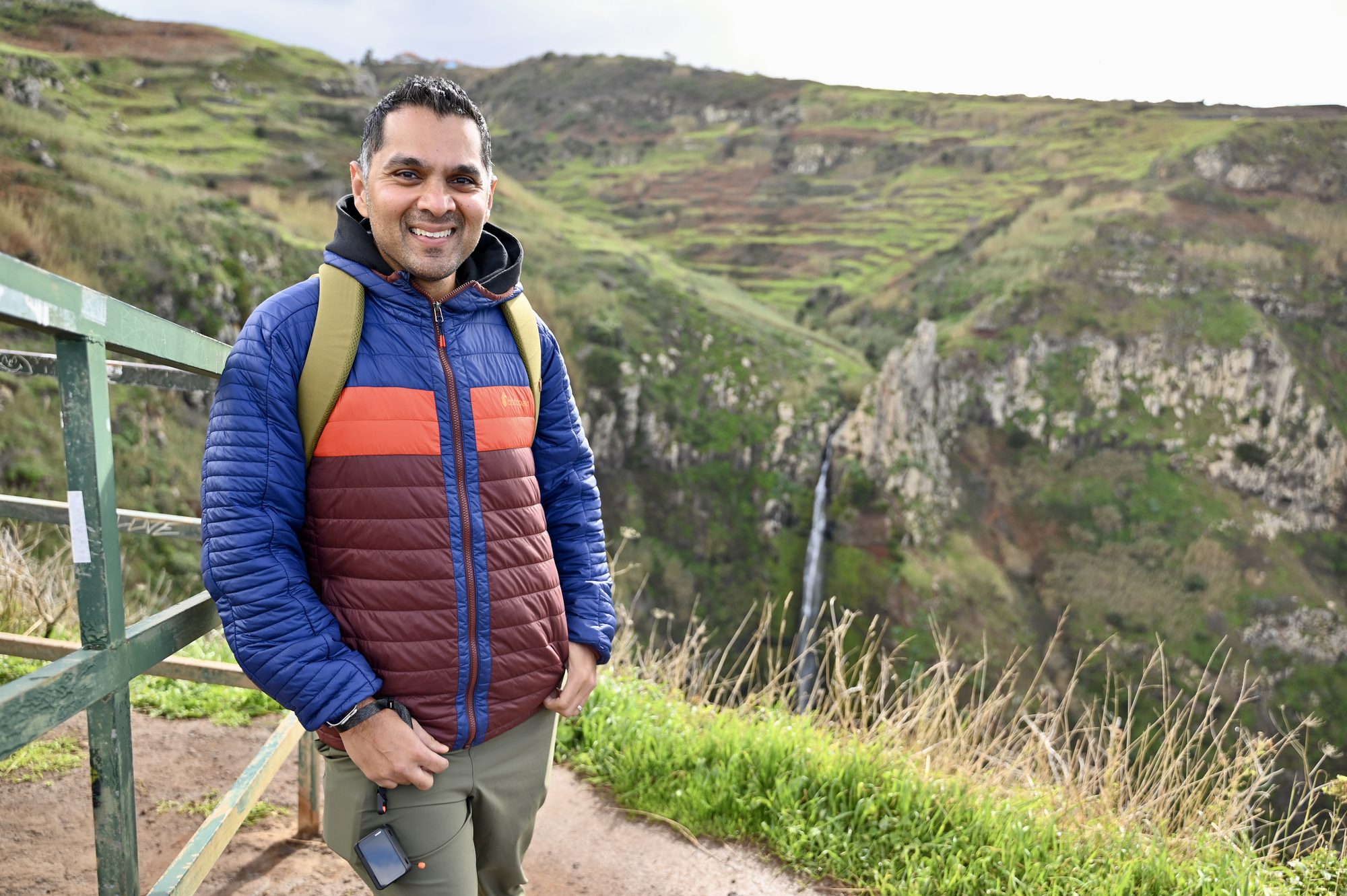
The view of the waterfall.
- Optional: Add the Risco waterfall on the Levada do Risco (PR6.1). This trail offers beautiful views even if you only walk part of it. The parking lot can get very busy.
- Hike the Levada do Moinho in Ponta do Sol. Parking is available near the trailhead, or park on the street in town. Follow the levada for incredible views in every direction — the mountains to the east and the ocean to the west.
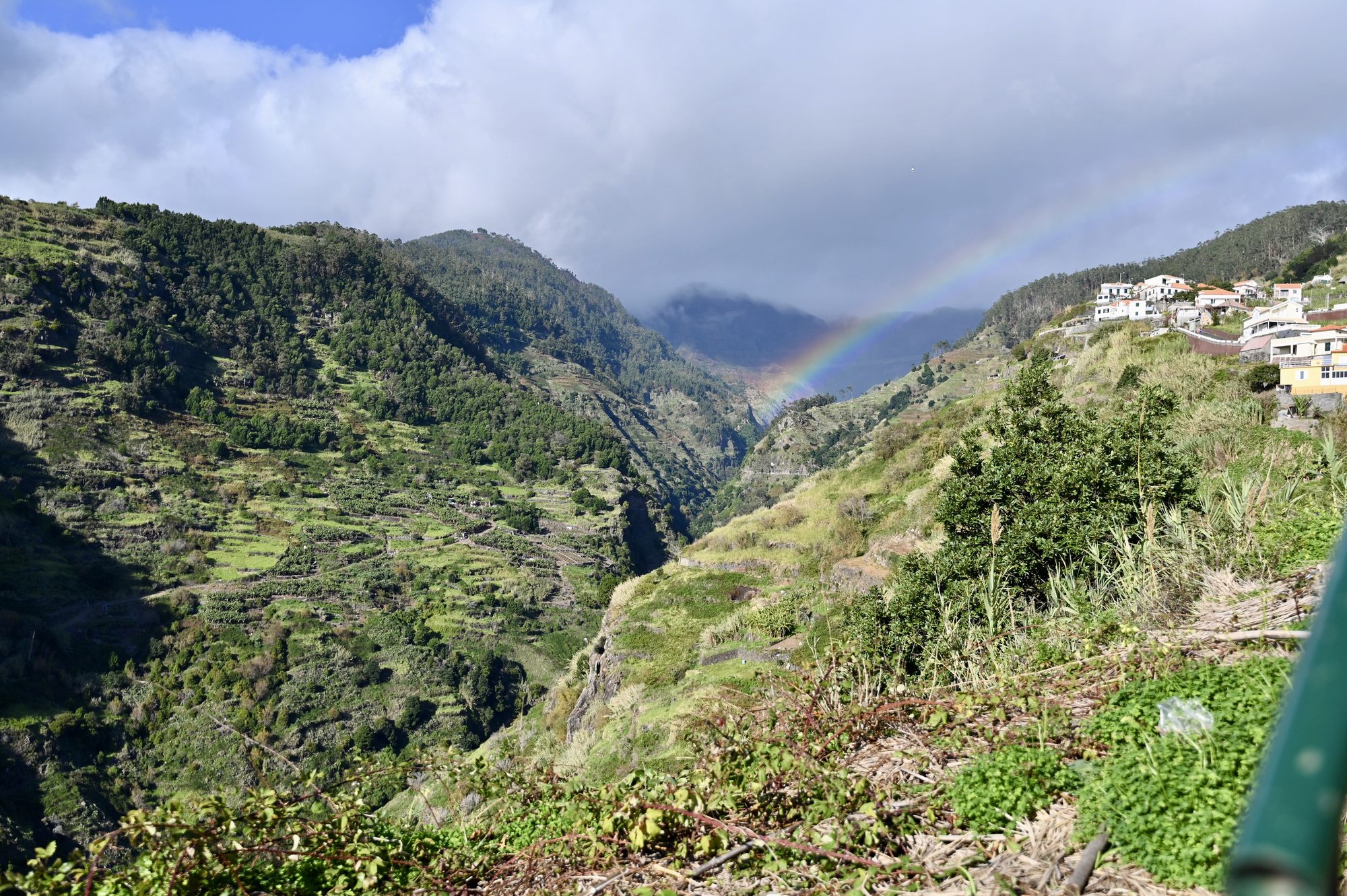
A rainbow over the Levada do Moinho hike.
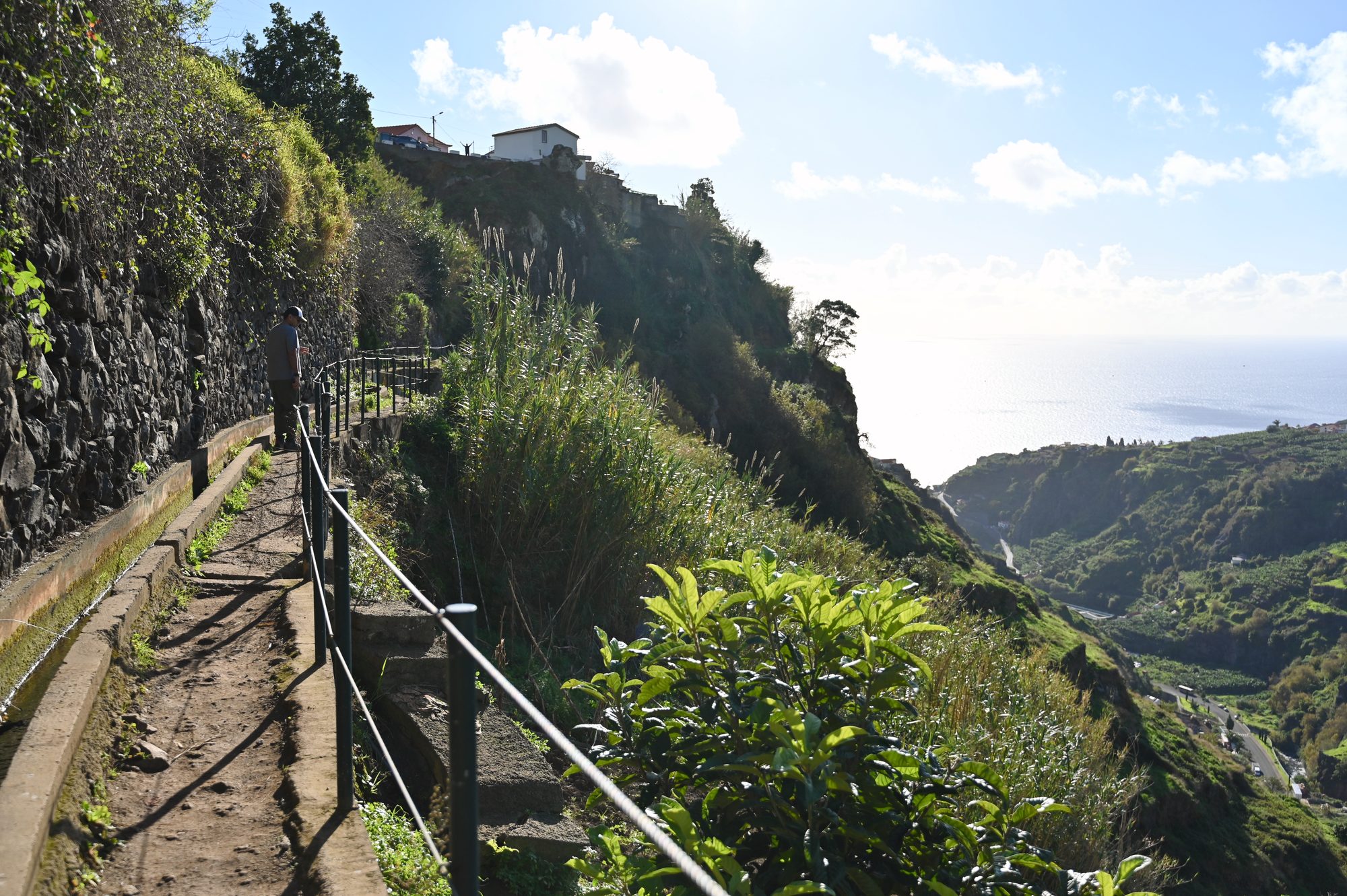
The view towards the ocean.
- Visit Cascata dos Anjos, a famous waterfall spilling onto a road (now closed to cars) before tumbling down a cliff into the ocean. Bring a rain jacket if you intend to walk under it. Park on the street before the traffic gets intense, close to the waterfall, and walk up to the spot.
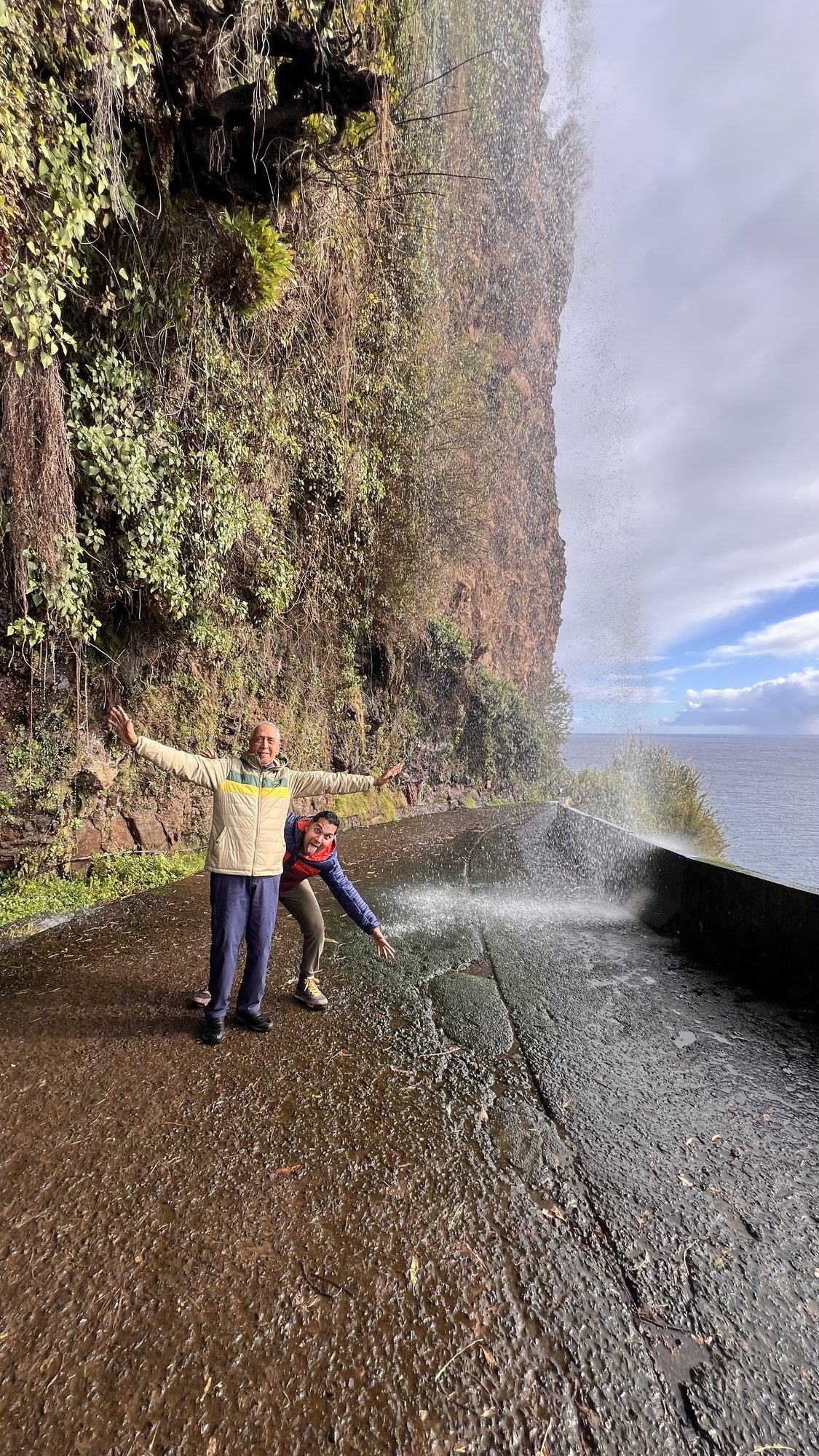
Cascata dos Anjos.
- Finish in Ponta do Sol — the town, the beach, and a short walk up to a viewpoint past the tunnel. Parking can be challenging in this town. There are some restaurants and grocery shops here as well.
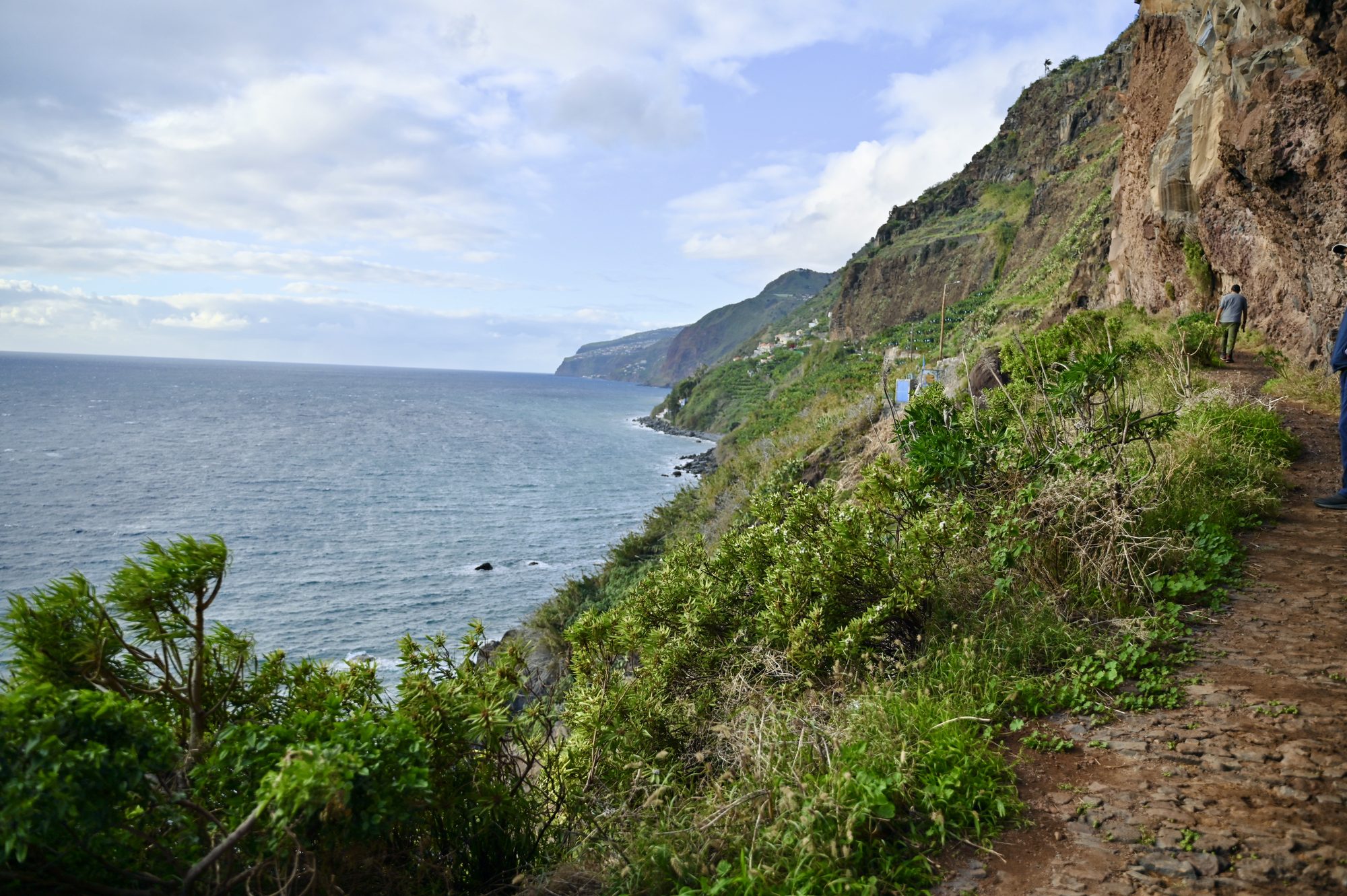
Ponta do Sol — the walk from the end of town, past the beach.
Day 3 — The north and northwest
- Begin the day by driving to Capelinha de Nossa Senhora de Fátima, a chapel on a hill near São Vicente. Park on the small street behind the chapel and take the stairs up to a grand, 360-degree view of the surrounding area, all the way down to the ocean.
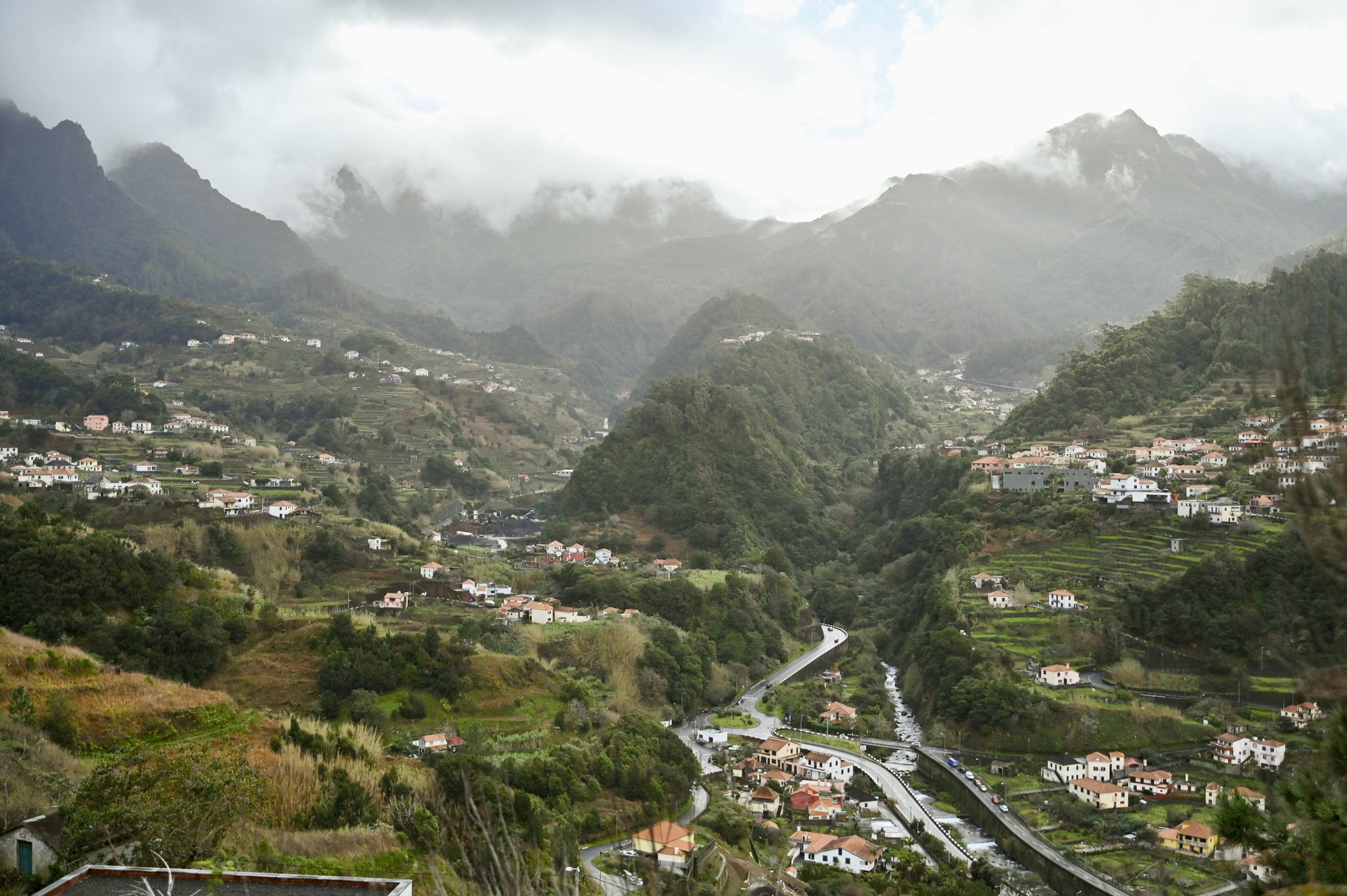
The view from the stairs up to the chapel.
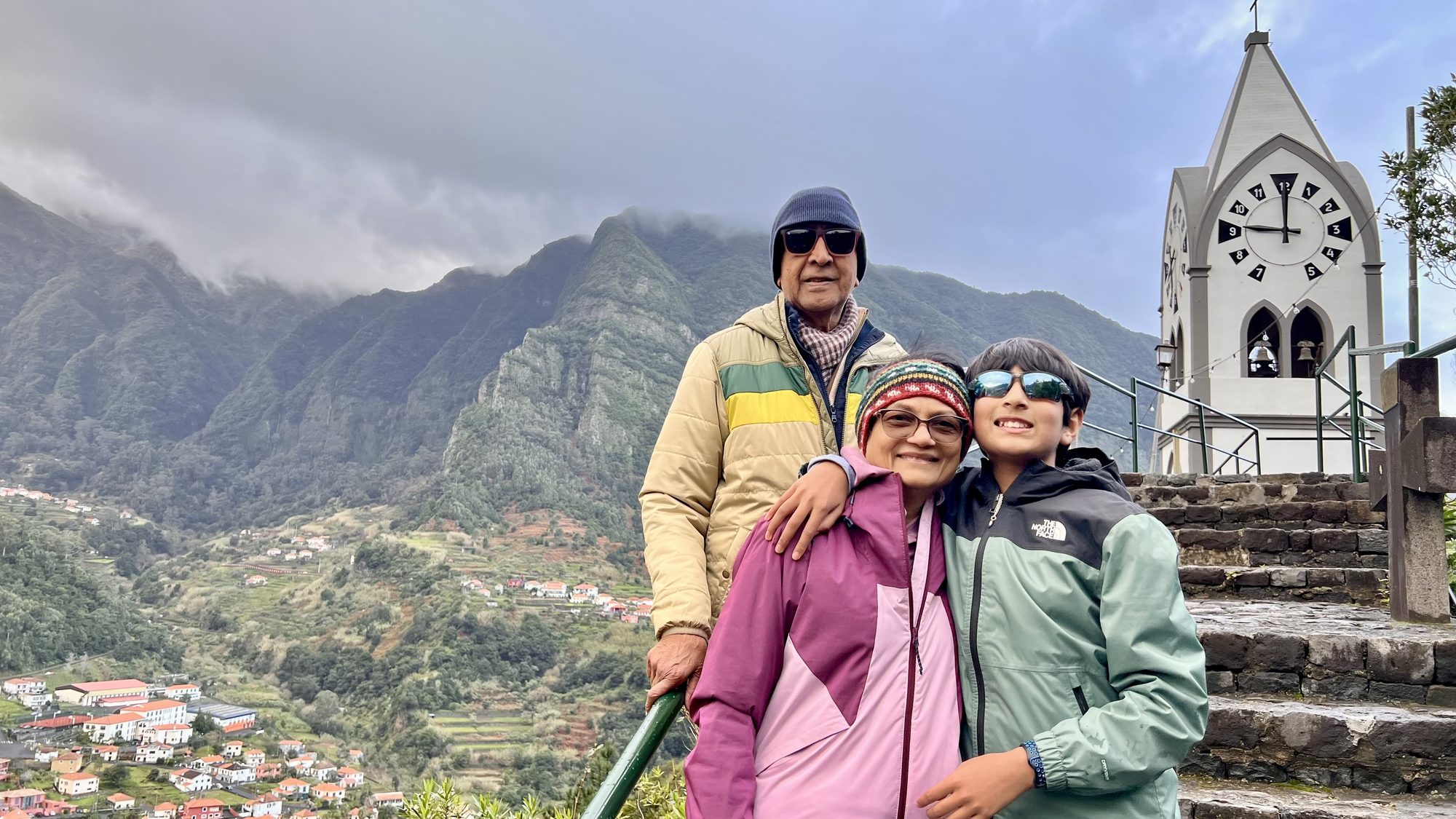
The chapel and the surrounding valleys.
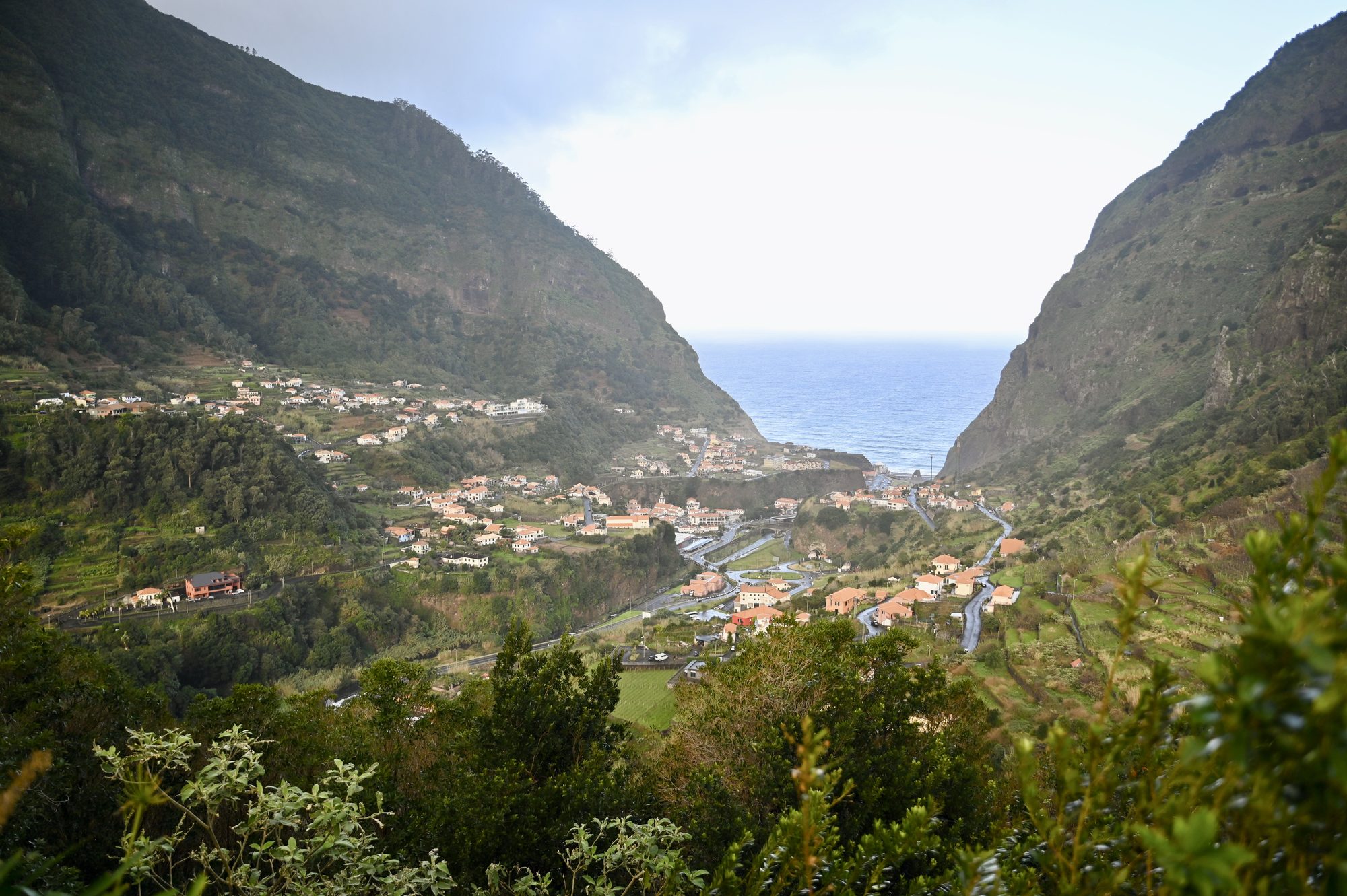
The view towards the ocean and São Vicente.
- Optional: Drive through the town of São Vicente.
- Drive to the Miradouro do Véu da Noiva, about 10 minutes away. Here a gorgeous waterfall tumbles over a tall, lush cliff directly into the ocean. The viewpoint is planted with tropical flowers like birds of paradise, which make the photos even more colorful. There are a few souvenir shops and cafés by the parking lot.
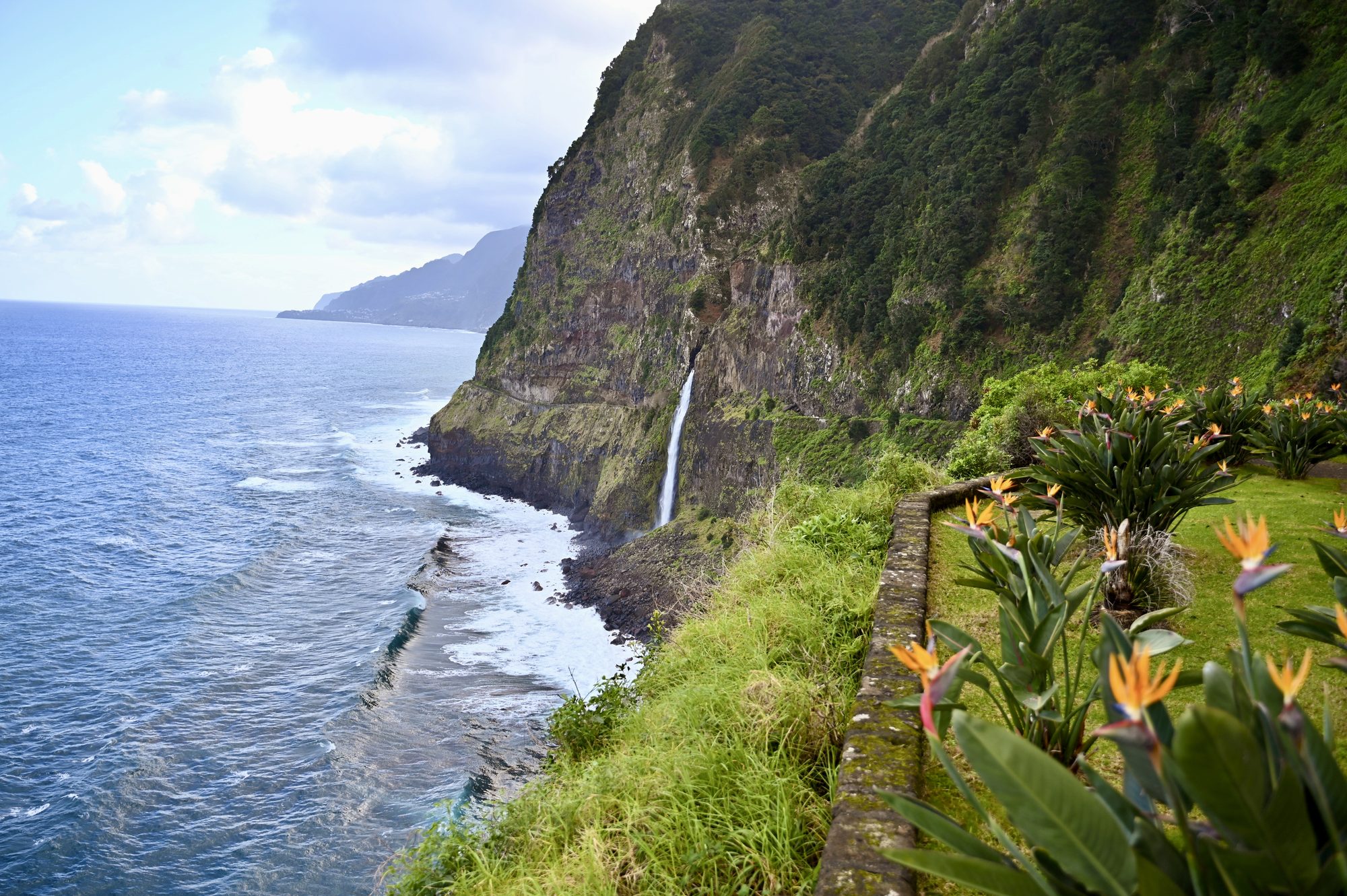
Miradouro do Véu da Noiva.
- Next, drive through the extremely narrow streets of Seixal to Seixal’s Praia do Porto. Park in one of the public lots near the beach. From here you can reach both the black-sand beach and the Piscinas Naturais do Seixal — natural swimming pools formed by volcanic rock next to the ocean.
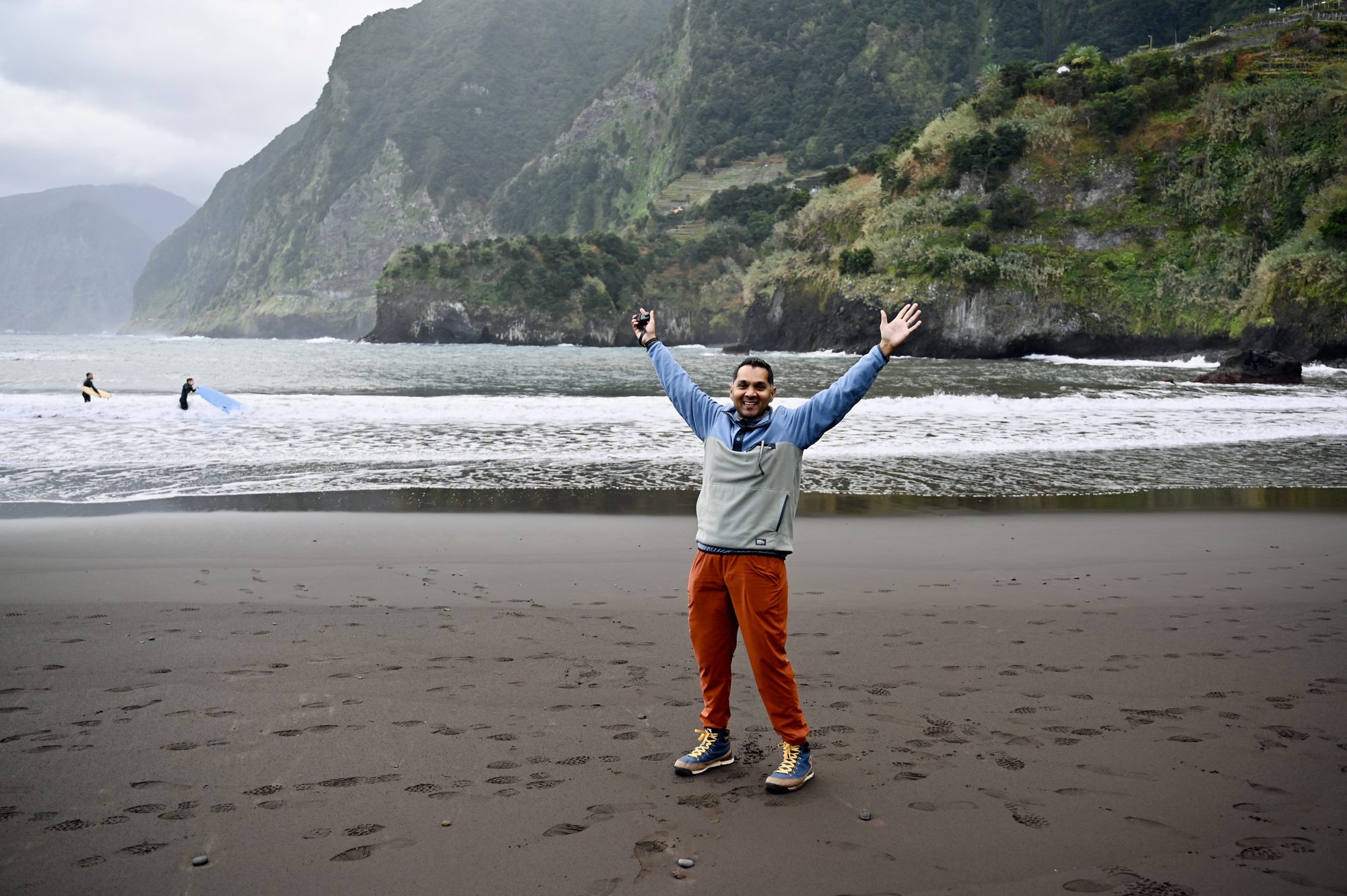
Seixal beach.
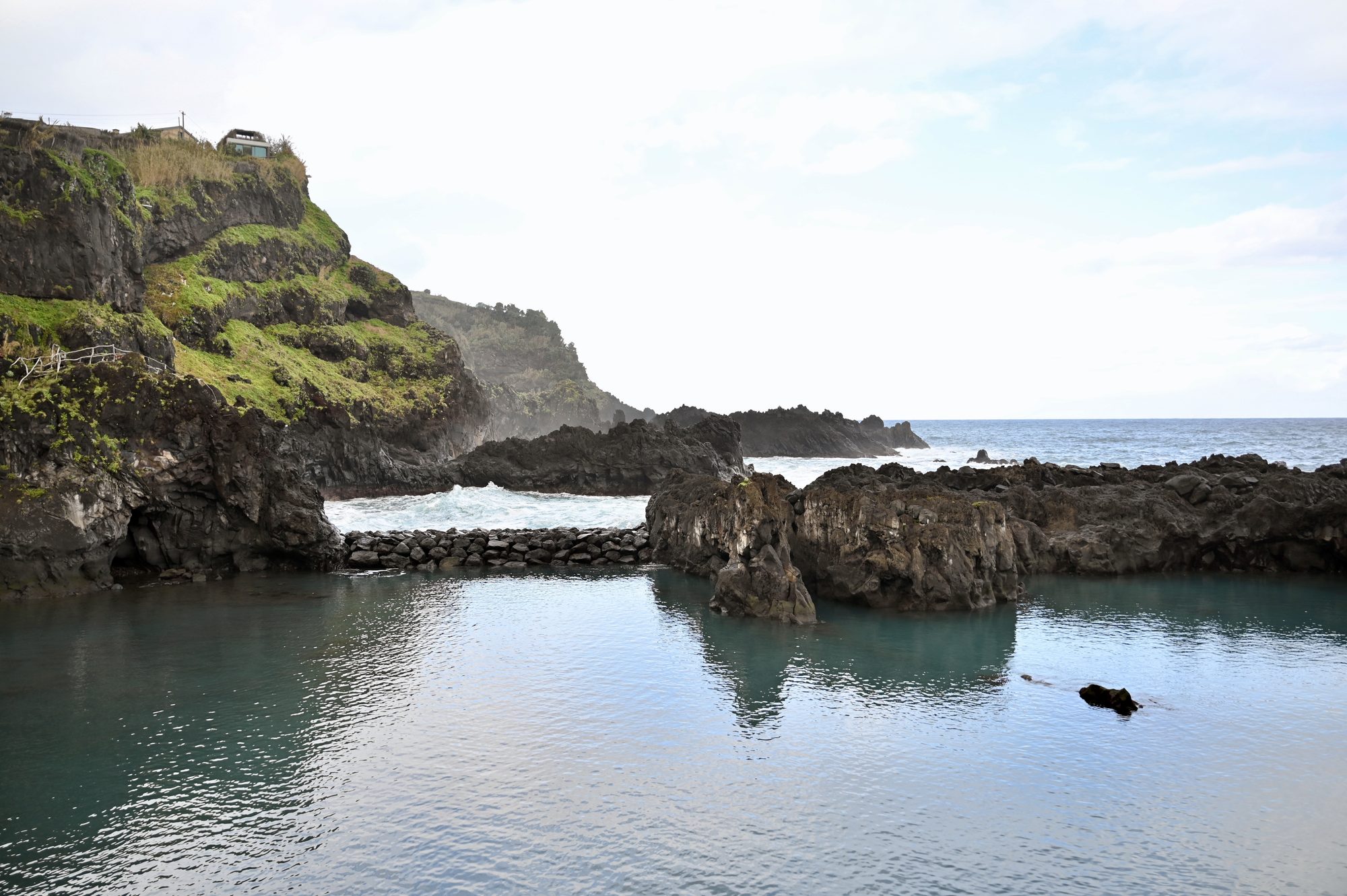
Seixal’s natural pools.
- Stop for a snack at one of the snack bars with gorgeous views in Seixal. They serve veggie burgers, sandwiches and Portuguese garlic bread.
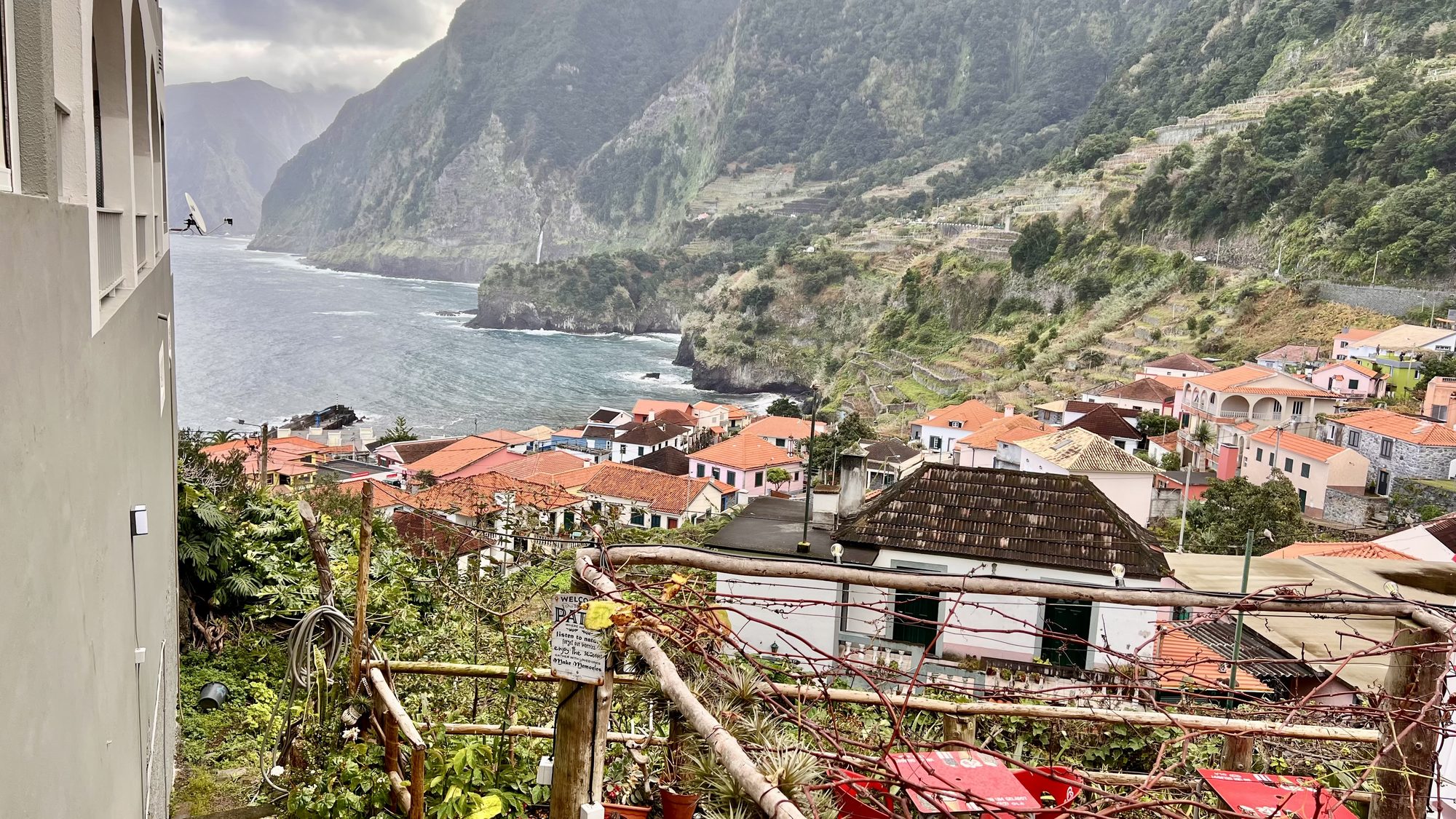
The view from the snack bar.
- Drive to the Miradouro da Ribeira da Janela and the beach, Praia da Ribeira da Janela, near the town of Porto Moniz. From a large parking lot, follow the walkway to an elevated viewing area over the sharp volcanic rocks rising out of the rough sea. Then walk over to the beach, covered in large boulders and smaller rocks, and enjoy the breeze and the scenery.
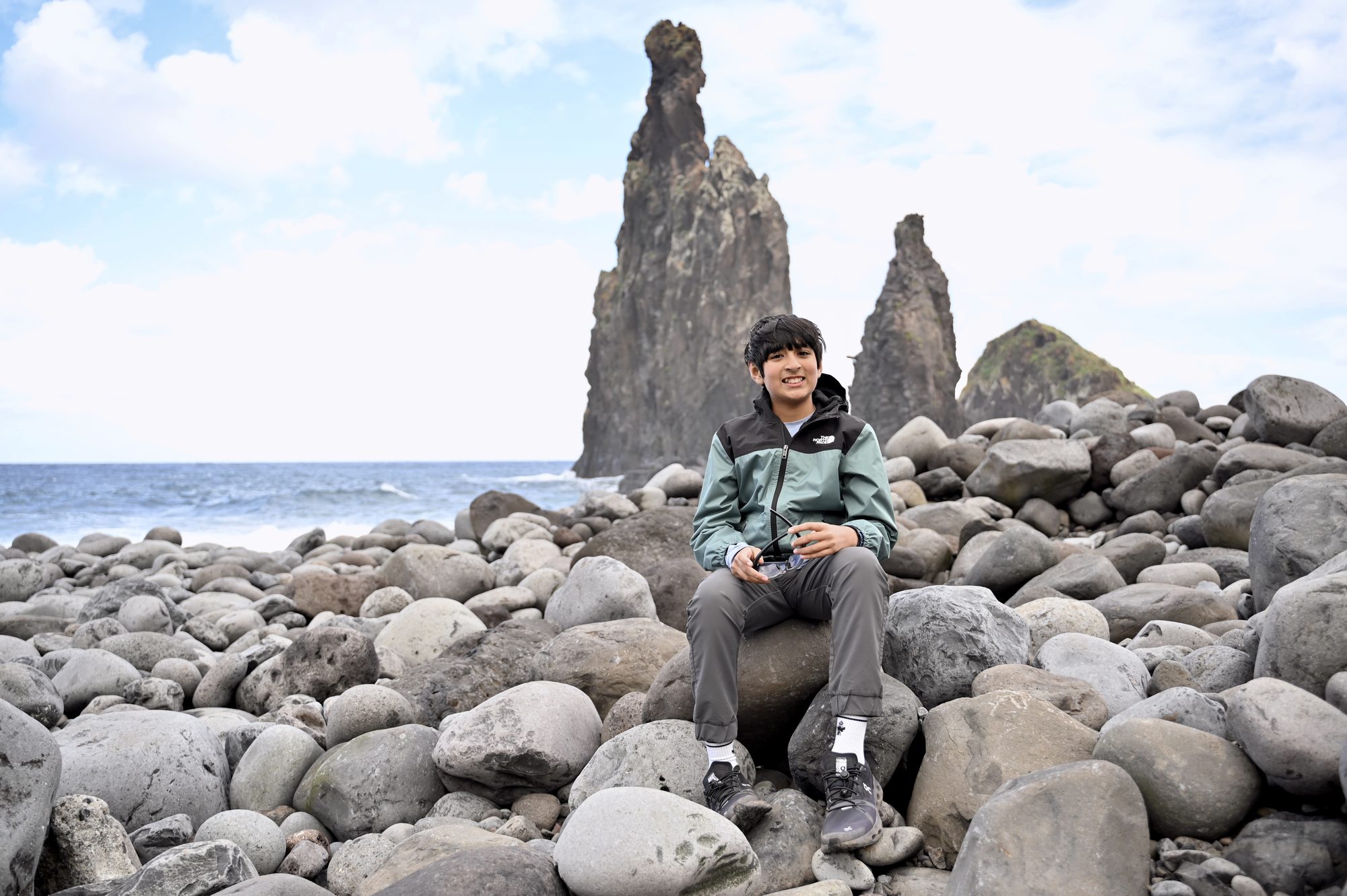
The view from the rocky beach.
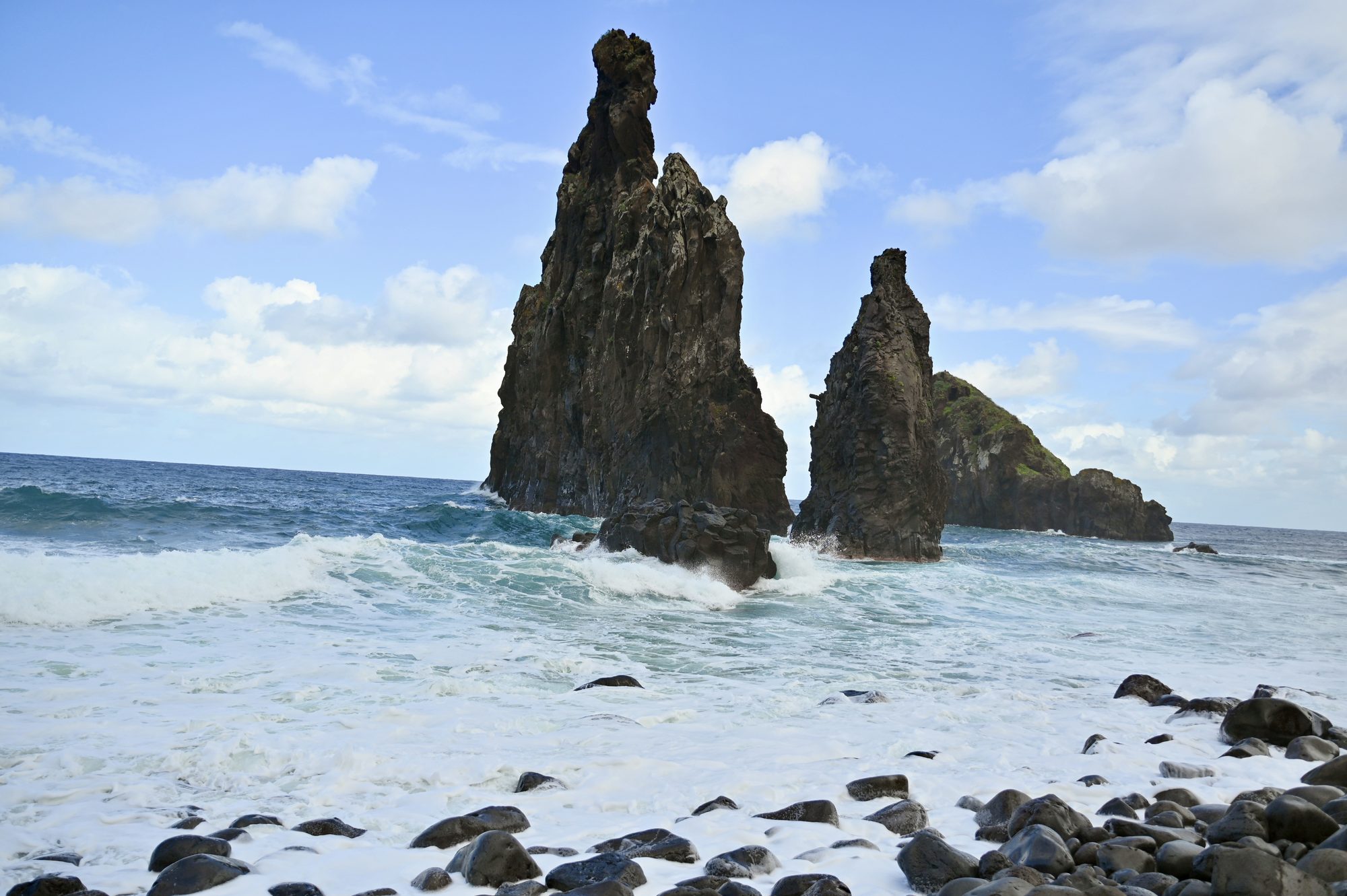
Probably the last thing the drone saw…
- Optional: If time permits, Porto Moniz has beautiful rock pools, natural swimming pools by the ocean and coastline to add to the day.
- The next stop takes you up on the cliffs to see the same coast from further away. Drive up the winding roads to the Miradouro da Eira da Achada. The parking lot has restrooms. A swing at this viewpoint makes for an interesting perspective in photos.
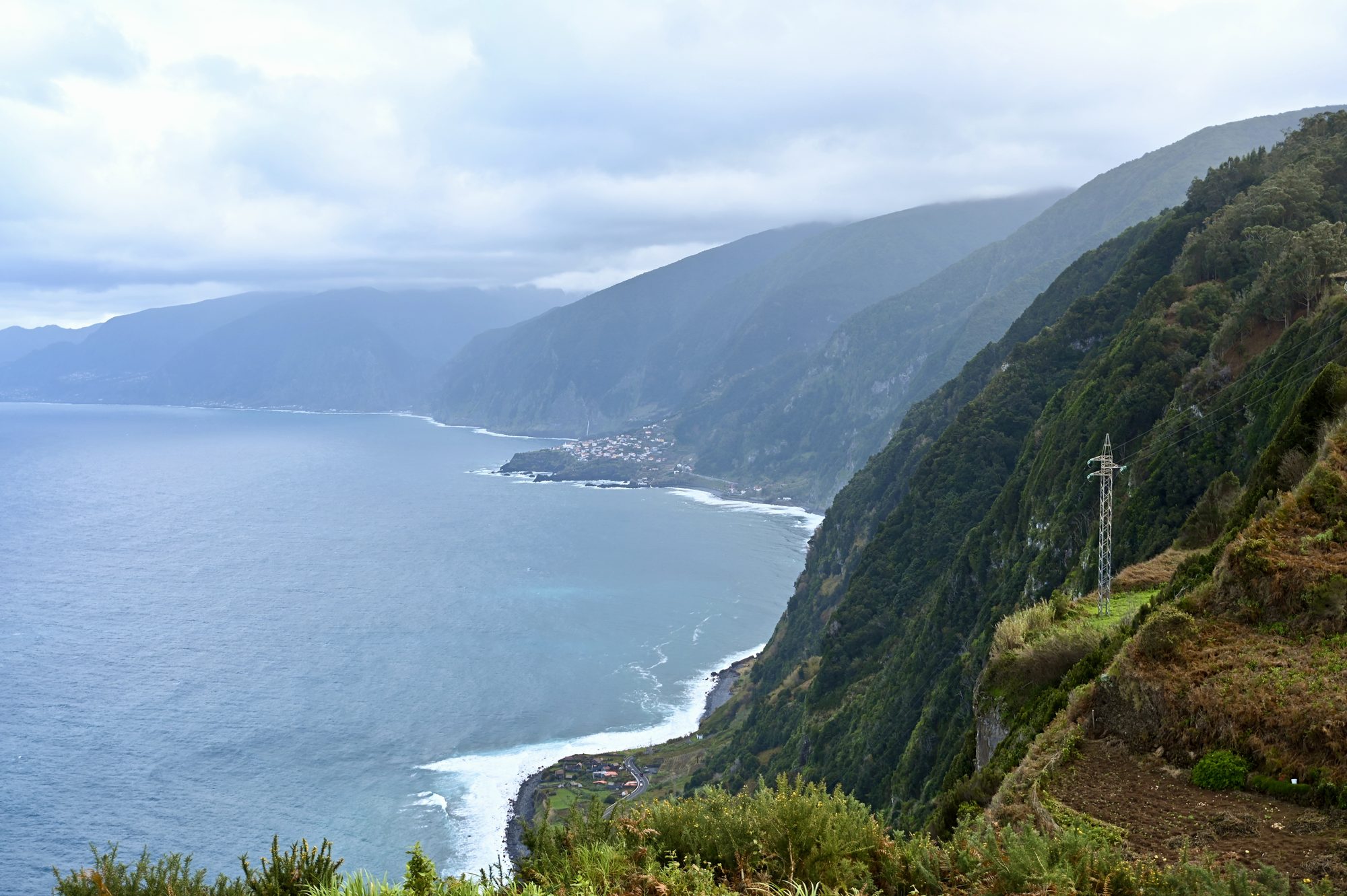
Miradouro da Eira da Achada.
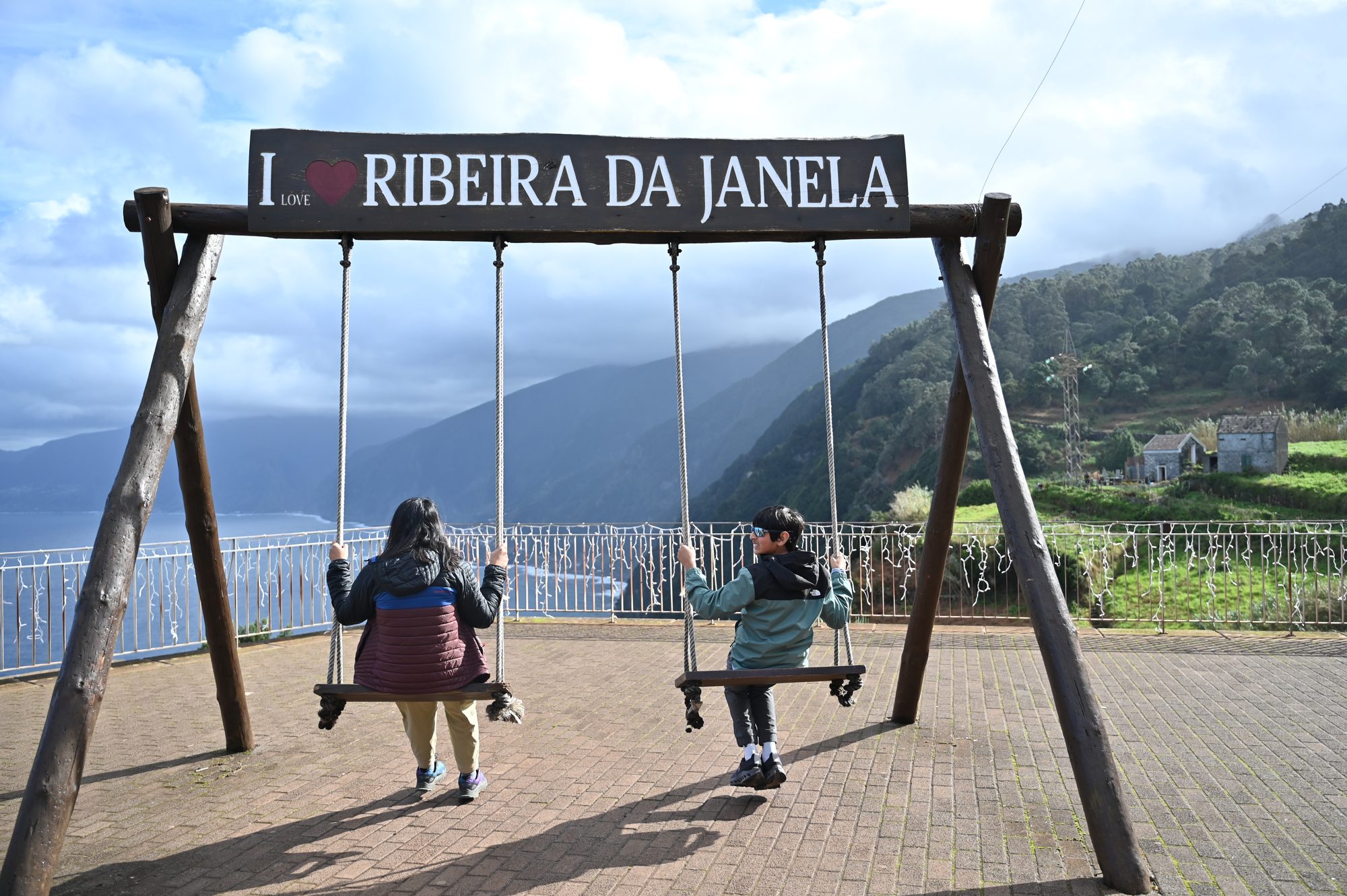
The swings at the viewpoint.
- From here, drive to the Fanal Forest. In Google Maps, search for “Lagoa do Fanal”, “Fanal parking” or “Fanal Forest” — the location should be a parking lot. There are paid, national-park-style restrooms. The walkway leads to the open areas of the forest, where you can wander around.
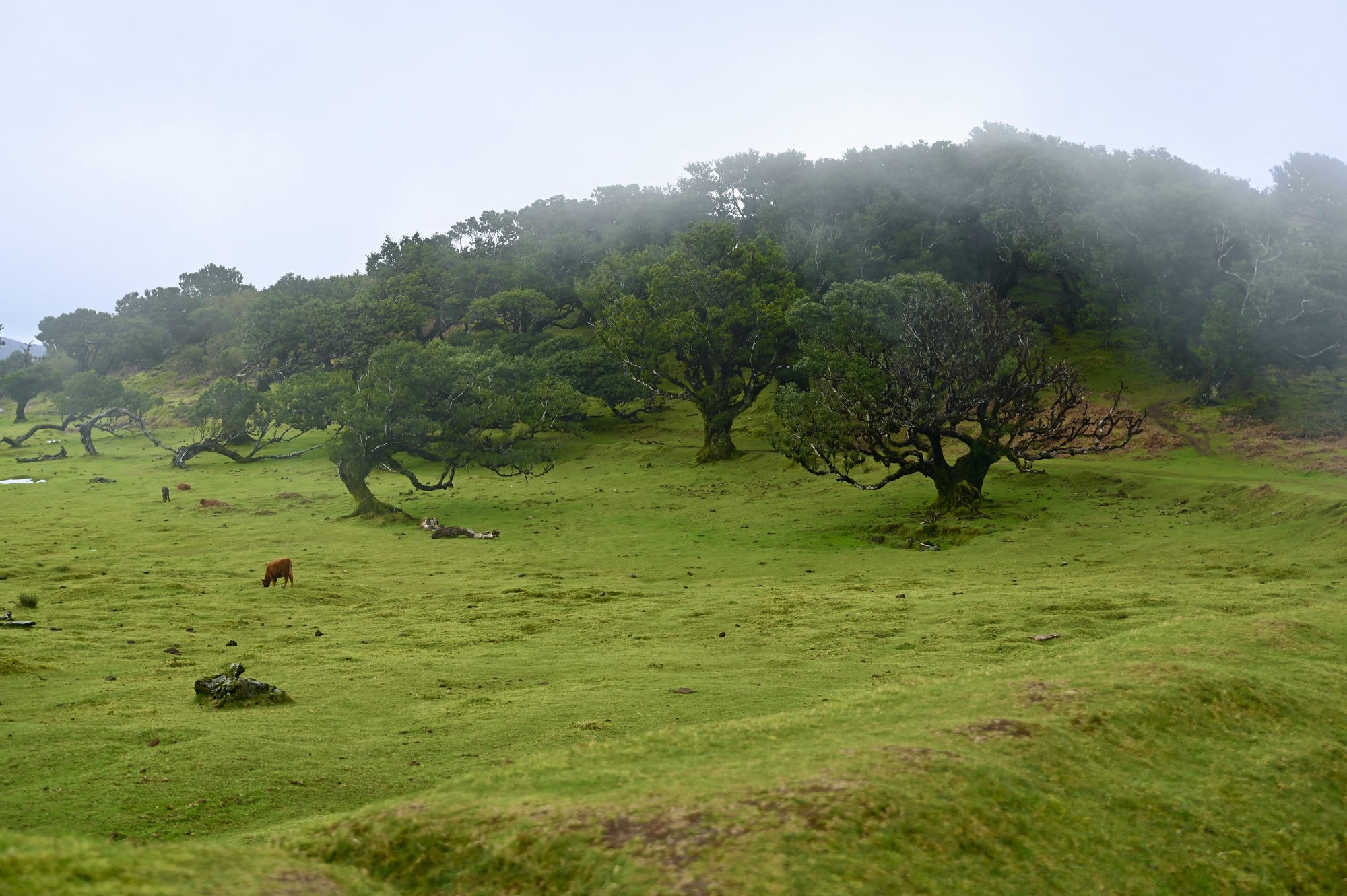
Fog and cows in the Fanal Forest.
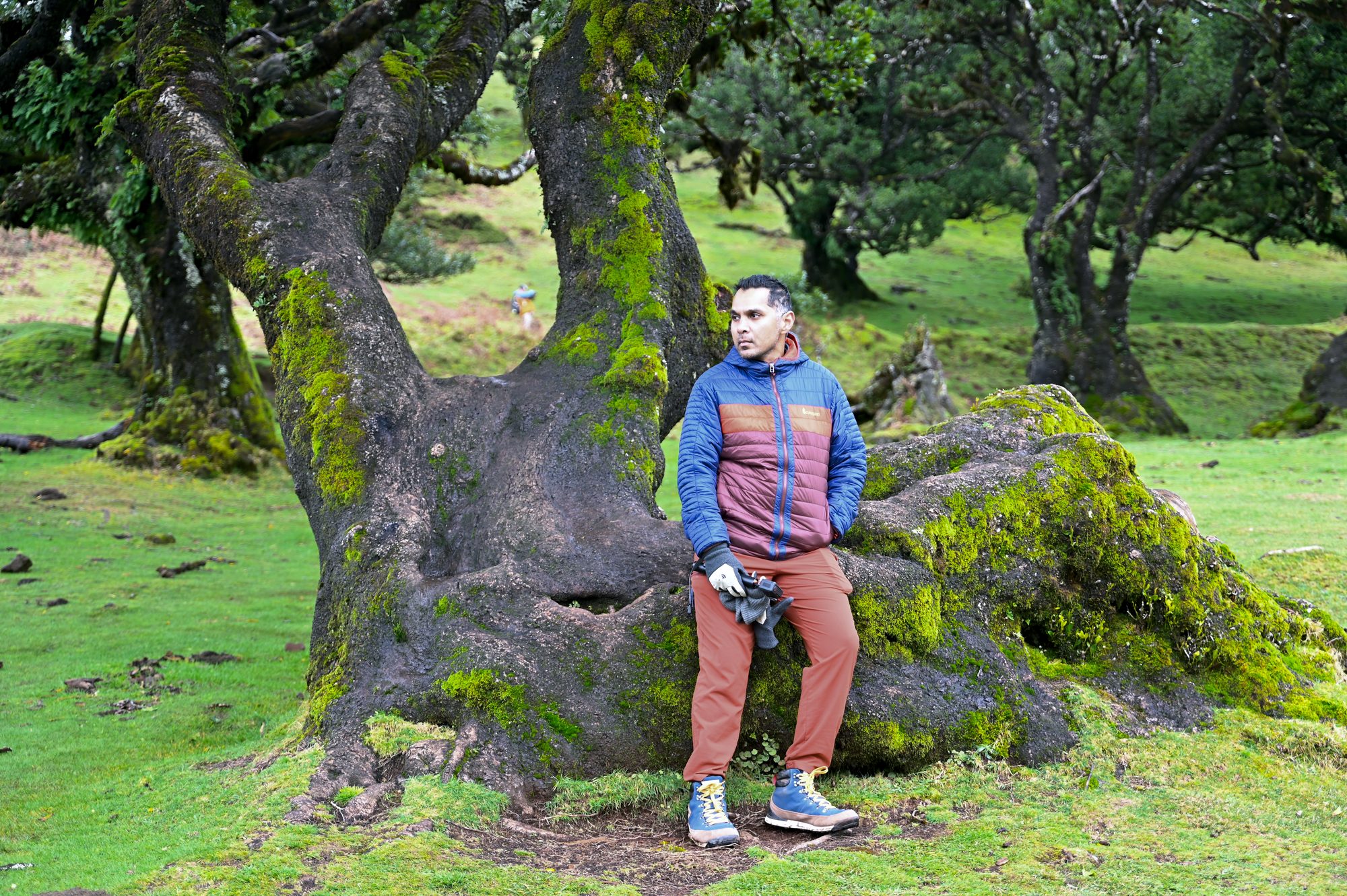
The Fanal Forest and its interesting trees.
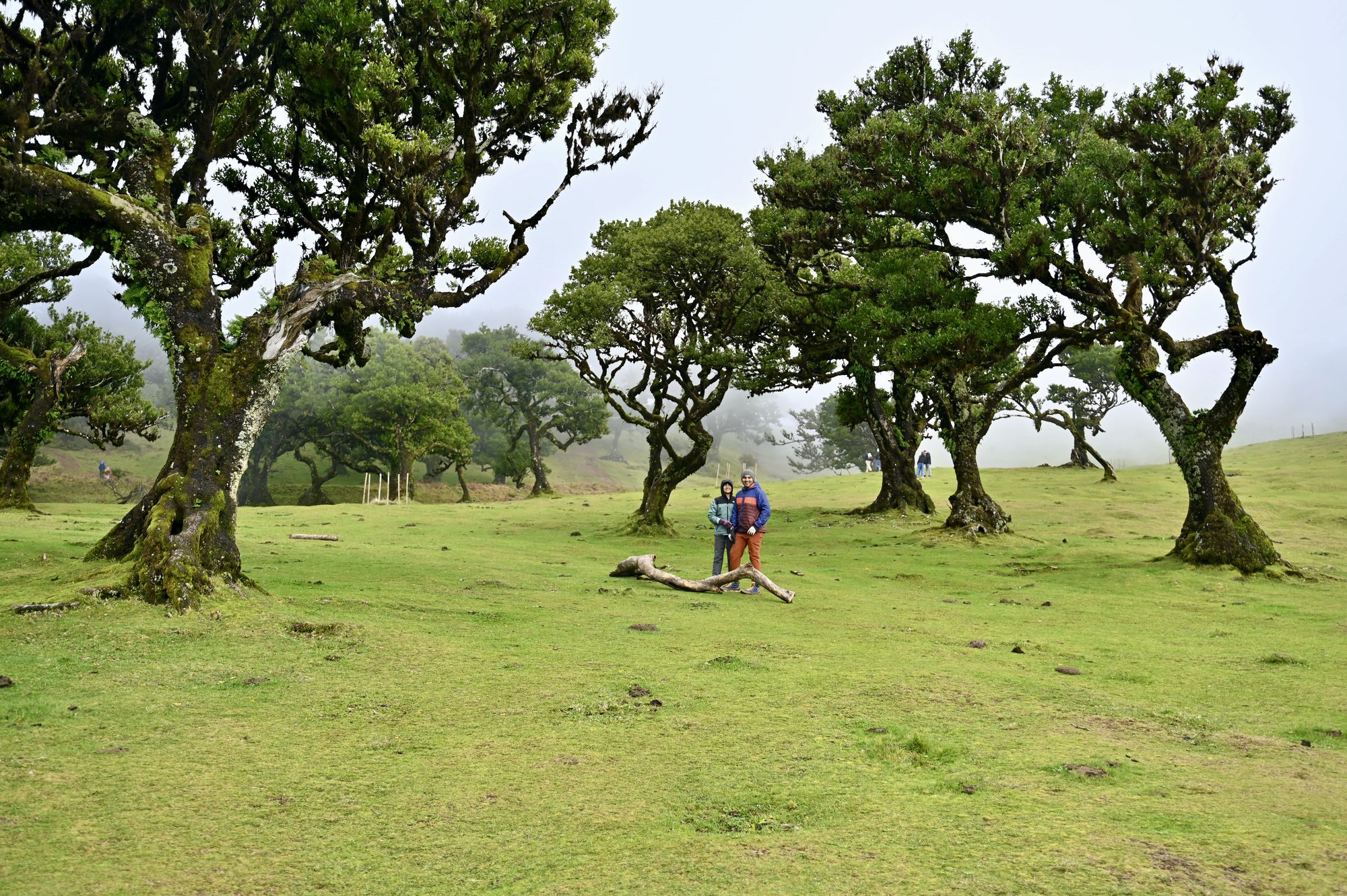
The Fanal Forest.
- Drive to the Cabo Girão skywalk. Park along the street or in the parking lot. There is a €3 per person fee to enter and enjoy the view from the skywalk. The view is amazing, but this spot is pretty touristy.
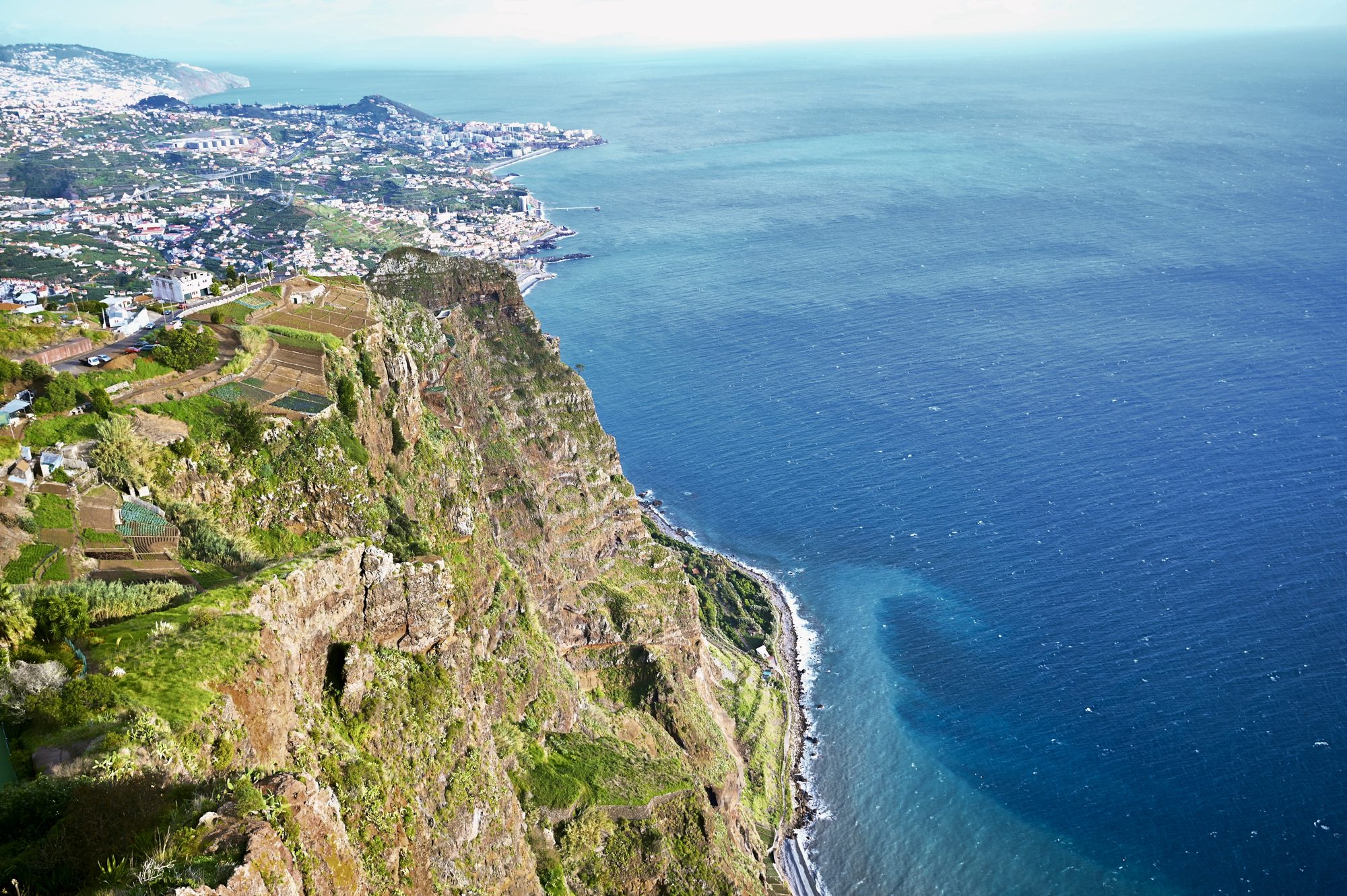
The view from the skywalk.
- Pick up dinner from a café or pizza place near the accommodation, to add some rest time to the day.
Day 4 — Central, north and east
- Begin with breakfast at the accommodation.
- Drive to Pico Ruivo (PR1.2) and hike 0.9 miles to the alpine hut. Parking can be challenging at the Achada do Teixeira lot, though with the current time-slot reservation system, traffic may be lighter. The café at the hut is cozy and has great food for lunch and snacks.
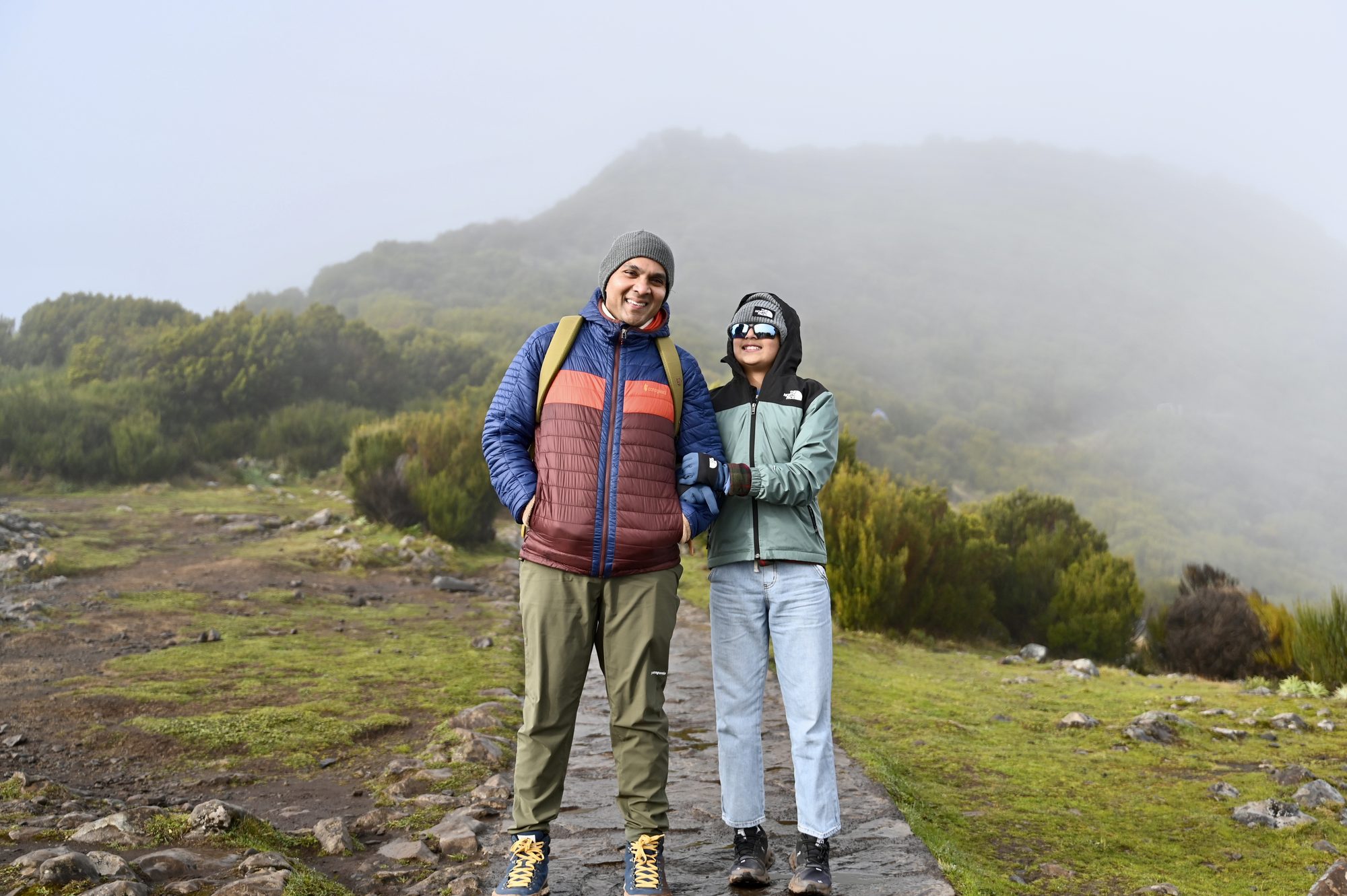
Thick fog at Pico Ruivo.
- Drive to the Aguage Waterfall (known locally as Cascata da Aguage). This small waterfall in a tiny village offers a glimpse of local village life. The short trail is overgrown with orchids, hydrangeas and beautiful local flora. It is quiet, and you can make it a longer hike by continuing past the waterfall.
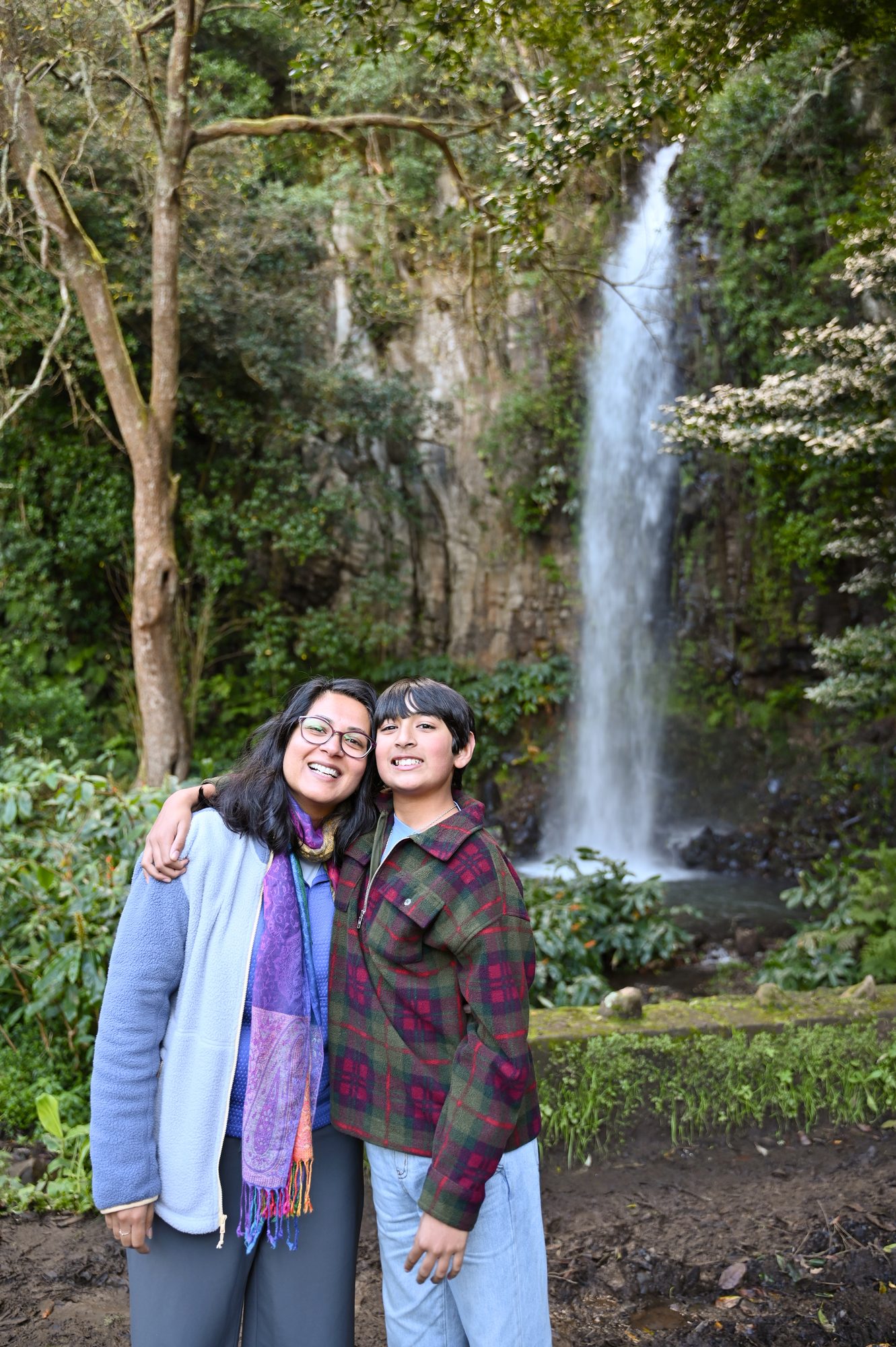
The waterfall.
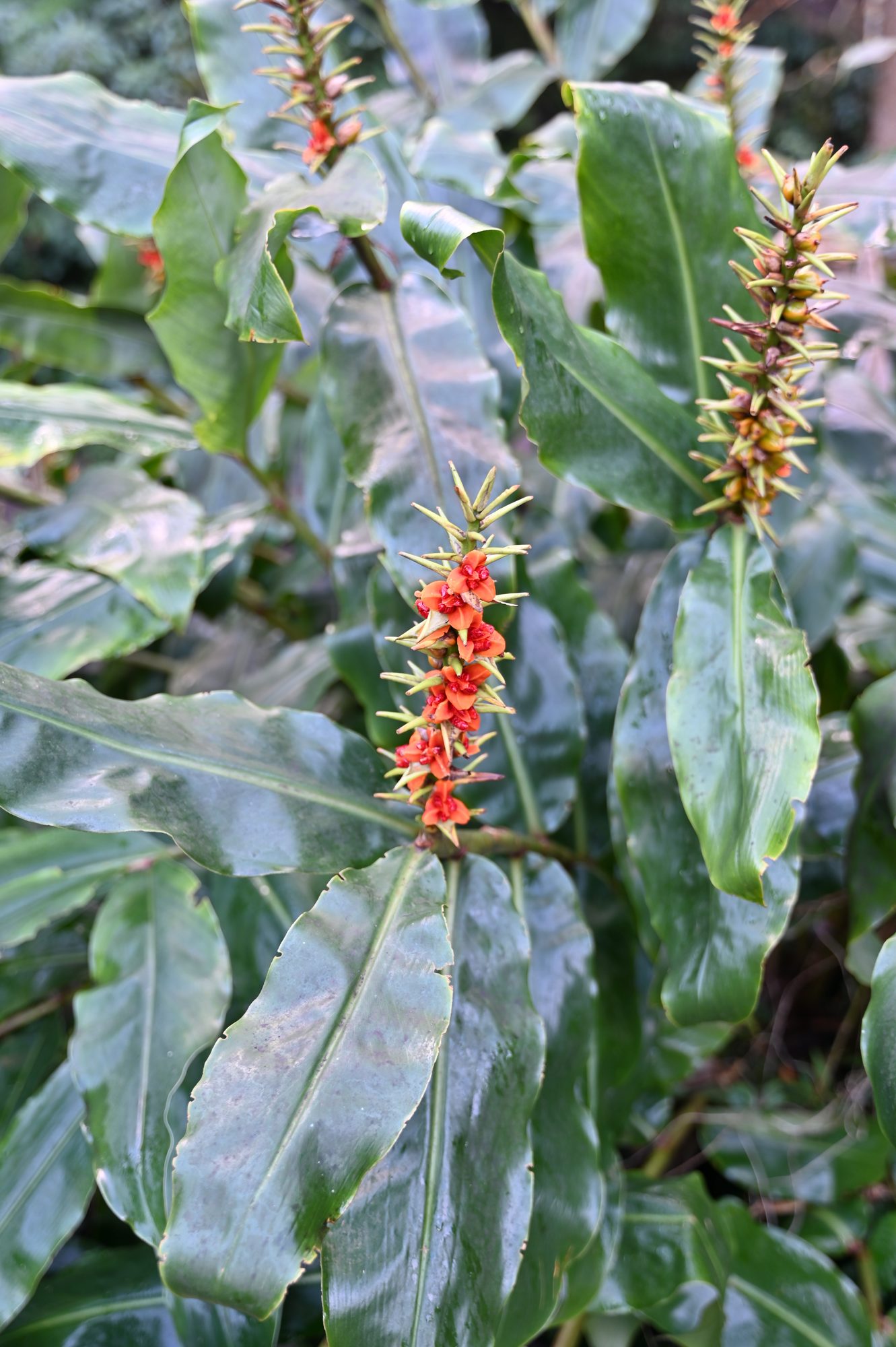
Unusual flowers on the hike.
- Next, drive to the town of Santana, with its cute downtown. Public parking lots are a short walk from downtown.
- Have lunch at a restaurant downtown.
- Walk around the Santana houses to see a building style popular in this area. The bright colors and steep, thatched roofs make for great photos.
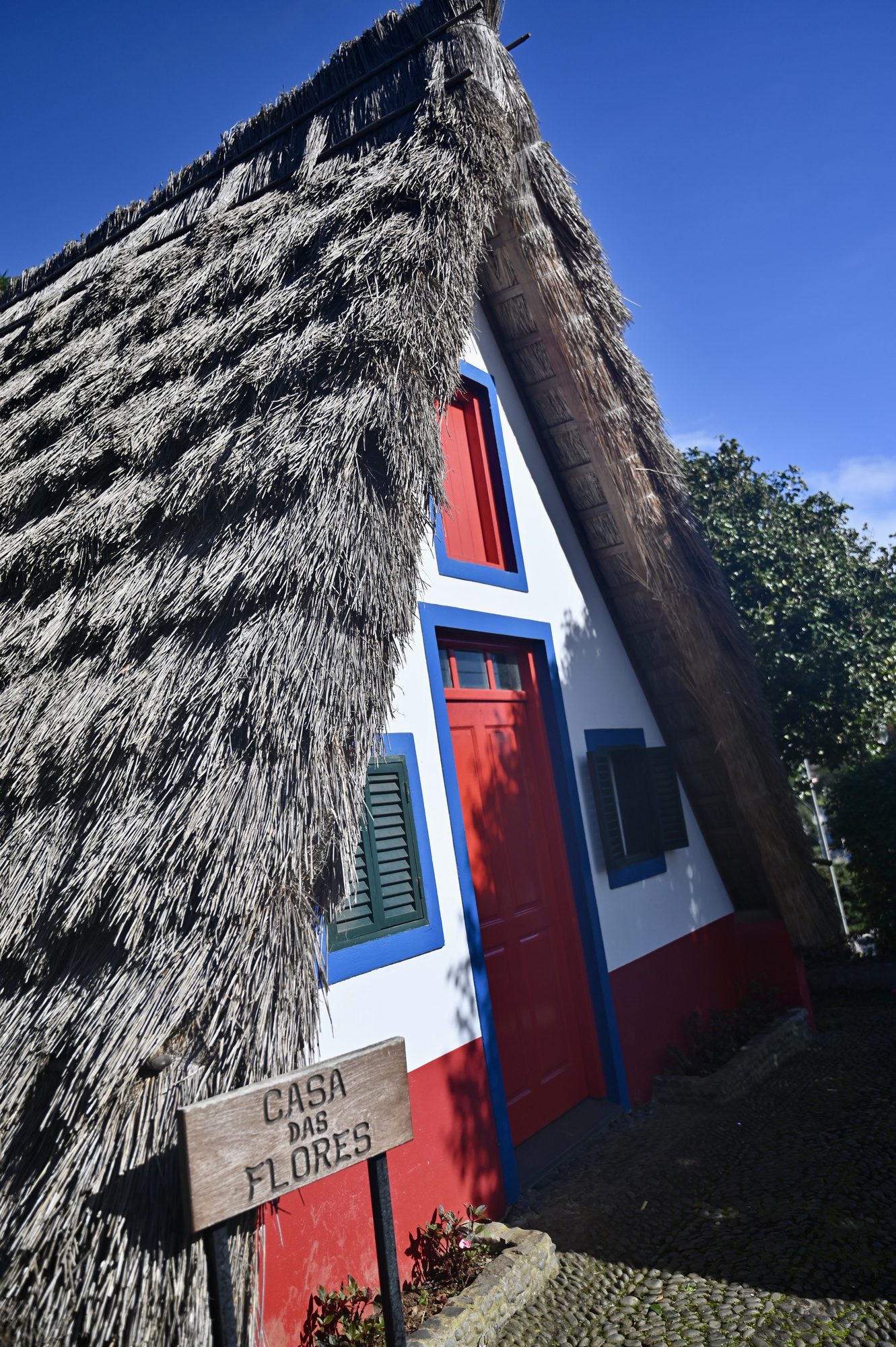
A Santana house.
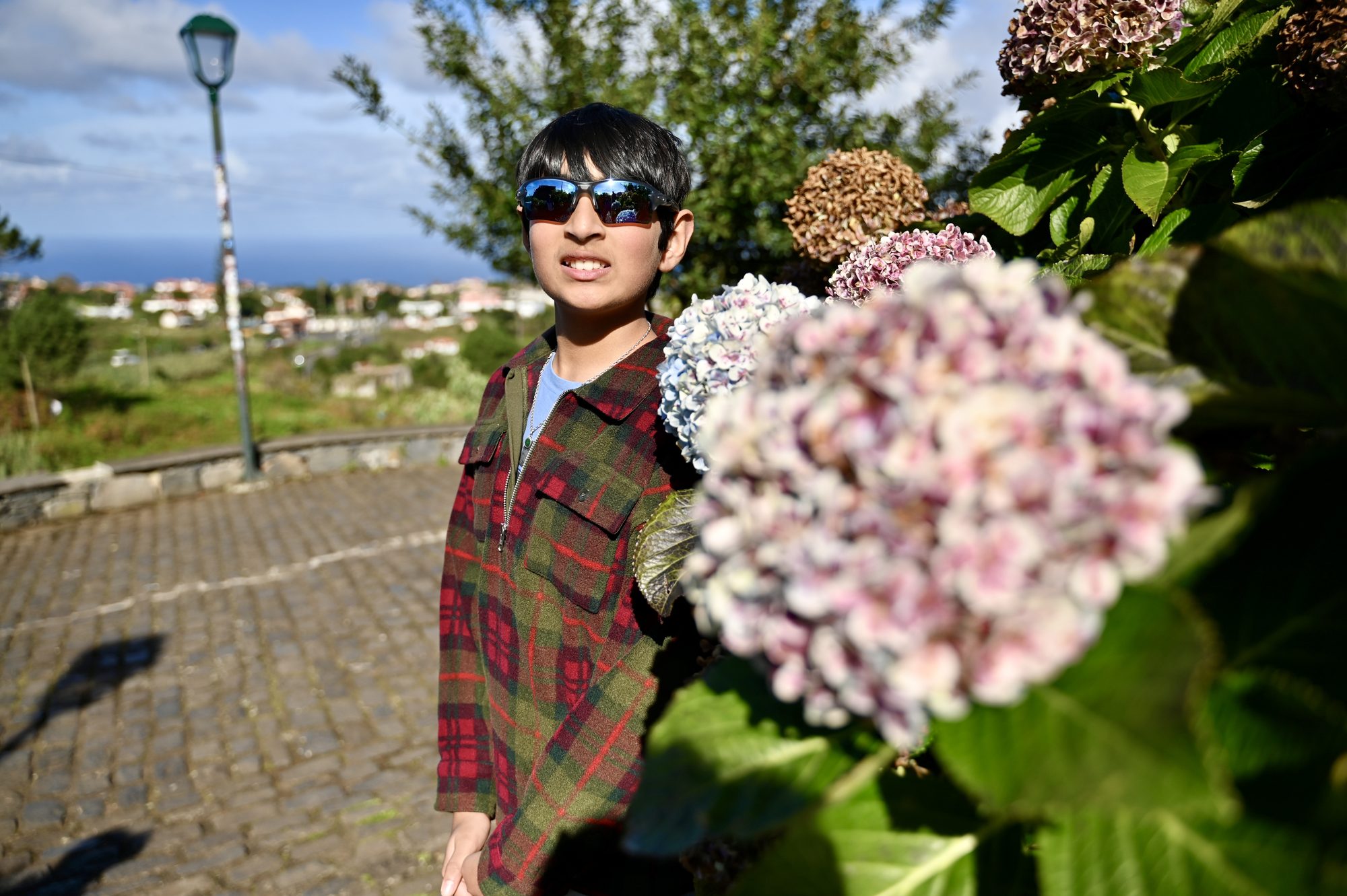
Beautiful hydrangeas on the walk around the Santana houses.
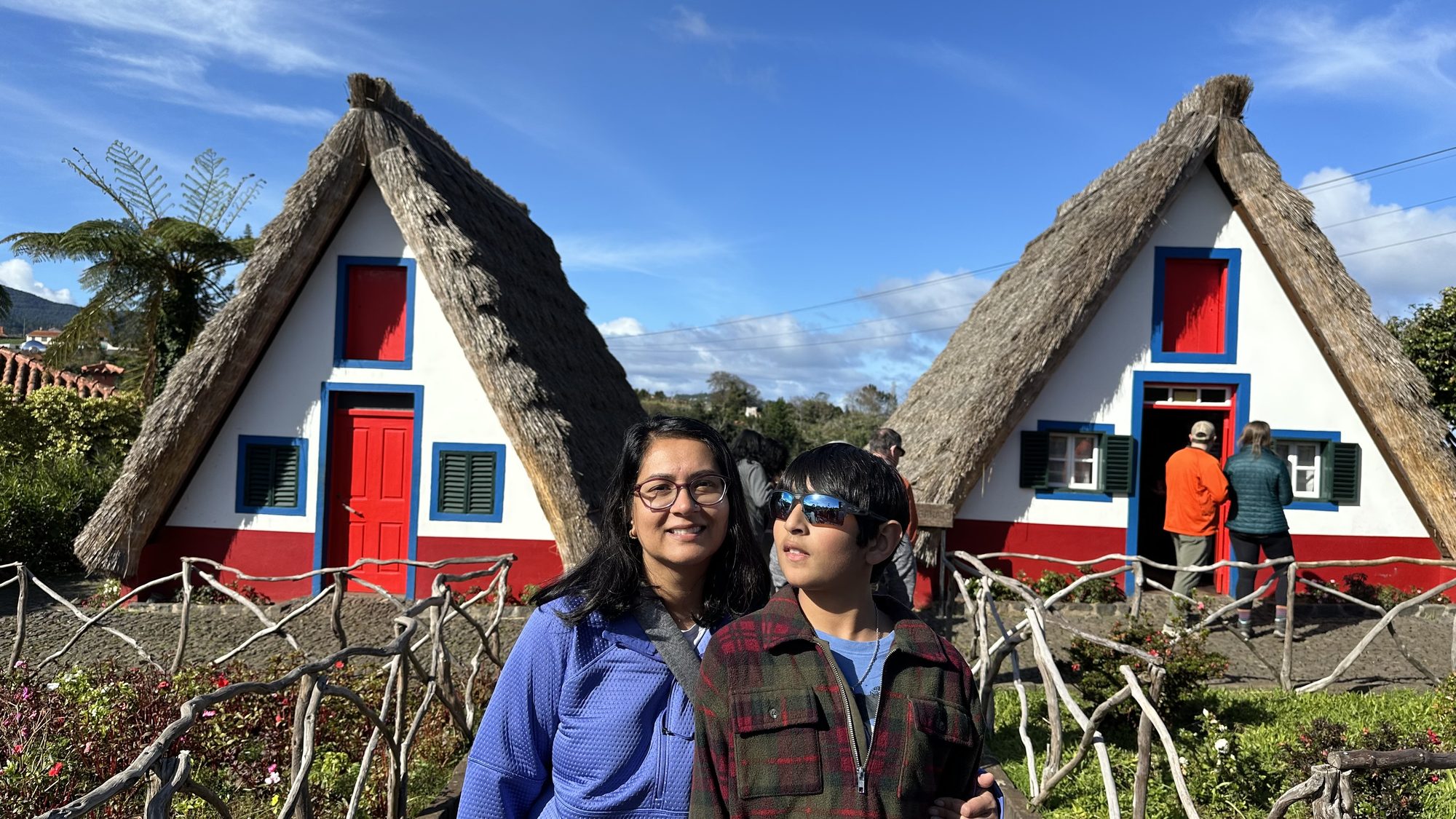
More of the Santana houses.
- After lunch, drive to the Miradouro do Guindaste. This viewpoint has a glass platform built out over the crashing waves, surrounded by lush, rugged mountains — a great spot for photos. A short walk to the right of the viewpoint gives you a different perspective of the landscape from a slightly higher point.
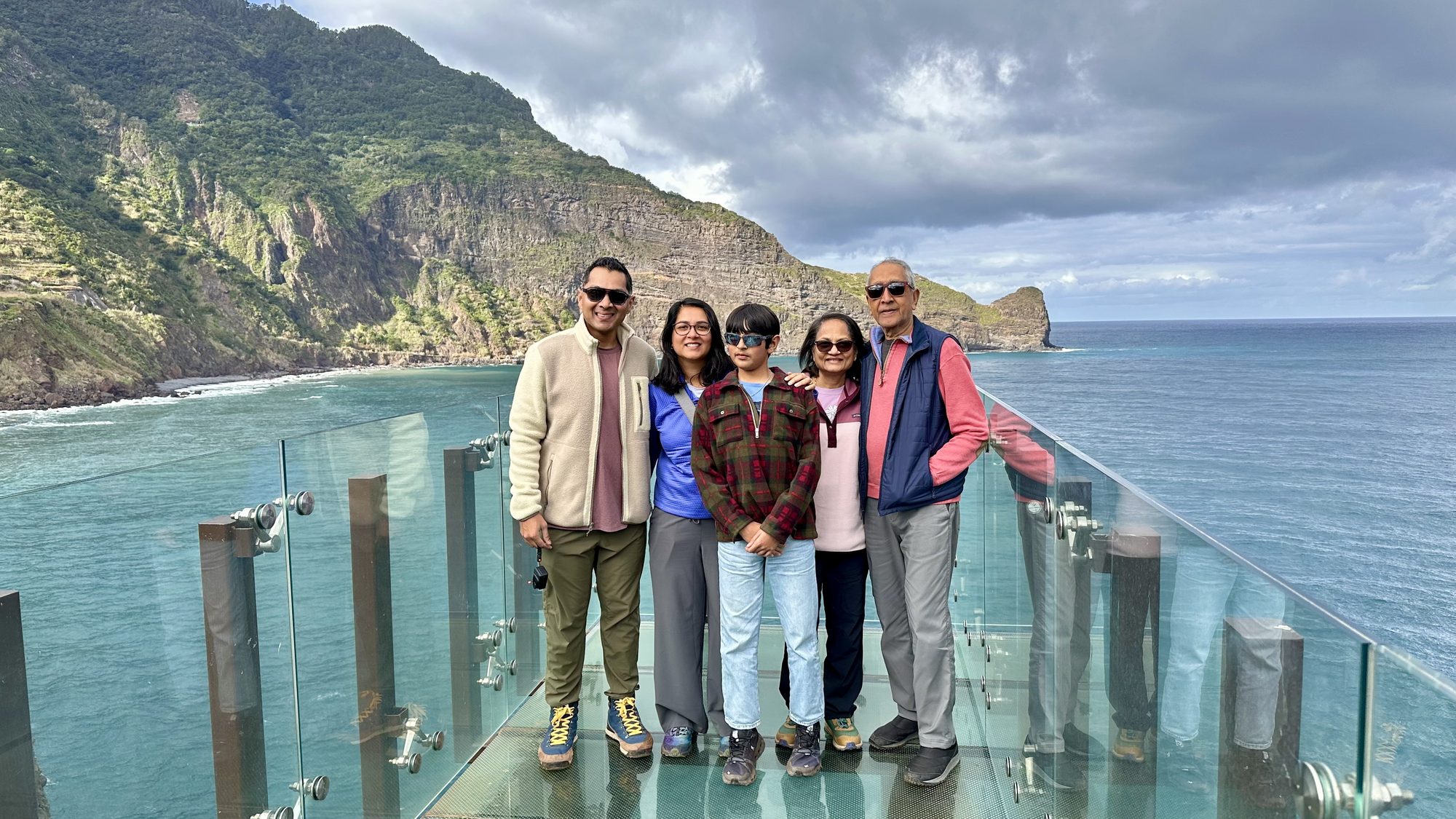
Miradouro do Guindaste.
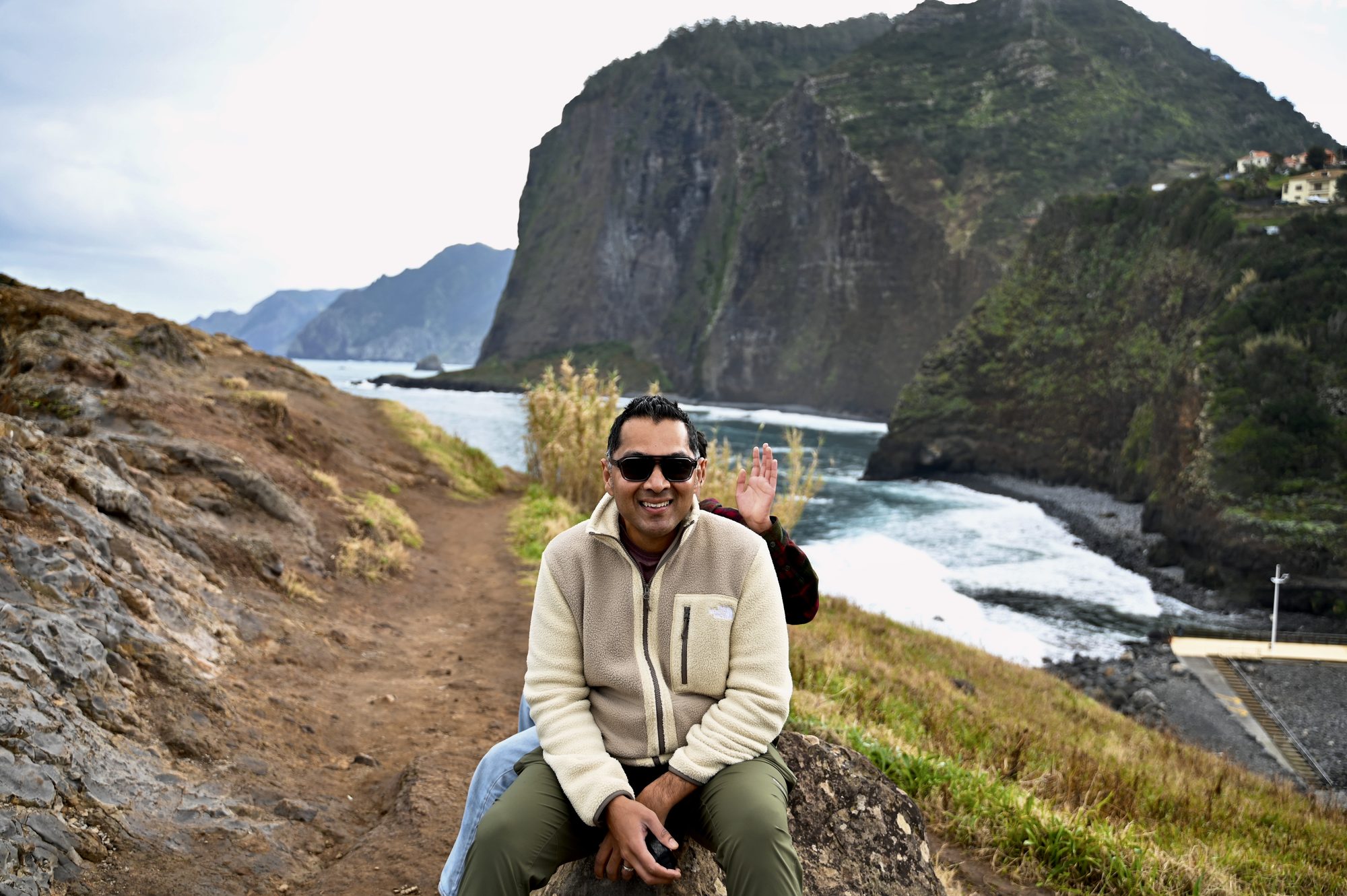
The view from the walk around the corner.
- Moving on towards São Lourenço, stop at the Miradouro da Ponta do Rosto. This viewpoint gives you great views of the São Lourenço peninsula without much walking. Ice cream and snack food trucks are sometimes in the parking lot.
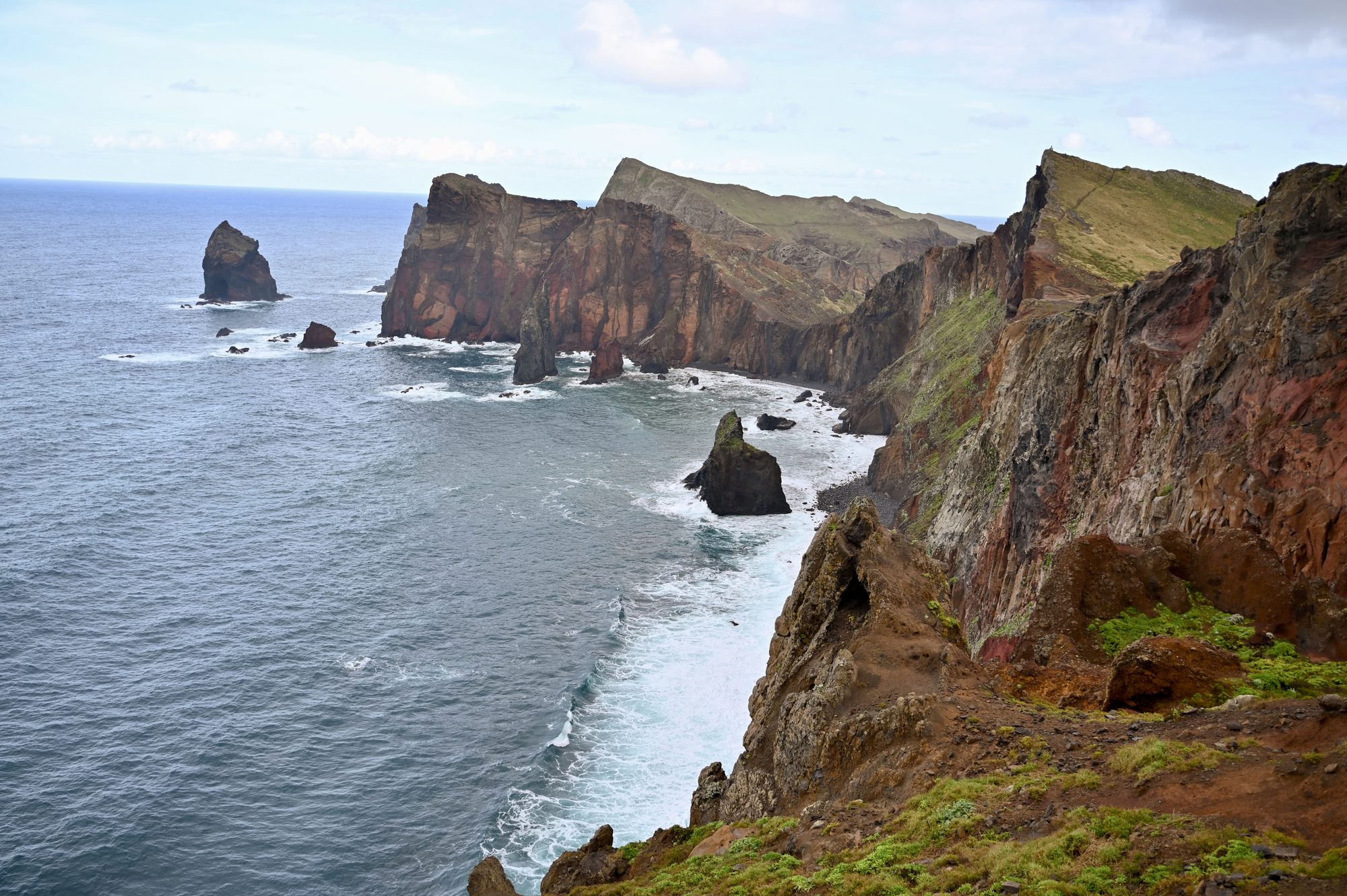
The view from the Miradouro da Ponta do Rosto.
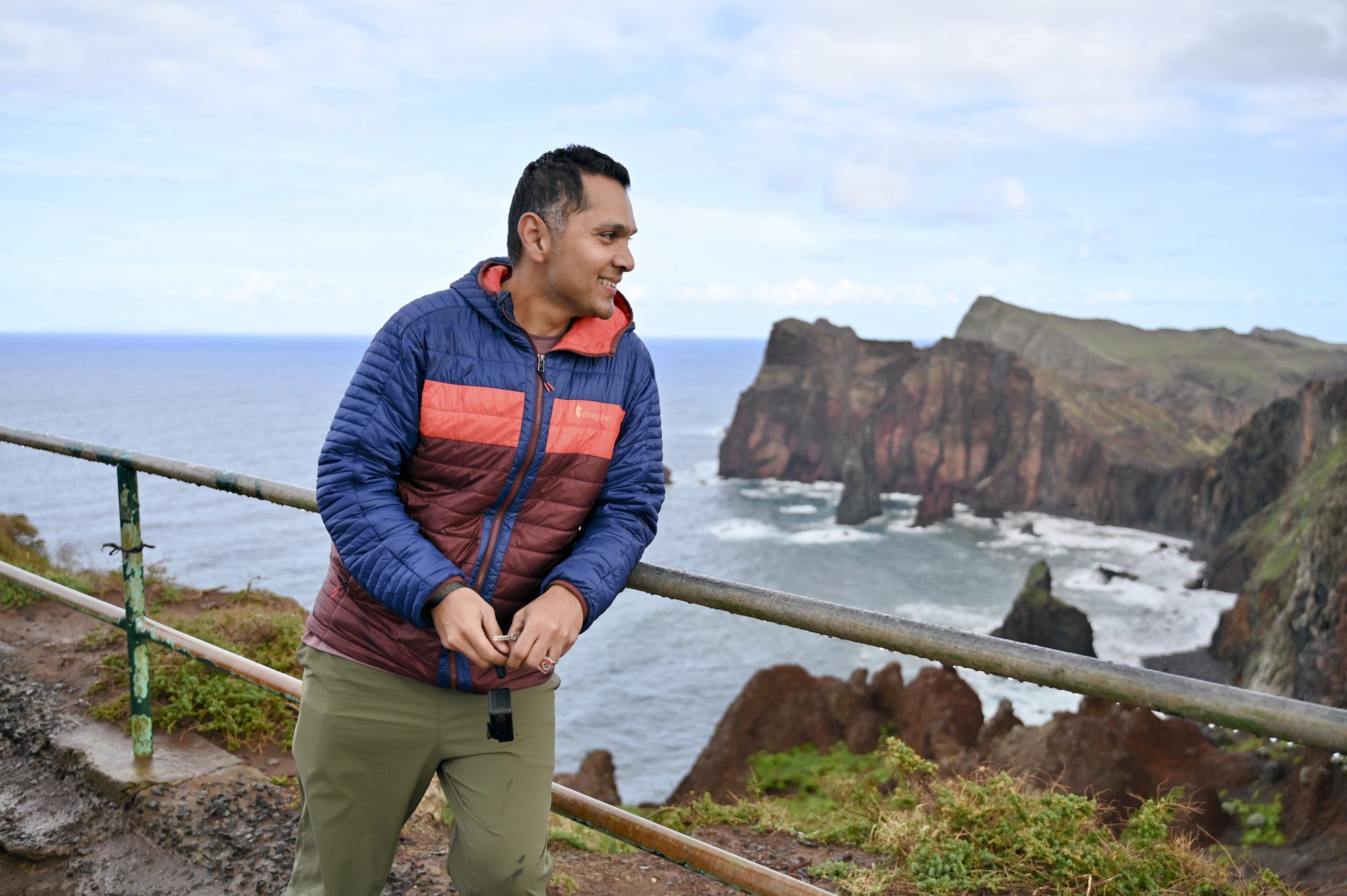
An amazing view from the area behind the railing.
- The next hike is one of the most popular in Madeira: the Vereda da Ponta de São Lourenço (PR8). It requires a reservation on the official Madeira hiking website. Enjoy sweeping views of the coastline, and bright red hills covered in lush green grass, from many different angles on this must-do hike. It is 4–6 miles depending on the route you choose. Part of the trail has boardwalks, which help in muddy conditions, though some sections stay muddy and wet. Many small side trails branch off the main trail for more views.
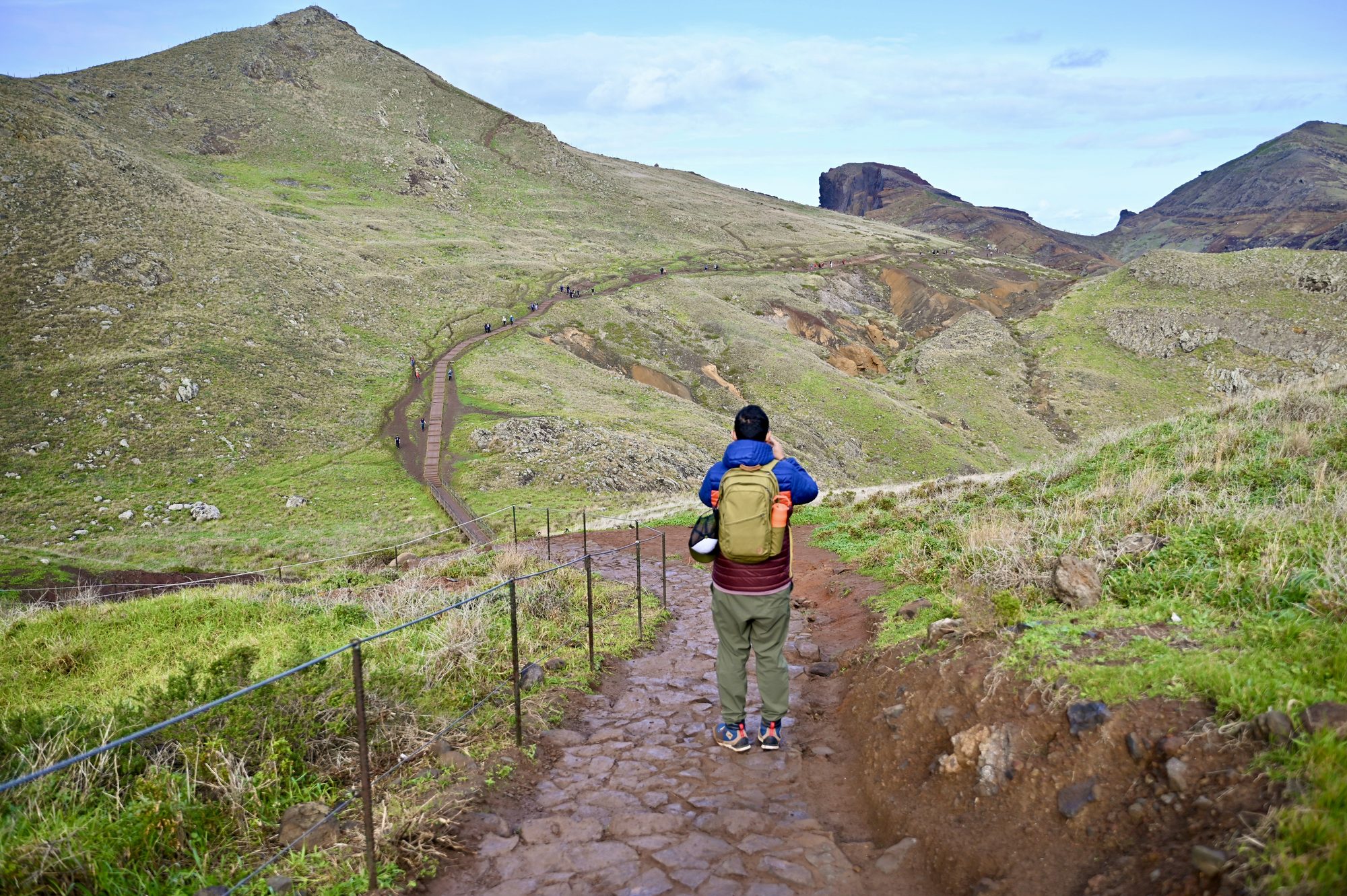
The beginning of the trail.
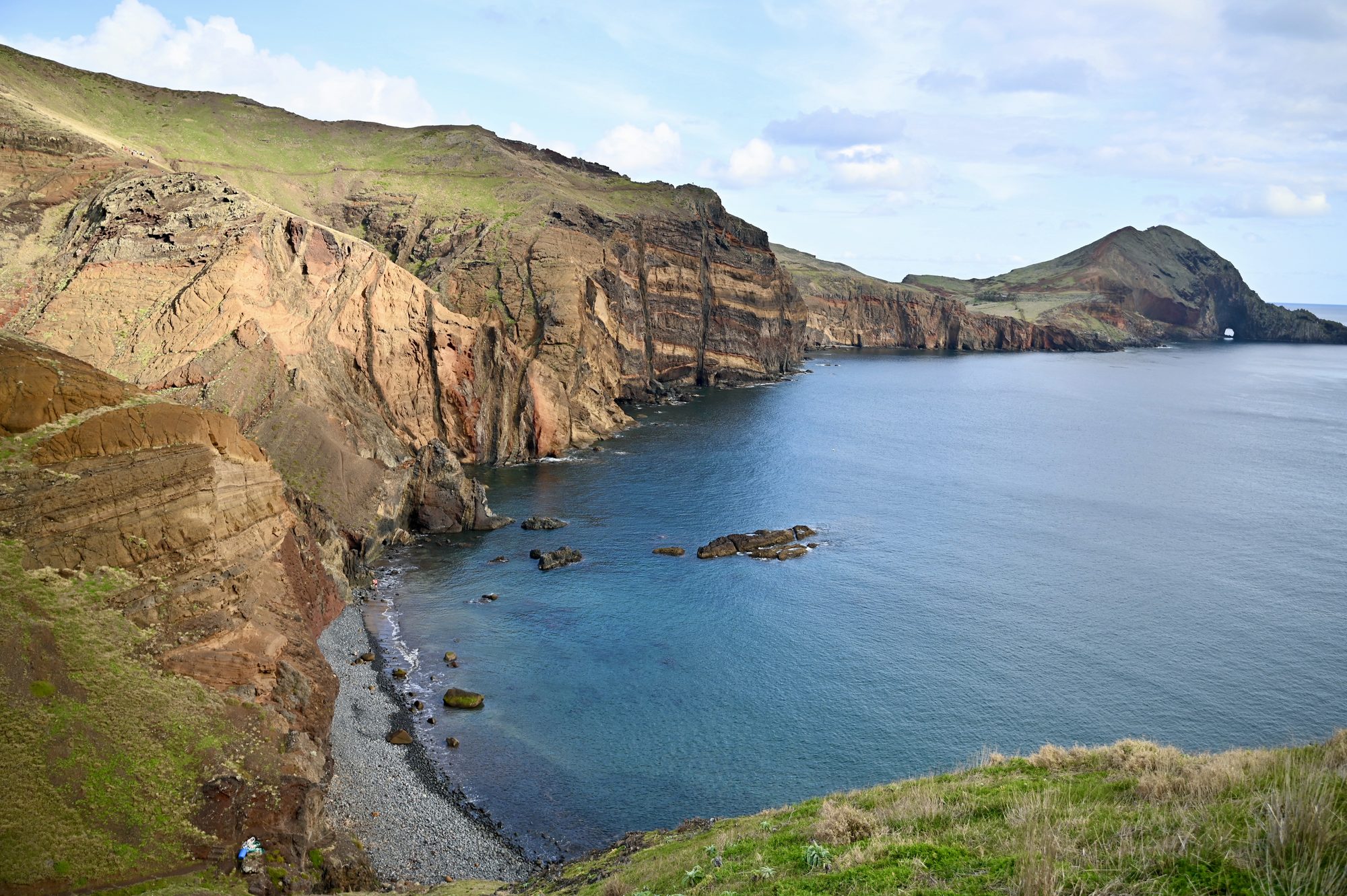
The beach. Boats sometimes offer trips back from here.
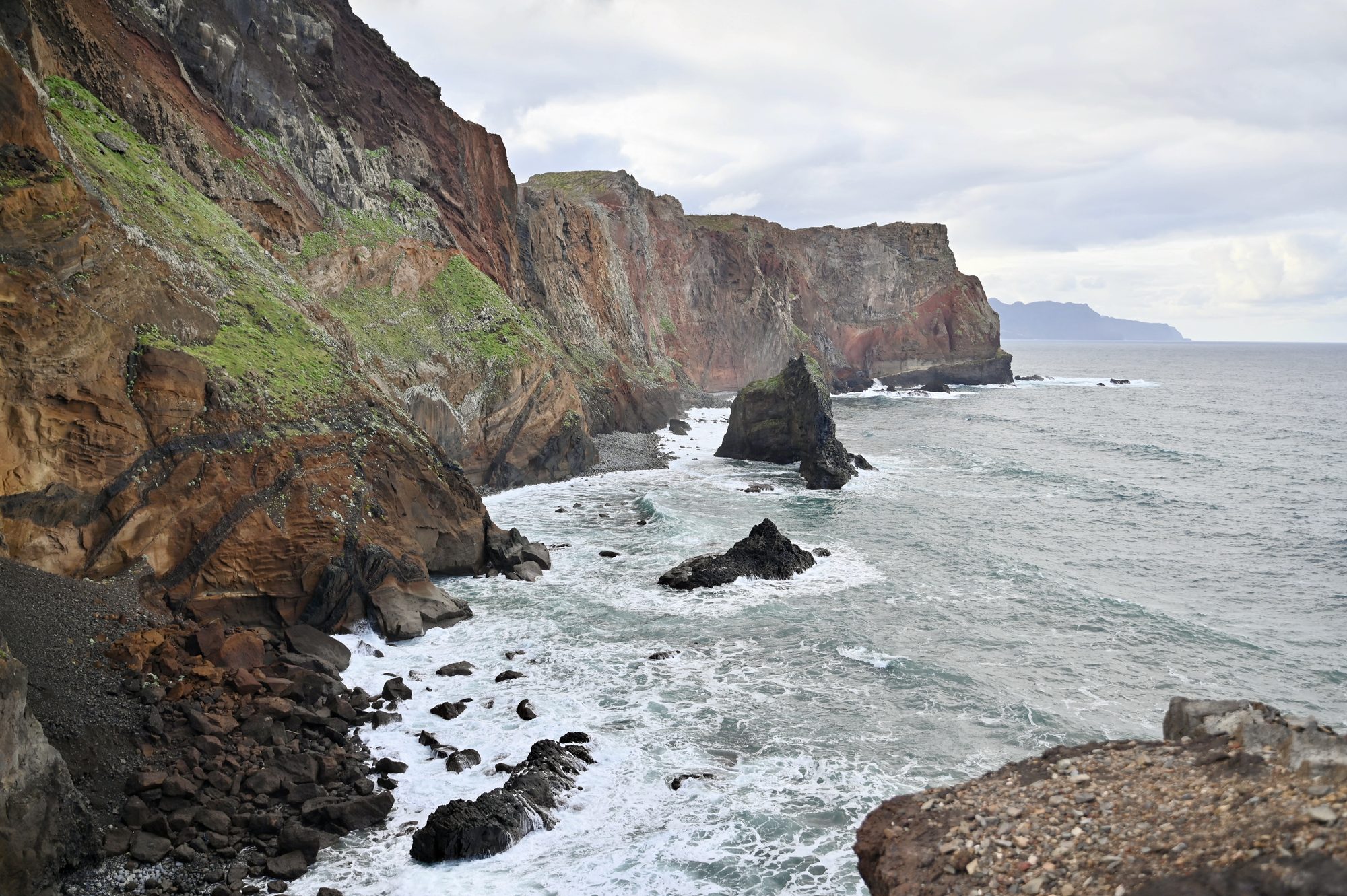
The view towards the ocean from the trail.
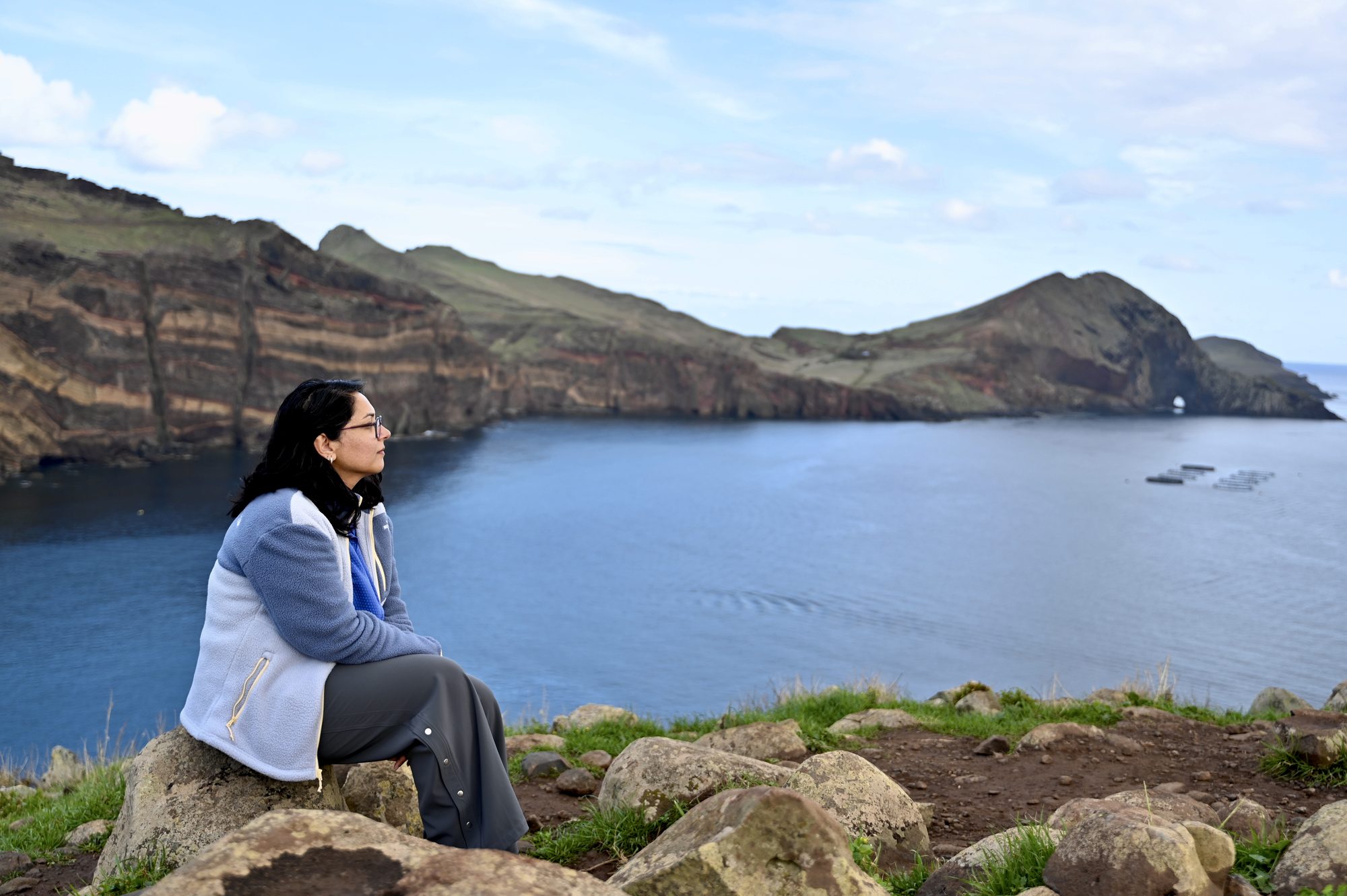
Looking out at the gorgeous view.
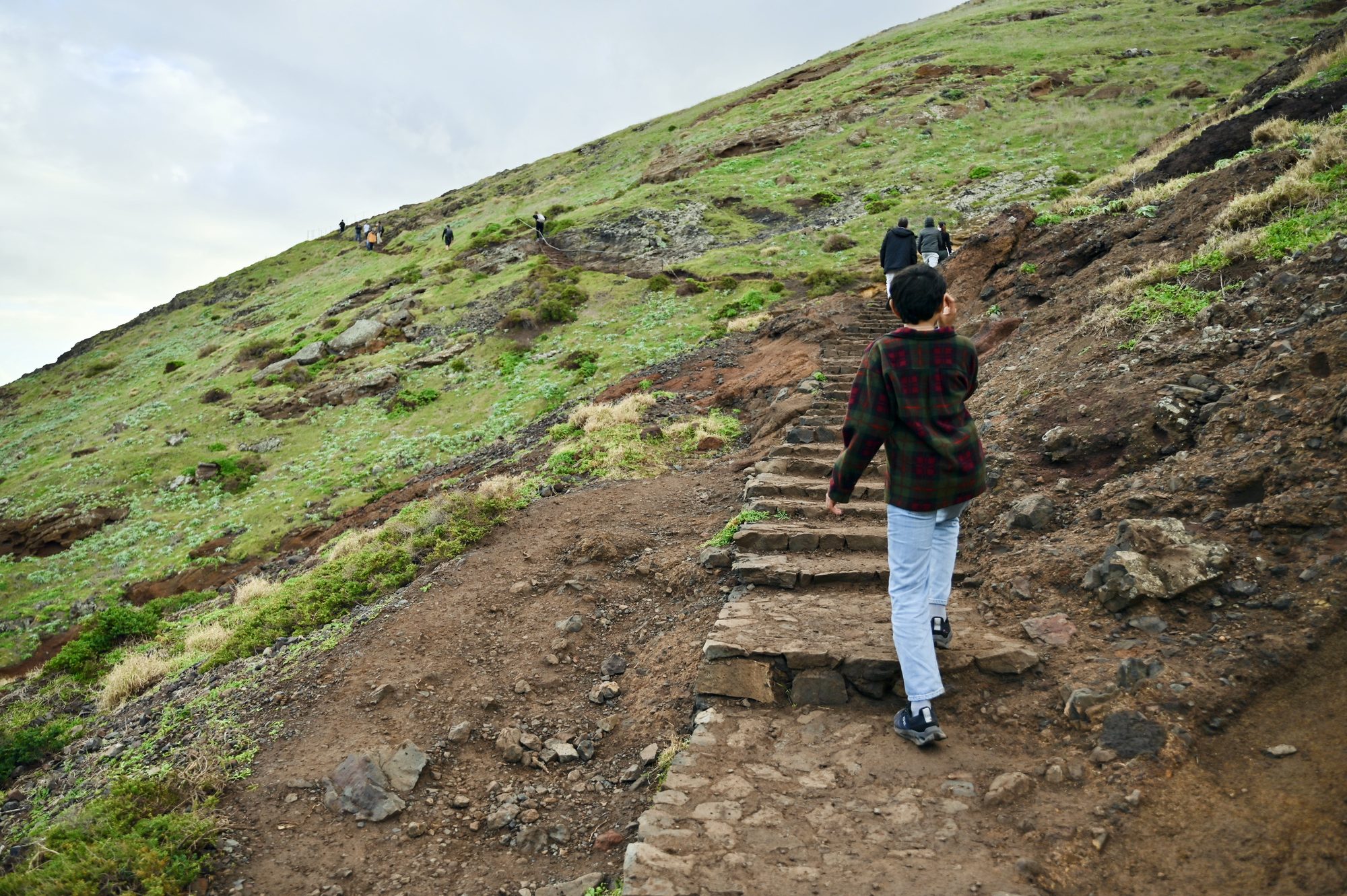
A mud and stone trail across the side of the hill.
- Optional: Skip Pico Ruivo on this day. Instead, begin at the Miradouro de São Cristóvão and enjoy the views of green mountains ending in the bright blue ocean. Next, drive to the Miradouro do Arco de São Jorge and visit the town of São Jorge. Hike the Levada do Rei (PR18) in this area before heading to Santana, then follow the rest of the day as time allows.
- For dinner, we recommend Sabor de India. We enjoyed the comforting food after a long day of hiking. A reservation is required.
- Tip: For aviation enthusiasts, Madeira’s airport is famous for its dramatic terrain, high winds that call for special maneuvers, and its specially built runway. Our son insisted on adding plane spotting to our itinerary. We found the spot on Google Maps as “Madeira airport spotting”. Driving up a bit from there and turning onto a slightly elevated street gave us an excellent view of the runway. It is next to a gas station, across the street from the chain-link fence around the airport. Several people were there with large cameras with the same idea. Check which times of day have more landings and takeoffs to make it worthwhile. We stayed about 45 minutes, until the last evening flight had left, before heading back to the accommodation.
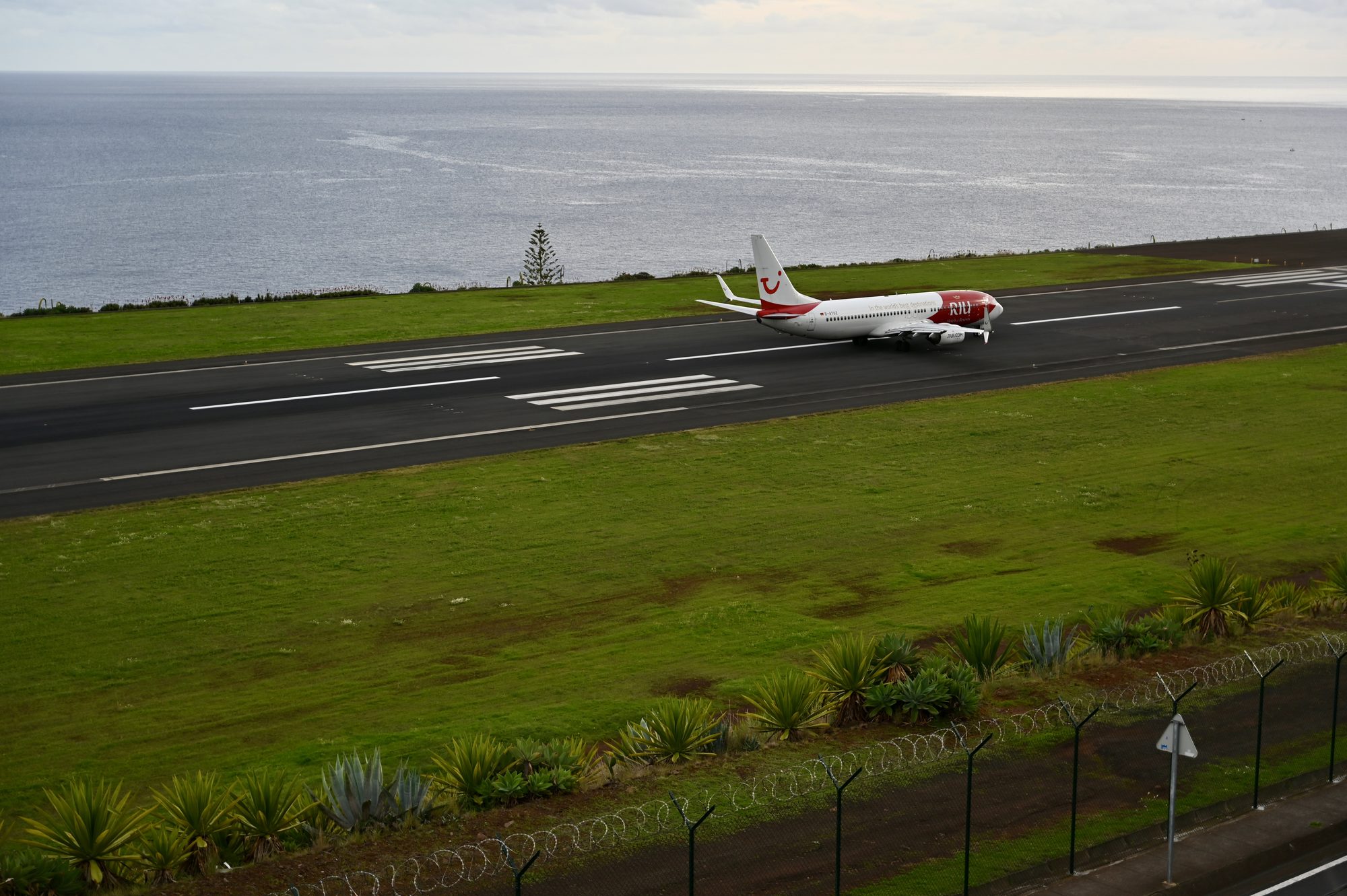
Plane spotting at Madeira airport.
Day 5 — Funchal
- Drive to Funchal city center and park in the public parking garage near the cable car station.
- Buy tickets and line up for the cable car up to the Monte neighborhood.
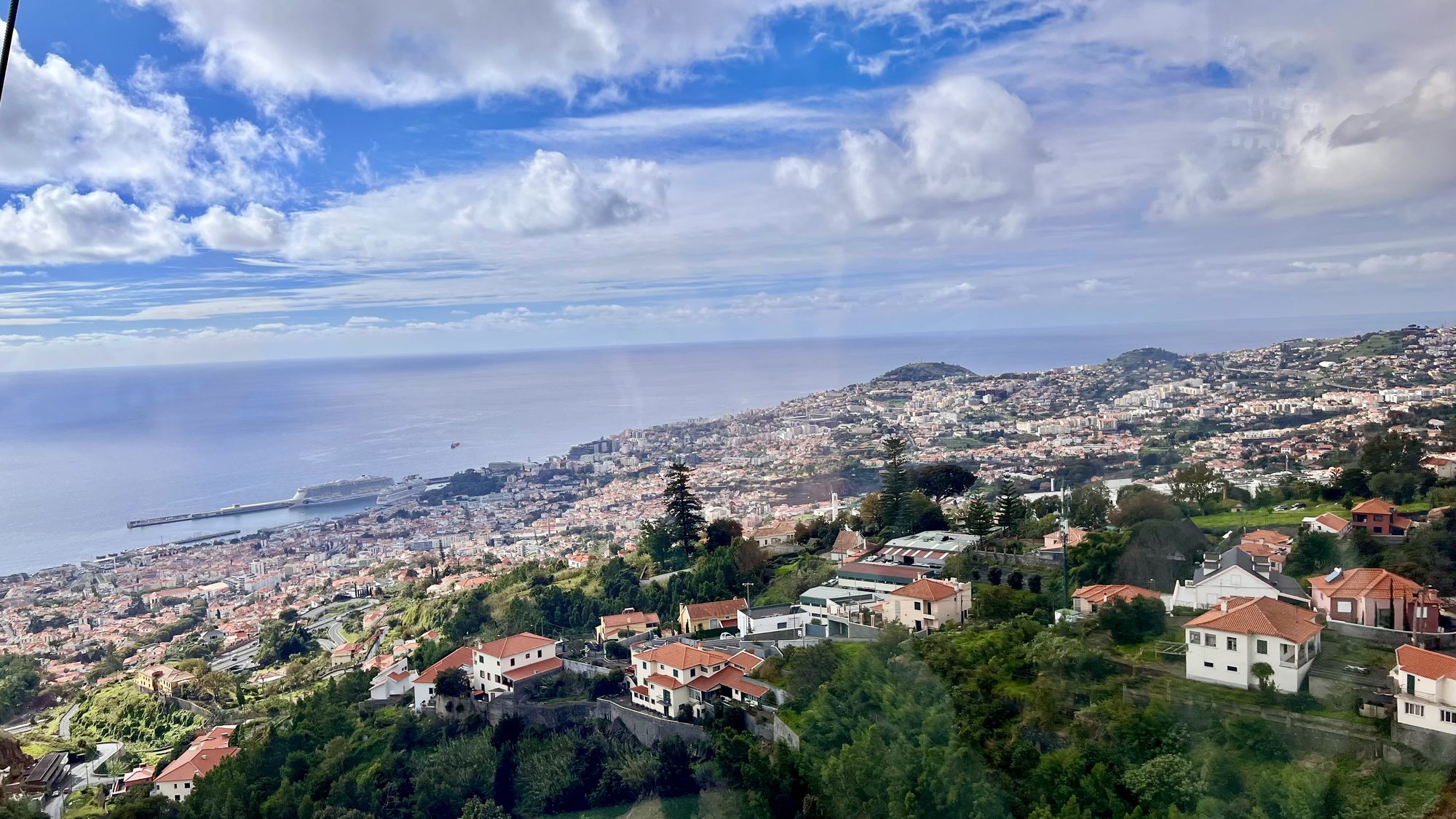
The view from the cable car to Monte.
- Walk a little way up the hill to the Monte Palace Gardens. These are reached on foot from the cable car station in Monte — there is no need to take another cable car. The garden you reach by an additional cable car ride is not the Monte Palace Garden.
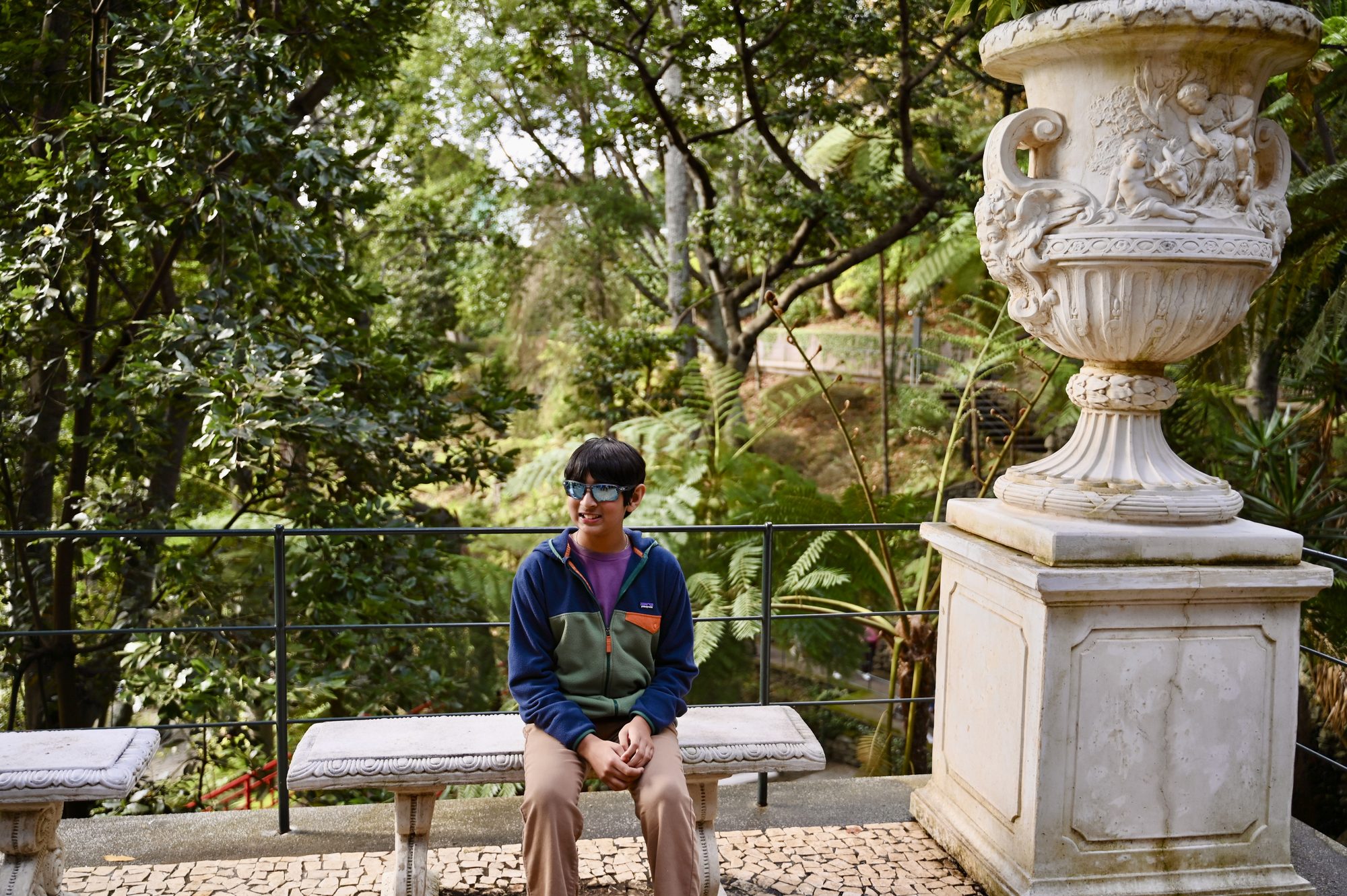
Views around the garden.
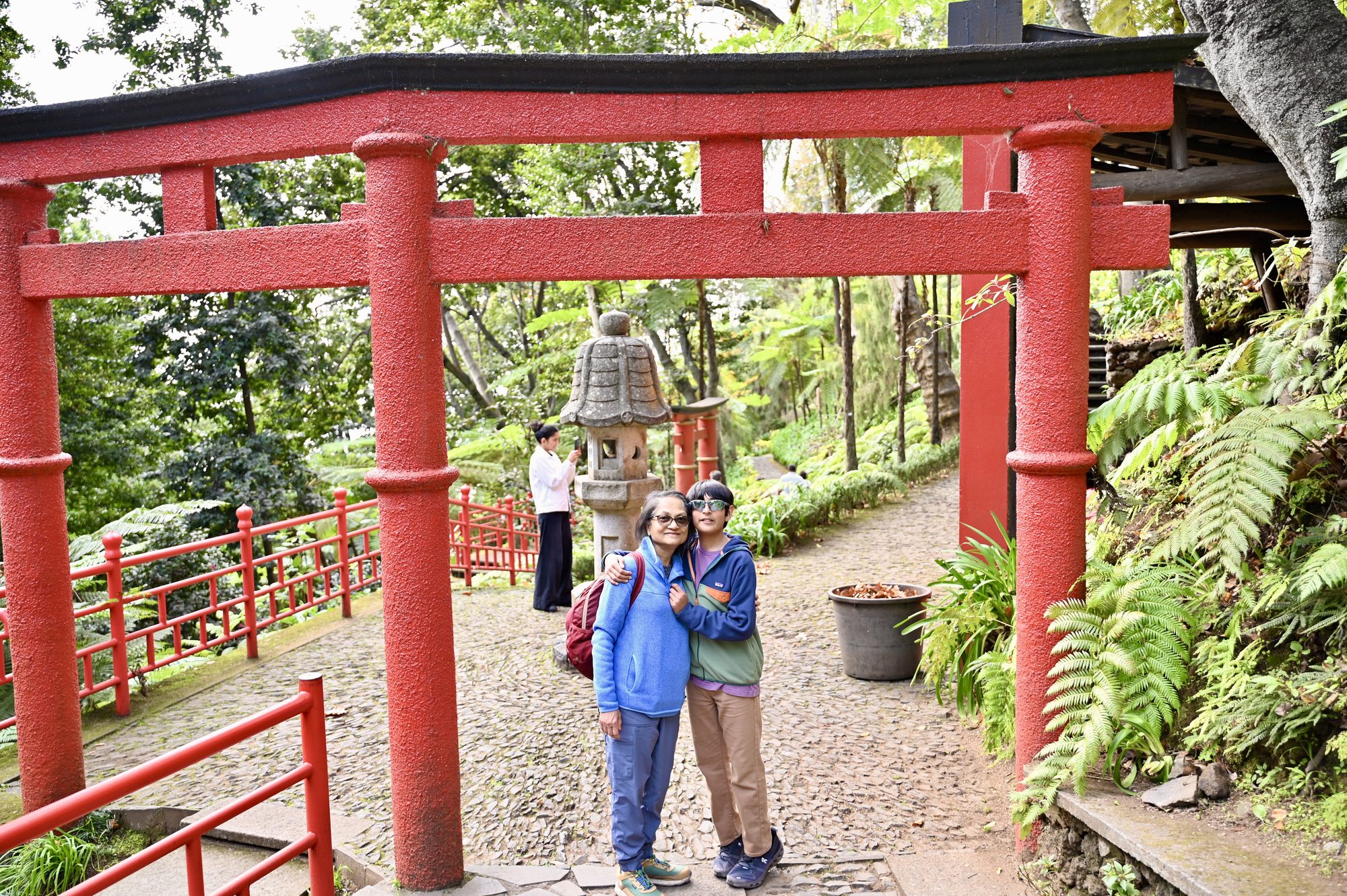
In the Japanese garden.
- Buy tickets at the counter and enter the gardens. Set high above Funchal, the atmosphere here feels more tropical and misty. The gardens are laid out on multiple winding levels of architecture, greenery and beautiful tile work, all woven together to give a glimpse into the history and art of Portugal. The Japanese gardens have painted red bridges, tiled roofs and koi ponds. The Portuguese gardens are lined with azulejos — blue tiles.
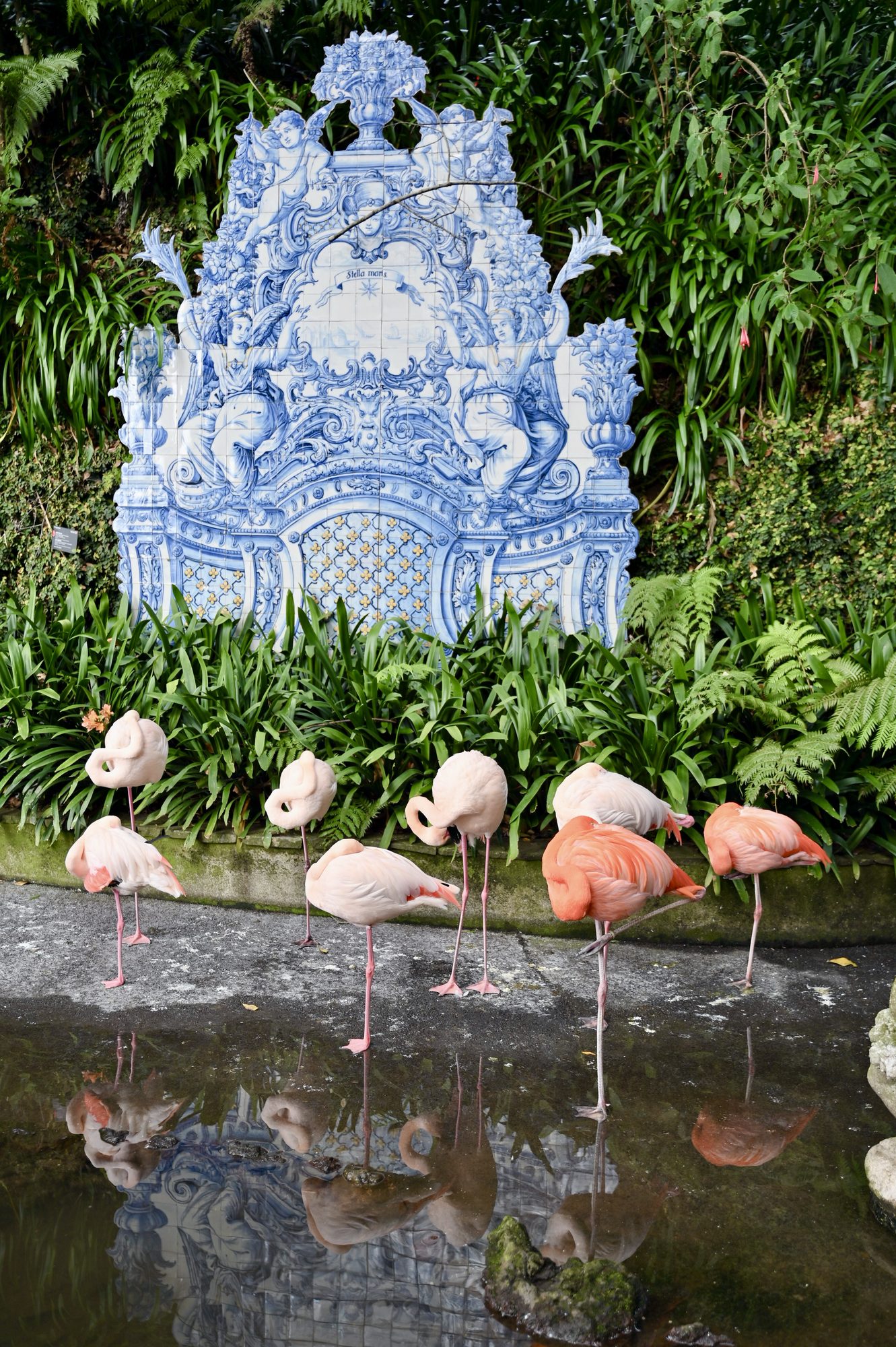
In the Portuguese-style gardens, with azulejos.
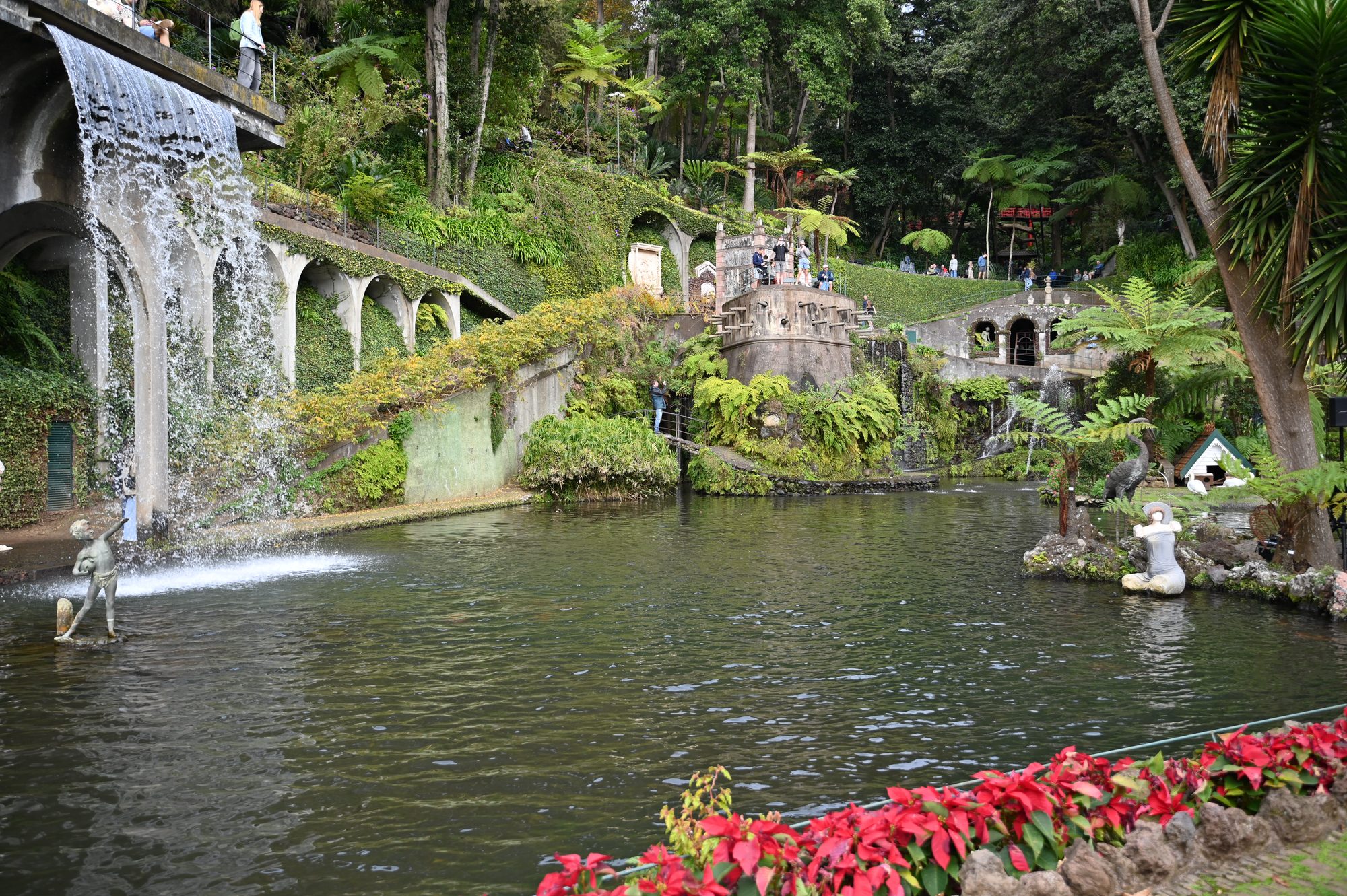
The water gardens, all the way at the base of the garden.
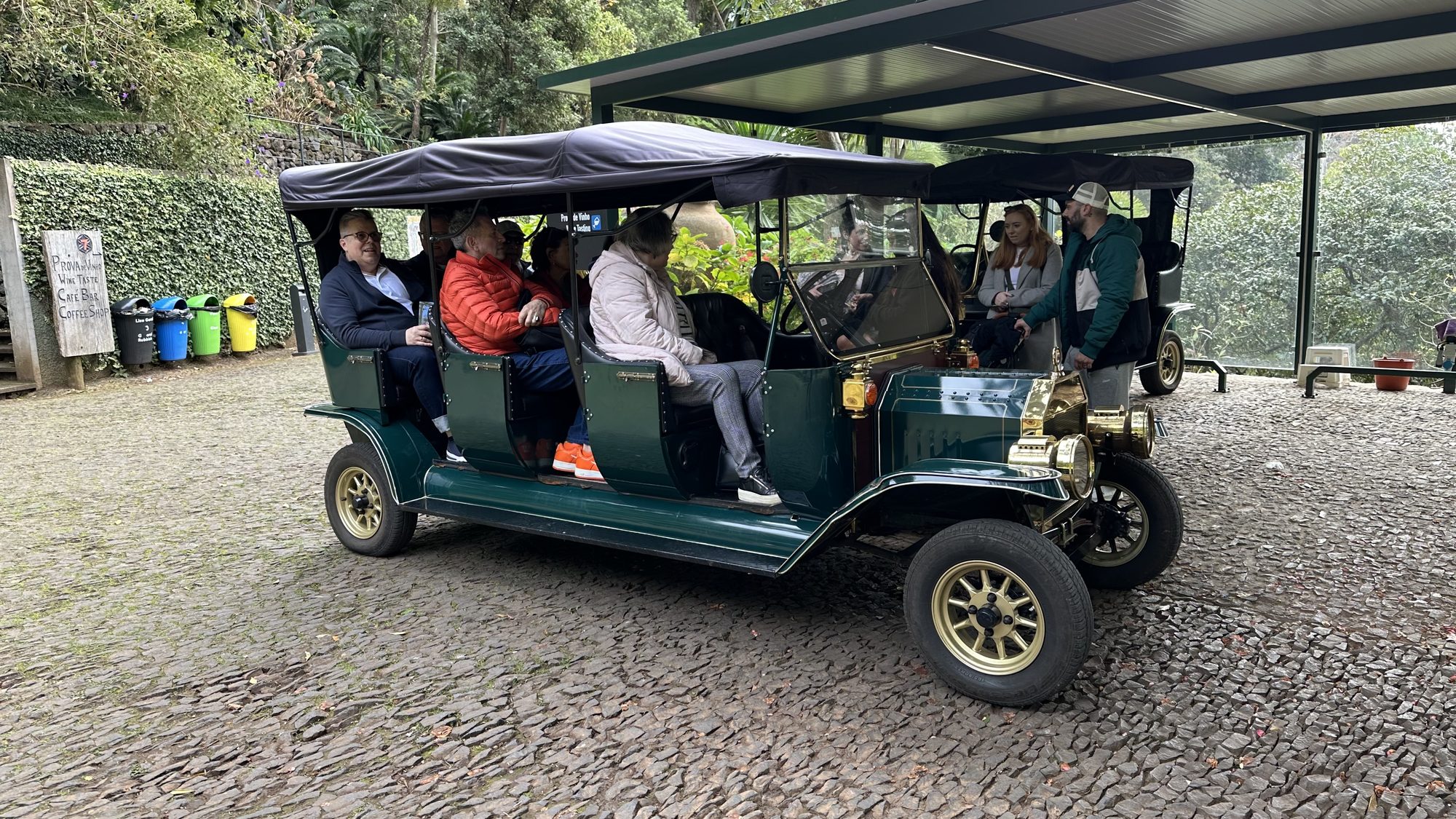
My parents took a ride back up the winding path to the exit.
- From here, the best-known way back down into Funchal is the famous toboggans of Monte. A return trip on the cable car works as well.
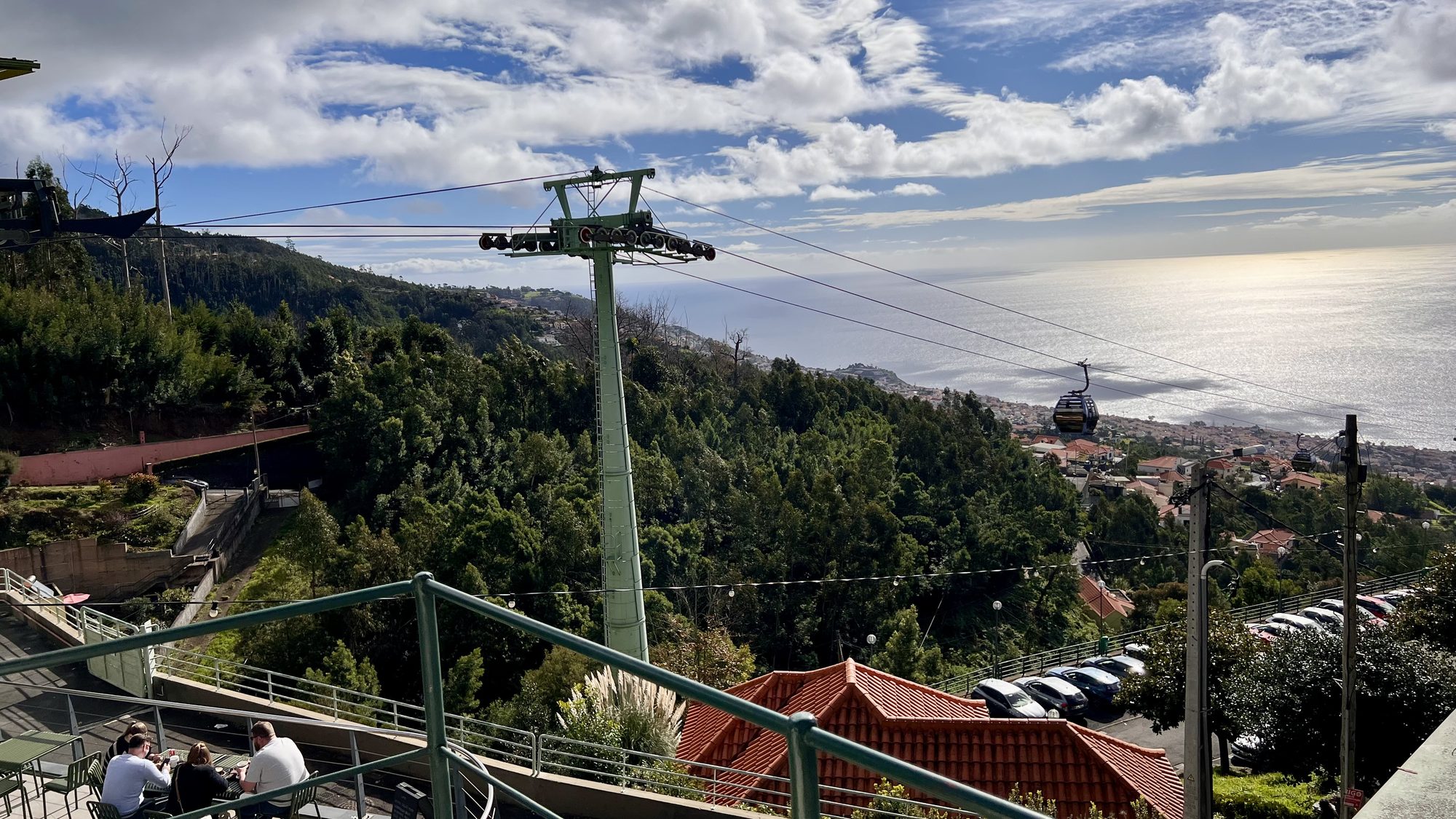
Taking the cable car back down.
- For lunch, we recommend Noodle King in Funchal, a walk from the cable car station. It was full of locals and had good vegetarian options.
- After lunch, walk over to Rua Dr. Fernão de Ornelas, one of Funchal’s bustling, pedestrian-friendly shopping streets, with interesting local and international brands.
- Tip: Check out the pharmacies for beauty products.
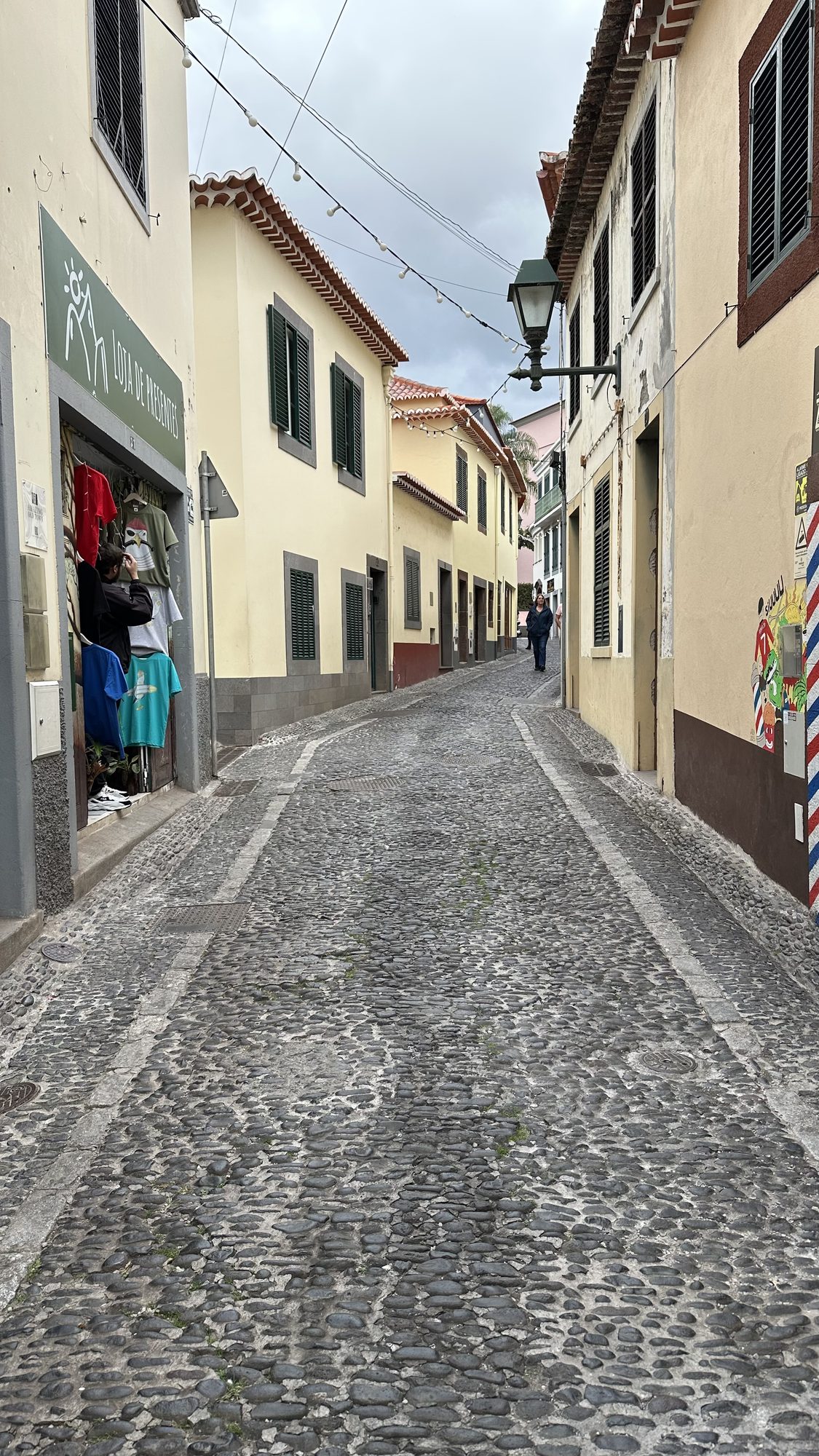
The streets of Funchal.
- Visit Fábrica Santo António. This famous cookie shop offers samples and has a wide variety of incredible, delicious flavors. They make great souvenirs.
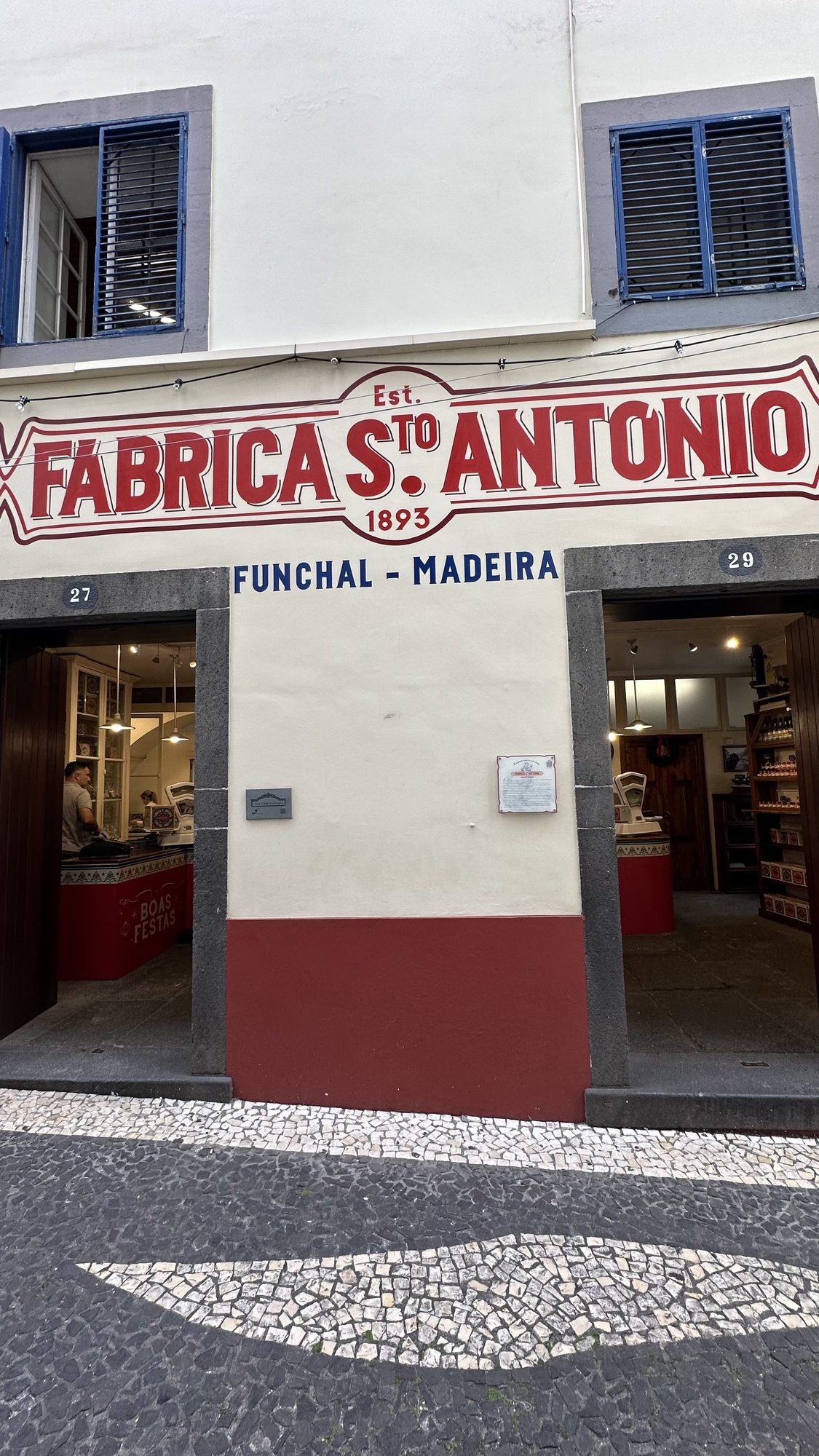
The best cookies in Portugal!
- Walk over to the Mercado dos Lavradores, the famous market. It gives you a glimpse of the huge variety of local flowers, fruits, vegetables and Portuguese ingredients.
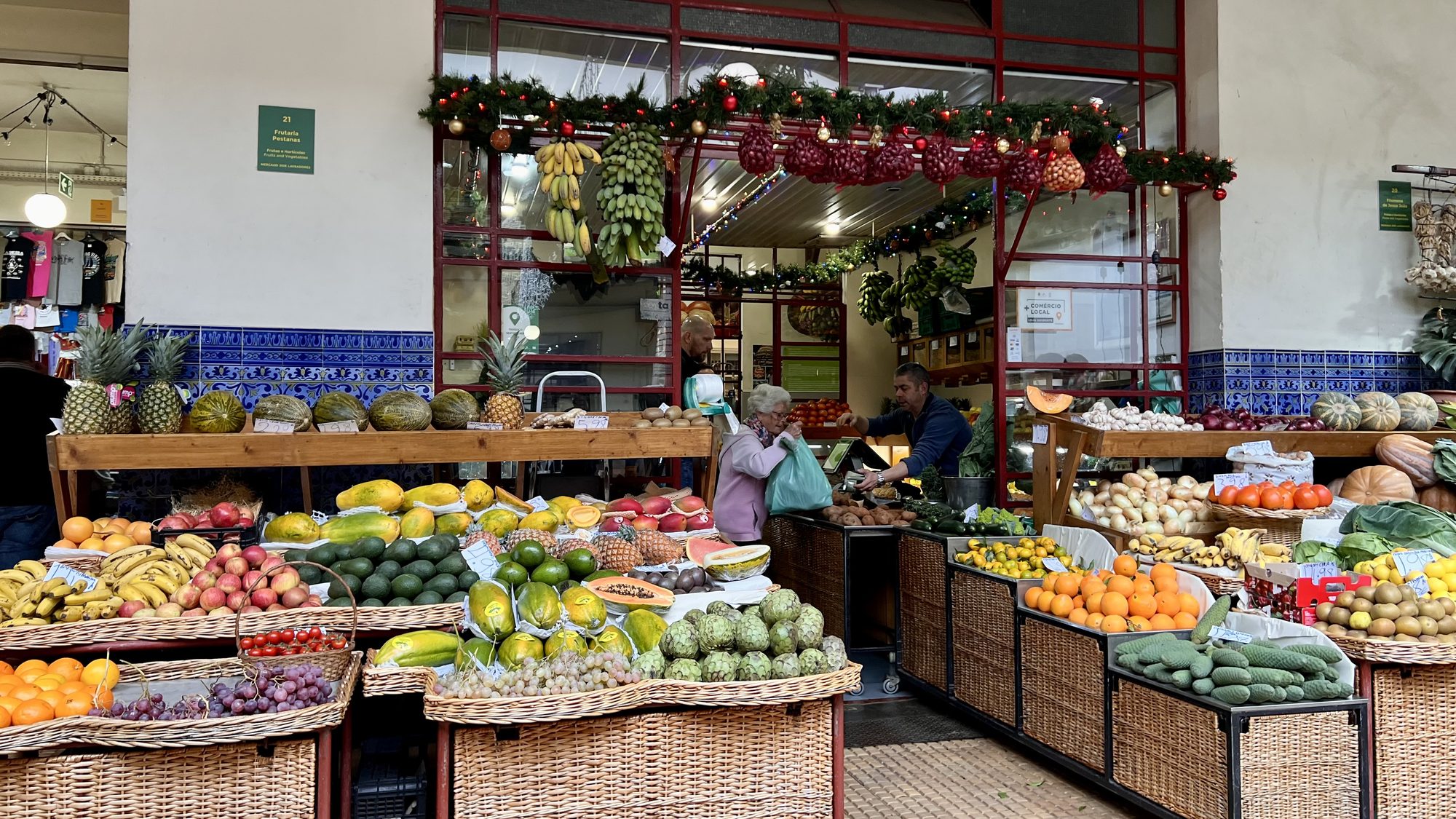
Mercado dos Lavradores.
- Tip: If you’re buying fruit and vegetables, the stalls on the top level towards the back may have better prices. The stalls on the lower level, close to the entrance, are usually more expensive and geared towards tourists.
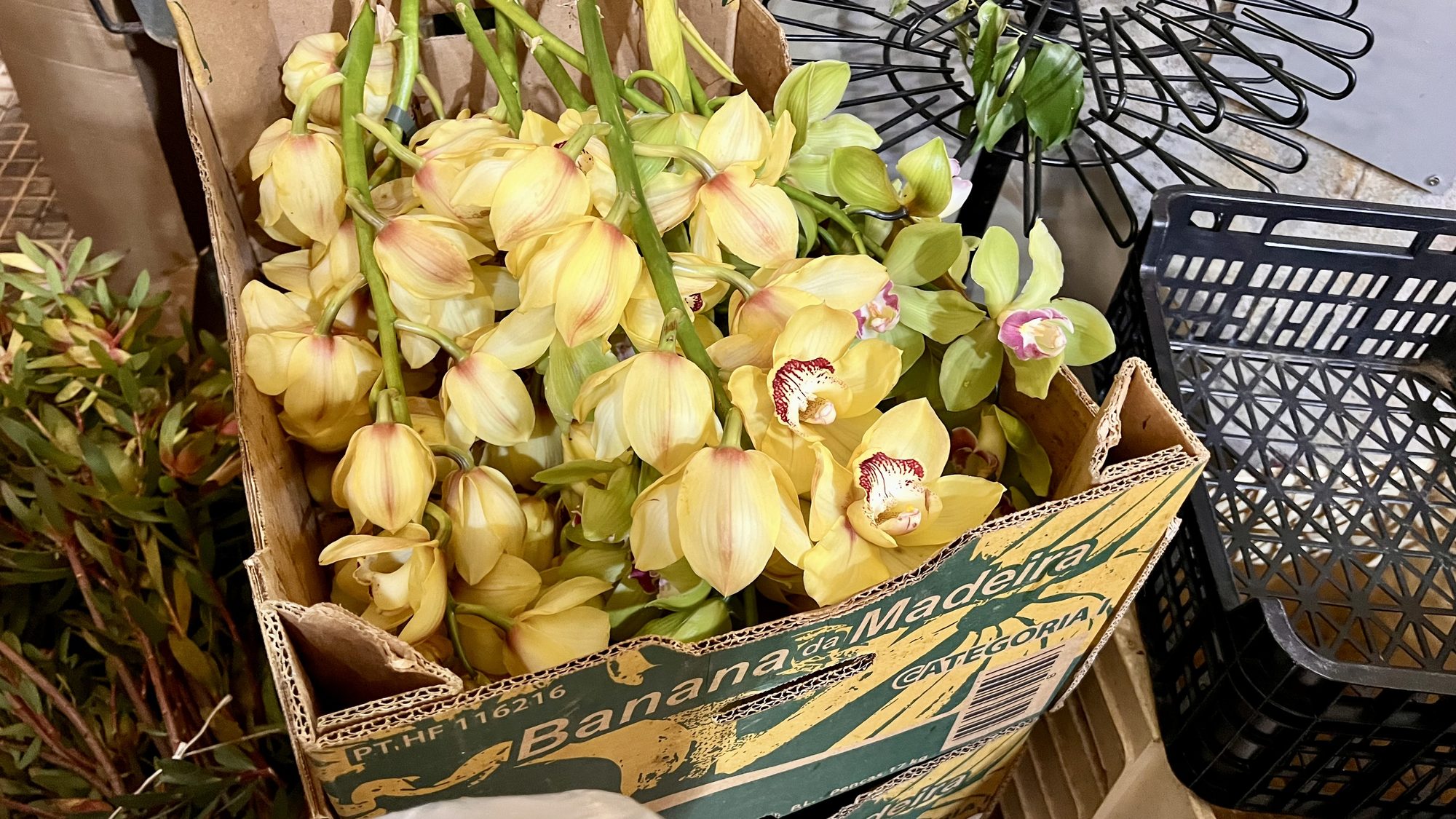
Orchids at the Mercado dos Lavradores.
- Tip: Try the different varieties of banana. They are grown locally in Madeira and are especially delicious.
- Visit Rua de Santa Maria, one of the main streets of old town Funchal, with beautiful old-world architecture and the famous painted doors. The restaurants lining this street are too touristy — there is better food a short walk away.
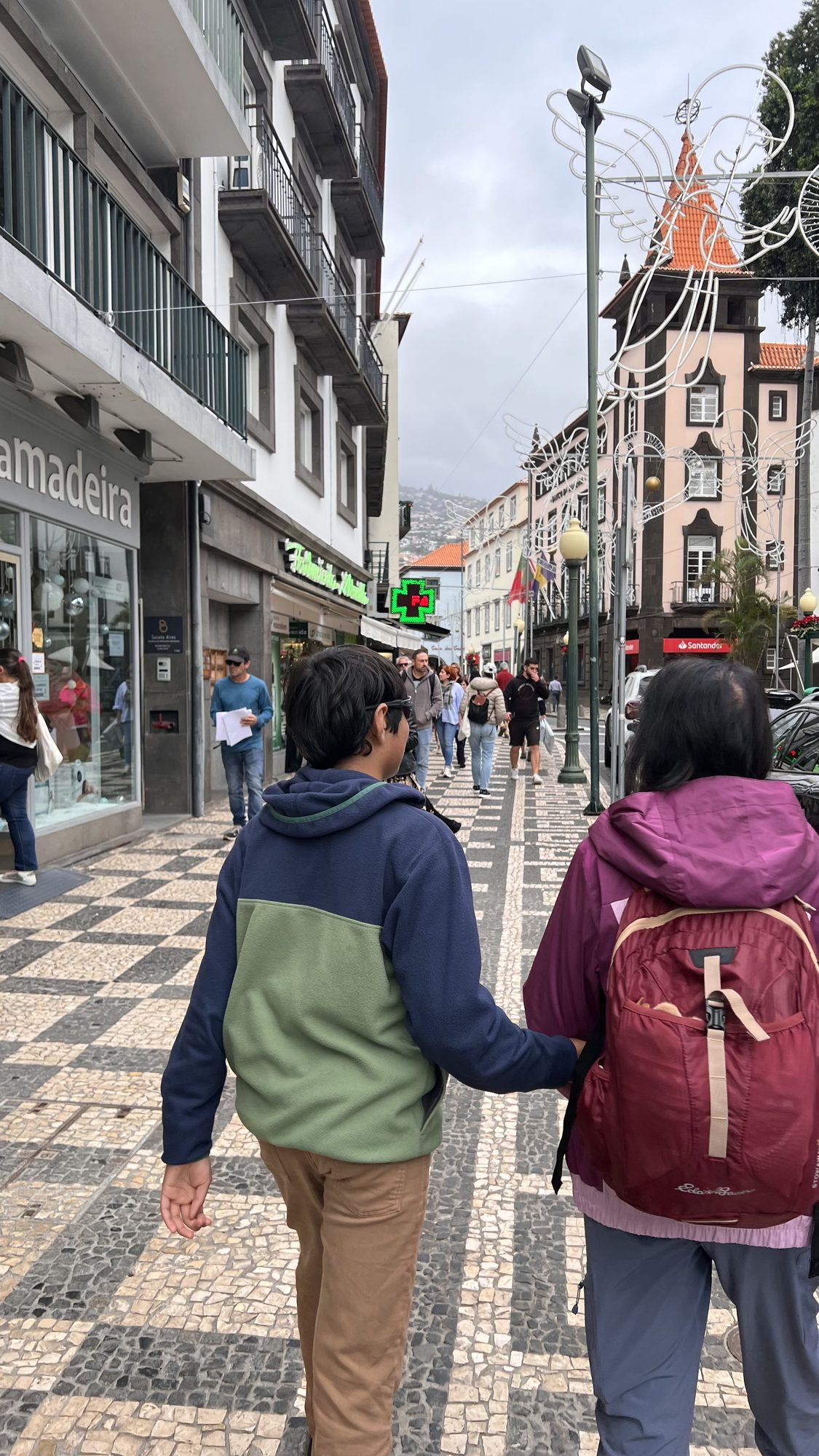
Shopping in the city.
- For dinner, we went to Thai Funchal. We enjoyed having a different cuisine in Funchal. The vegetarian options were limited, but we had a decent meal. A reservation is required.
Day 6 — The Valley of the Nuns and departure
- After breakfast, drive to the Miradouro da Eira do Serrado, above the Valley of the Nuns (Curral das Freiras). There is a parking lot here, which can fill up with tour buses, plus a restaurant and a few souvenir shops. It is possible to hike down into the valley from this viewpoint. After parking, follow the short path to a couple of viewpoints looking out at the mountains and down into the valley.
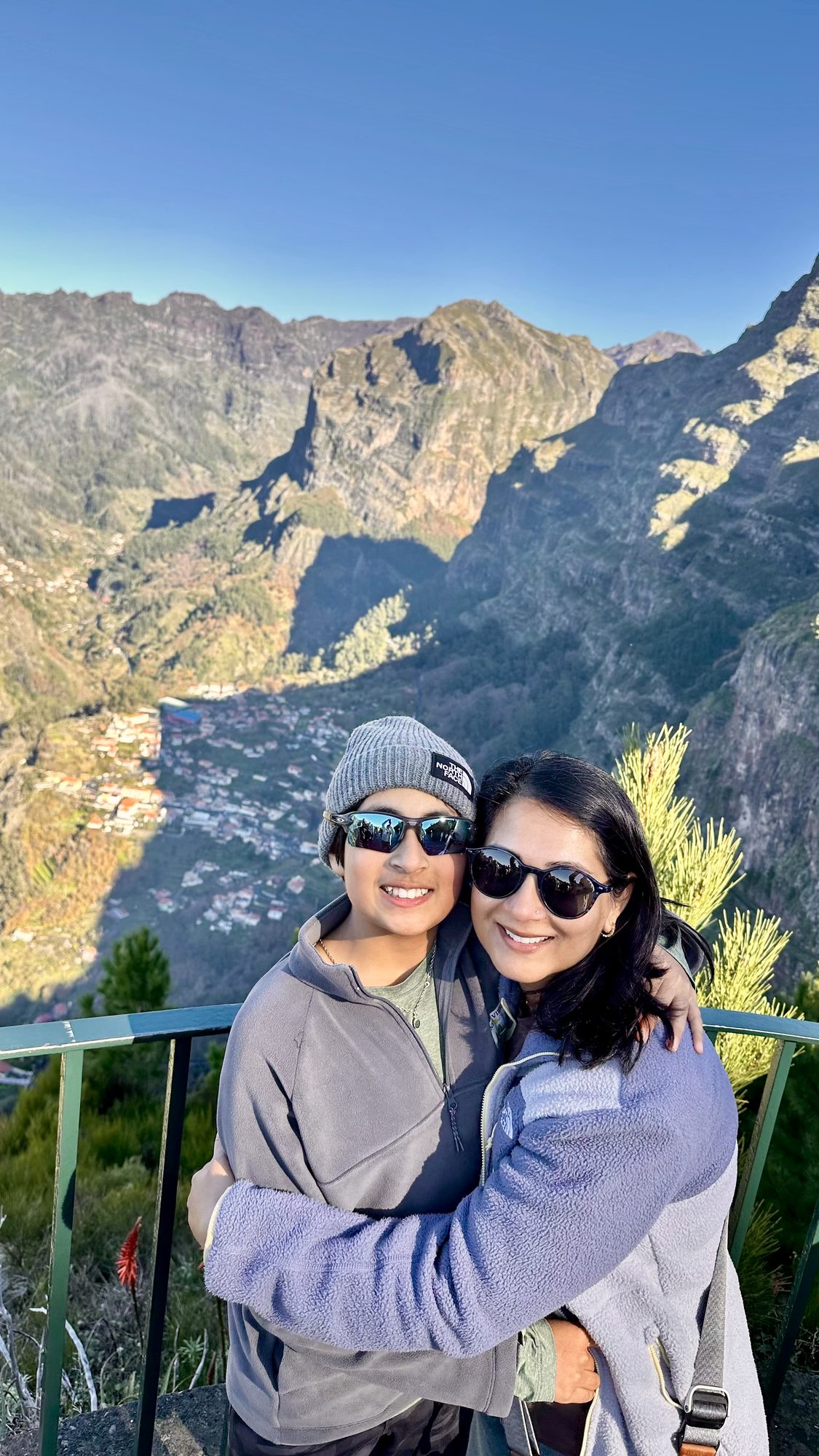
The first viewpoint on the trail.
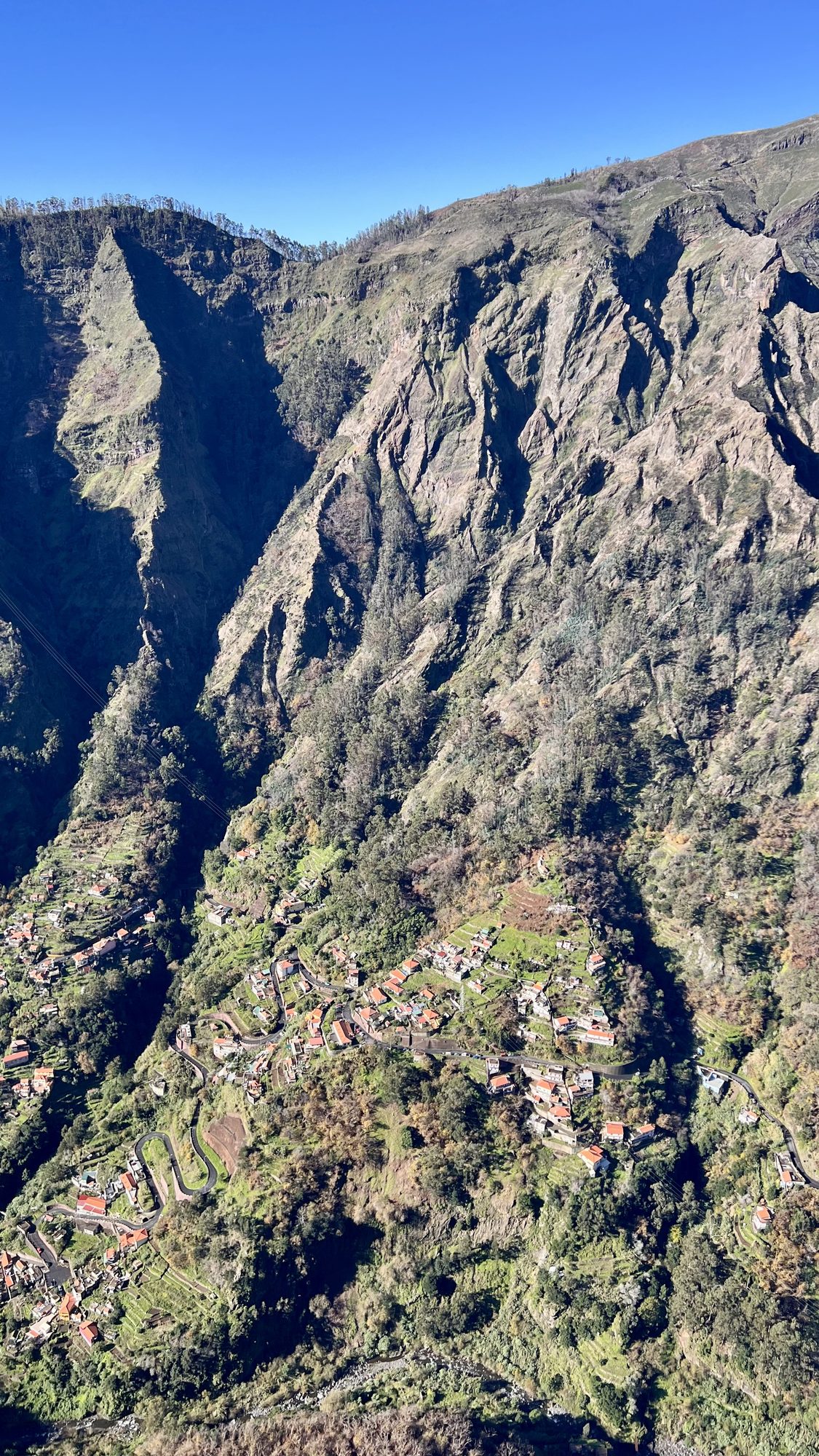
The Valley of the Nuns.
- For lunch, we recommend Chef Guru, an Indian restaurant. This was by far the best meal we had in Funchal — the service, the quality of the food and the beautiful location in old town Funchal made it a great experience. We parked in the public parking near the cable car station (the same as the day before). It is a brief walk to the restaurant through narrow cobblestone streets.
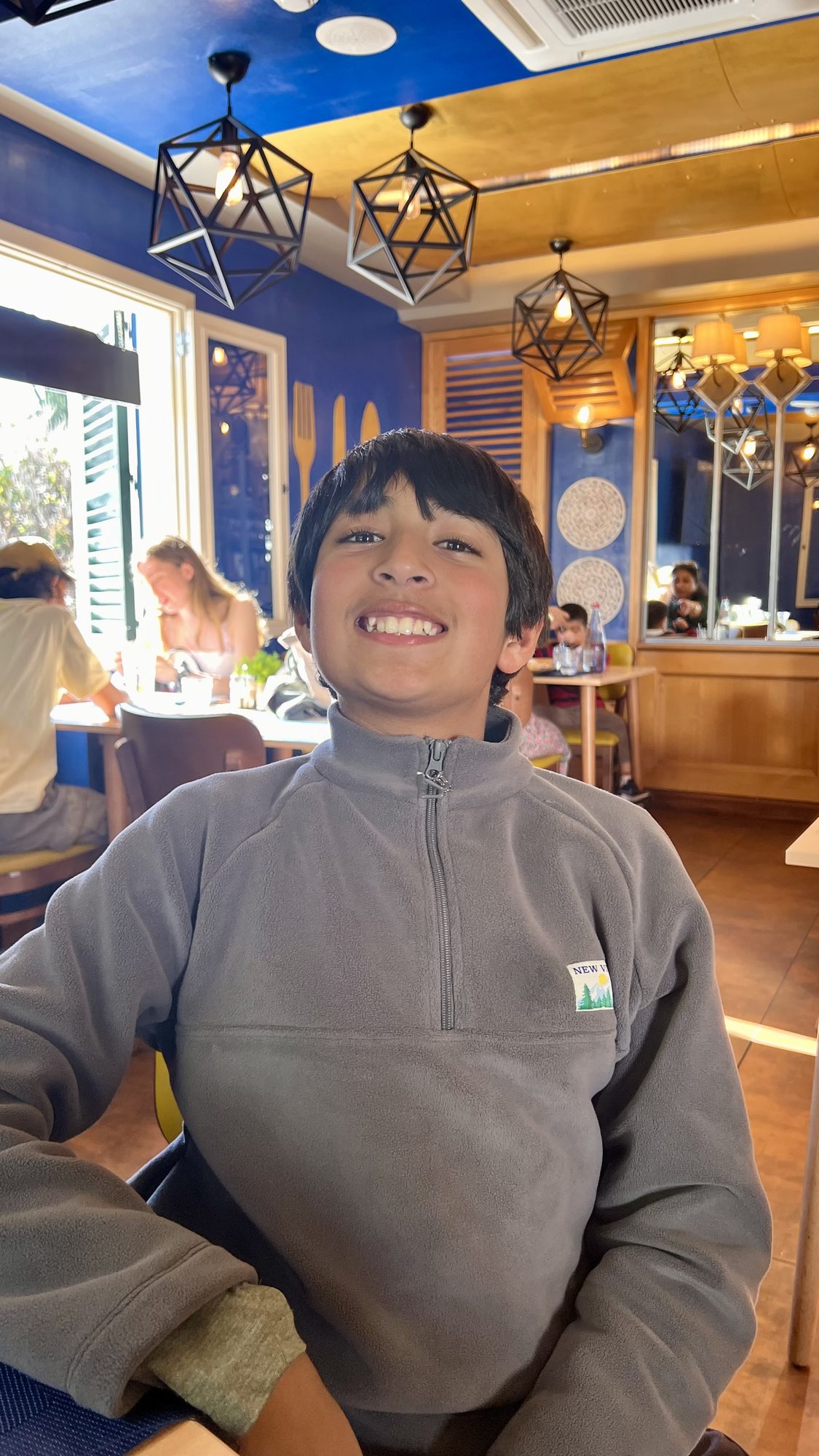
In Chef Guru.
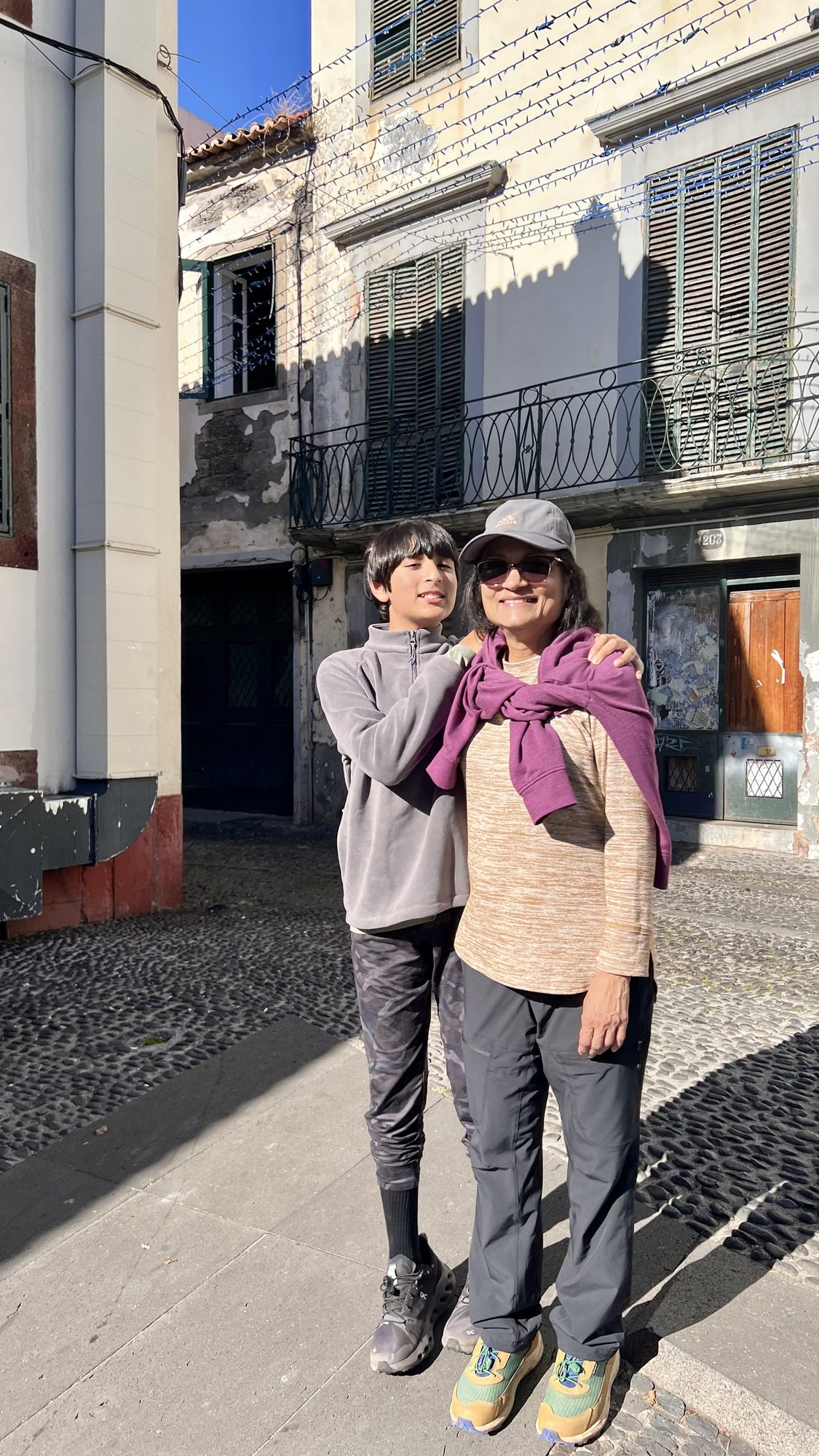
The street outside the restaurant.
- After lunch, head to the airport.
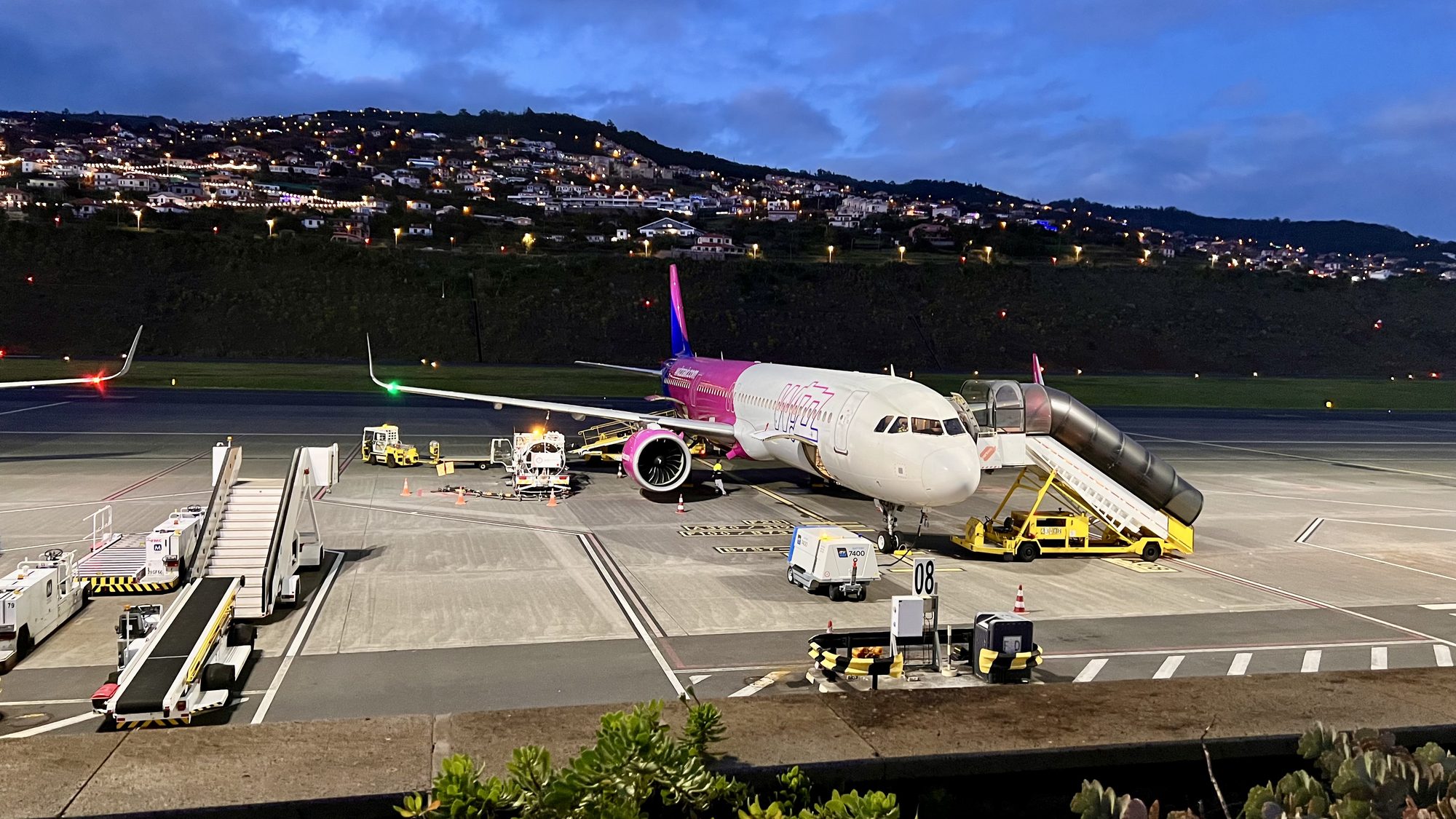
Madeira airport at dusk.
- The airport here is pretty new and nice, with great places to get food and souvenirs. The best part is the outdoor viewing deck, where you can watch flights land and take off. Our son especially enjoyed the deck for a long time, as our flight was delayed by a couple of hours.
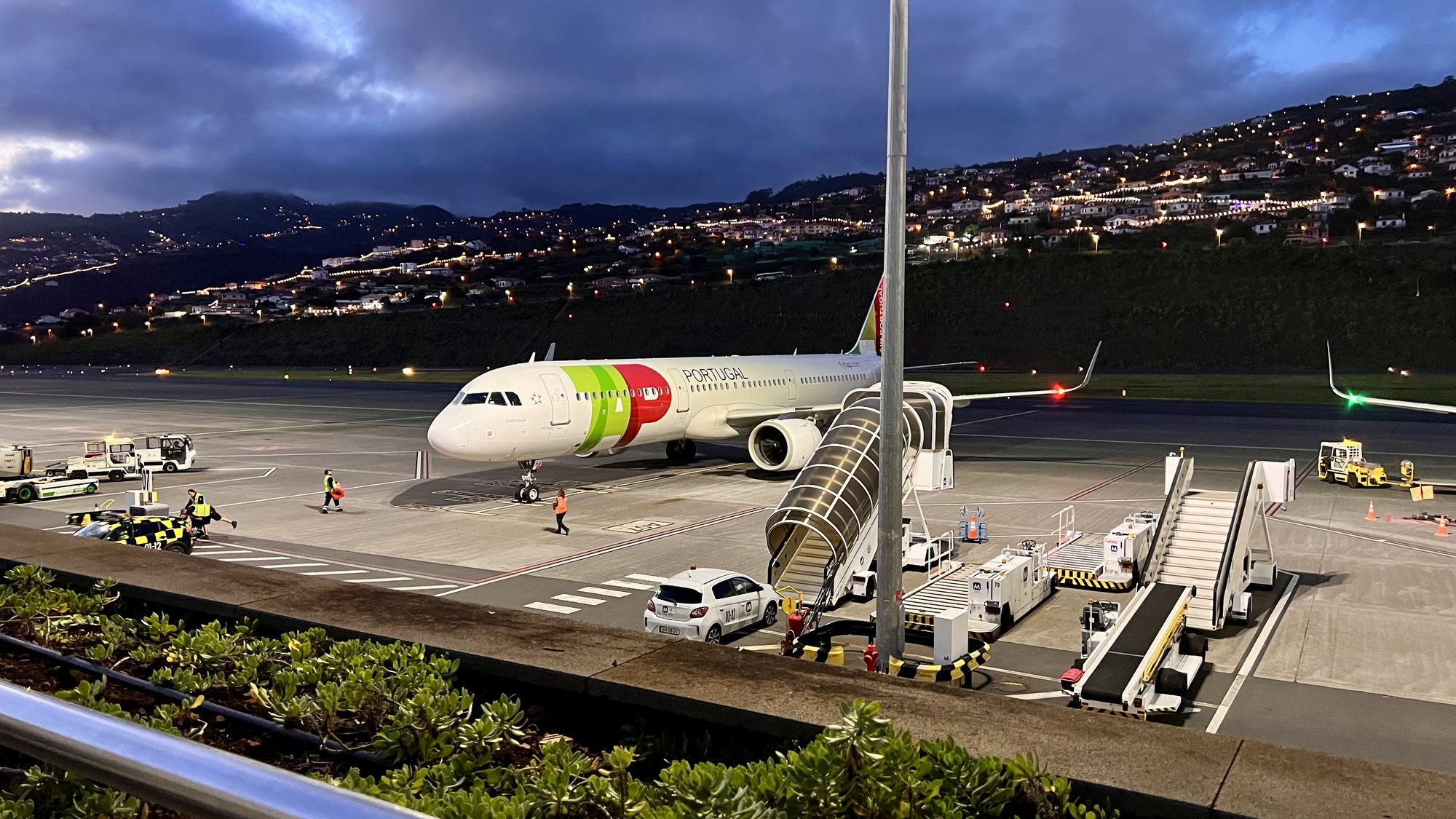
The view of our flight from the viewing deck.